Now Reading: What Is a Data Breach? Business Risks and Impact Explained
-
01
What Is a Data Breach? Business Risks and Impact Explained
A data breach occurs when unauthorized individuals gain access to sensitive, confidential, or protected company data. Breaches can result from hacking, insider threats, human error, phishing, malware, or system vulnerabilities.
The consequences can be serious, including financial losses, legal penalties, operational disruption, reputational damage, and loss of intellectual property. Companies may also have to notify affected individuals and authorities, investigate the incident, secure compromised systems, and strengthen cybersecurity measures.
Because a breach can affect finances, customers, employees, operations, and competitive position, data protection and cybersecurity have become critical priorities for businesses.
What Is a Data Breach?
A data breach happens when people who are not authorized to access information gain entry to sensitive, confidential, or protected data. The incident can affect businesses of any size and may expose information belonging to customers, employees, partners, or the company itself.
A breach does not always happen because of sophisticated hacking. Human error, insider threats, phishing attacks, malware, and weaknesses in computer systems can also create opportunities for unauthorized access.

The information exposed during a breach can vary significantly depending on the organization and the systems involved. Personal information may include Social Security numbers, payment information, and health records. Companies can also lose intellectual property and proprietary business information, including patents, trade secrets, and business plans.
This makes a data breach more than a technical cybersecurity problem. When sensitive information is exposed, the incident can create financial, legal, operational, and reputational consequences that continue long after the initial unauthorized access has been stopped.
How Does a Data Breach Affect Companies?
The impact of a data breach can extend across almost every part of a business. Companies may face immediate costs associated with investigating and containing the incident, while longer term consequences can include customer losses, regulatory penalties, legal expenses, and damage to the organization’s reputation.
The financial impact can be particularly significant. According to IBM’s Cost of a Data Breach 2025 report indicates that the average global cost of a data breach is around $4.44 million, while the average cost in the United States is about $10.22 million. These costs can involve legal fees, regulatory fines, investigation expenses, customer notifications, and potential lawsuits.
However, financial losses represent only one part of the problem. A company can also lose customer confidence when people discover that their personal or financial information has been compromised. Customers may become less willing to do business with an organization they believe has failed to protect their information. This loss of trust can ultimately affect revenue and future business opportunities.
Financial Losses Can Become a Major Business Burden
A serious data breach can create substantial financial pressure because companies may need to respond to several expenses at the same time. Investigating what happened, determining which information was exposed, notifying affected individuals, dealing with regulators, and responding to potential lawsuits can all increase the cost of an incident.
The financial consequences may also continue after the immediate breach has been contained. Businesses may need to invest in stronger security measures, improved monitoring, employee training, and additional cybersecurity support. If the incident disrupts normal operations, the company may also lose productivity and revenue during the recovery process.
The cost of a breach therefore extends beyond the value of the stolen information. The response itself can become a significant business expense, particularly when the incident affects a large number of people or involves critical company systems.
Reputational Damage Can Reduce Customer Trust
Customer trust is one of the most important assets a company can lose following a data breach. People expect organizations to protect sensitive information, particularly when companies collect personal, financial, or health related data.
When sensitive information is compromised, customers may question whether the company has adequate security practices. This can lead to reduced confidence and potentially lost business and revenue. Rebuilding trust can take considerable time because customers and stakeholders may continue to remember the incident even after the company has improved its security measures.
For businesses, reputation is closely connected to customer relationships. A company responding to a breach therefore needs to focus not only on technical recovery, but also on communicating responsibly with affected individuals and stakeholders.
Operational Disruption Can Interrupt Business Activities
Some data breaches involve ransomware attacks that prevent companies from accessing their systems. When critical systems become unavailable, employees may be unable to perform normal duties, resulting in downtime and lost productivity.
Operational disruption can make a breach especially damaging because the company may have to manage its cybersecurity response while simultaneously trying to maintain essential business activities. The longer systems remain inaccessible, the greater the potential impact on employees, customers, and business operations.
Restoring systems must therefore be handled carefully. Companies need to recover operations securely while ensuring that the original vulnerability has been addressed and that additional unauthorized access does not occur.
Regulatory Penalties Can Add Legal Pressure
Companies affected by data breaches may also face regulatory obligations and penalties. Requirements can depend on the industry, jurisdiction, and type of information involved. Laws and regulations such as GDPR and CCPA can create requirements relating to data protection, reporting, and notification.
Companies may need to notify relevant authorities and affected individuals within specific timeframes. The material provided also highlights that some regulatory frameworks can require action within a much shorter period, including a 72 hour timeframe for certain personal data breaches.
The exact requirements can differ significantly, which makes legal assessment an important part of the response process. Companies need to understand what information was compromised, who was affected, and which legal requirements apply to the incident.
Loss of Intellectual Property Can Affect Competitive Position
Not all valuable information held by a company is personal information. Businesses also maintain proprietary information that can be essential to their competitive position.
A breach can expose patents, trade secrets, business plans, and other forms of intellectual property. If competitors or unauthorized individuals obtain such information, a company could face disadvantages that extend beyond the immediate incident.
The loss of intellectual property can therefore affect a company’s future plans, market position, and ability to maintain an advantage over competitors. Protecting business information is consequently an important part of an effective data protection strategy.
What Should a Company Do Immediately After a Data Breach?
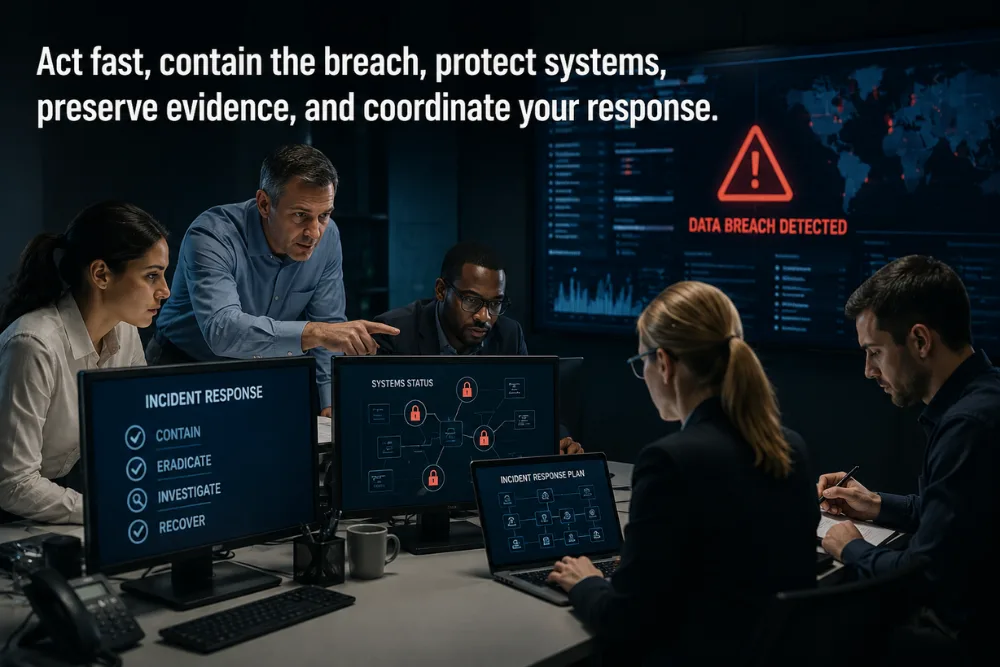
A company should respond quickly and methodically after discovering a data breach. The first priority is to secure operations and contain the incident so that unauthorized access does not continue.
Affected equipment may need to be taken offline, while avoiding actions that could interfere with forensic investigation. Companies should also change passwords and access credentials and address the vulnerabilities that allowed the breach to happen. Physical areas connected to the incident may also need to be secured, including changing access codes where necessary.
A dedicated breach response team can help coordinate the process. The team may include professionals from forensics, information technology, legal services, communications, and management. Independent forensic investigators can also help determine how the breach occurred, what systems were affected, and what information may have been exposed.
Preserving evidence is important because investigators may need it to understand the incident, support remediation, and address potential legal proceedings.
Also read: 10 Best Cybersecurity Tips for Protecting My Home WiFi Network
Companies Need to Assess the Scope of the Breach
Once the initial response has begun, companies need to establish what happened and determine the scope of the incident. This includes gathering information about how unauthorized access occurred, how many individuals may have been affected, and what types of information were exposed.
Companies should also assess the potential risks and harm to people whose information was compromised. Careful documentation is important throughout this process because the findings can influence notification requirements, remediation efforts, and the broader recovery strategy.
The assessment should be based on available evidence rather than assumptions. A clear understanding of the incident gives the company a stronger foundation for deciding what action needs to be taken next.
Companies Must Consider Notifications and Legal Obligations
Affected individuals and relevant authorities may need to be notified following a data breach. Notification requirements depend on the circumstances of the incident and applicable federal, state, industry, or international requirements.
The information provided indicates that affected individuals may typically need to be notified within 30 to 60 days under certain laws, although other regulatory frameworks can require faster reporting. Notifications should explain what happened, what information was involved, and what steps affected individuals can take to protect themselves.
Those steps can include credit monitoring and fraud alerts when appropriate. Companies may also need to notify regulatory bodies such as the Federal Trade Commission or the Department of Health and Human Services when applicable. Business associates and partners affected by the incident may also need to be informed.
Because notification requirements can vary, companies should carefully evaluate their legal obligations rather than relying on a single universal timeframe.
Companies Should Prevent Further Exposure
Containing the original breach is only one part of the response. Companies should also identify whether compromised information has been exposed through websites or other platforms and take steps to remove or secure improperly posted information.
Additional security measures may be necessary to reduce the risk of another incident. These can include updating software, strengthening monitoring, and improving employee training on security practices.
Employee awareness is particularly important because human error and phishing are among the possible causes of data breaches. Improving security practices across the organization can therefore help reduce vulnerabilities that may otherwise remain after the immediate incident has been resolved.
Long Term Recovery Is Essential After a Breach
The recovery process should continue after systems have been secured and notifications have been completed. Companies need to develop a plan for restoring normal operations securely and rebuilding trust with customers and stakeholders.
Organizations may consider working with specialized vendors or consultants for ongoing cybersecurity and communications support. External expertise can help companies evaluate weaknesses, improve their response processes, and strengthen their overall security posture.
A breach should also be treated as an opportunity to learn. Reviewing what happened can help a company identify weaknesses in its systems, processes, employee practices, and security controls. The lessons learned can then be used to reduce the likelihood of future breaches.
Why Data Protection Should Be a Business Priority
Data breaches demonstrate why cybersecurity cannot be treated solely as an information technology concern. A single incident can affect finances, customers, employees, legal obligations, daily operations, intellectual property, and the company’s reputation.
The potential financial costs alone can be substantial, but the broader consequences can be equally serious. Customers may lose trust, employees may face operational disruption, regulators may require action, and proprietary information may be exposed.
For these reasons, businesses need to consider data protection as an ongoing priority. Stronger security practices, employee training, monitoring, response planning, and regular improvements can help organizations prepare for potential incidents and respond more effectively when they occur.
Conclusion
A data breach occurs when unauthorized individuals gain access to sensitive or protected information, and its consequences can reach far beyond the loss of data. Companies can face financial losses, reputational damage, operational disruption, regulatory penalties, legal pressure, and the loss of valuable intellectual property.
An effective response requires immediate containment, careful investigation, assessment of the affected information, appropriate notifications, stronger security measures, and a long term recovery strategy. Companies should also review each incident carefully to understand what went wrong and improve their security posture. As businesses continue to handle valuable personal and proprietary information, data protection and cybersecurity remain essential priorities for maintaining trust, protecting operations, and reducing future risk.
References:
Understanding the Business Impact of Data Breaches
What is a Data Breach and How Does It Affect Your Business?
Immediate Steps To Take After a Data Breach
Frequently Asked Questions
What is a data breach?
A data breach occurs when unauthorized individuals gain access to sensitive, confidential, or protected data. It can result from hacking, insider threats, human error, phishing, malware, or system vulnerabilities.
What information can be exposed during a data breach?
A breach can expose personal information such as Social Security numbers, payment information, and health records. It can also expose intellectual property, patents, trade secrets, business plans, and proprietary company information.
How can a data breach affect a company financially?
A breach can create costs related to legal fees, regulatory fines, investigations, customer notifications, lawsuits, operational disruption, and additional security measures. The information provided places the average global cost at around $4.44 million.
Can a data breach damage a company’s reputation?
Yes. Customers may lose trust when sensitive information is compromised. Reduced confidence can result in lost customers, lost business, and reduced revenue.
What should a company do first after discovering a breach?
The company should immediately secure its operations and contain the breach. This can include securing affected systems, changing credentials, addressing vulnerabilities, mobilizing a response team, and preserving evidence for forensic investigation.
Should companies notify customers after a data breach?
Companies may need to notify affected individuals when their information has been compromised. The timing and requirements depend on applicable laws and regulations.
Can a data breach cause operational disruption?
Yes. Breaches involving ransomware can prevent companies from accessing their systems, resulting in downtime, reduced productivity, and disruption to normal business activities.
Why is forensic investigation important after a breach?
Forensic investigators can help determine the source, scope, and method of the breach. Their work can also help preserve evidence needed for remediation and potential legal proceedings.
How can companies prevent future data breaches?
Companies can strengthen security by updating software, improving monitoring, addressing vulnerabilities, increasing employee training, and reviewing the incident to identify weaknesses that need to be corrected.
What is the long term impact of a data breach?
The long term impact can include financial losses, regulatory consequences, customer distrust, operational problems, legal issues, and loss of intellectual property. Recovery also requires rebuilding trust and improving the company’s overall security posture.
Also read: Top 5 Best Smart Home Devices for Security Systems

Dony Garvasis is the founder of Search Ethics, a freelance SEO consultant, and a passionate technology blogger. With over 8 years of experience in SEO, blogging and content marketing, I provide expert content on Tech, digital marketing, SEO, Artificial intelligence, gadgets, science, automobiles, lifestyle, tips, tutorials and much more. My mission is simple: Ethical Search, Genuine Results! I will make sure people everywhere get trustworthy and helpful information.