Now Reading: Brilliant Tips on Website Design for Better Branding
-
01
Brilliant Tips on Website Design for Better Branding
G’day! Thinking about creating a website for your business? Here are some helpful suggestions and website design tips to get you started on the right track. A strong website design helps businesses build trust, improve brand recognition, enhance customer experience, and increase online visibility.
Following professional tips on website design allows companies to create a memorable digital presence that supports long term growth and helps them stand out in a competitive marketplace.
Introduction
This is an era where a website is much more than just an online address. Am I right?
Absolutely yes!
It serves as the foundation of a company’s online presence and often becomes the first interaction potential customers have with a brand. Because of this, website design plays a vital role in shaping customer perceptions, improving search visibility, and encouraging business growth.
Modern consumers expect websites to be visually appealing, easy to navigate, and responsive across different devices. Businesses that invest in professional website design are more likely to establish credibility, attract new visitors, and convert those visitors into loyal customers. Effective design combines aesthetics with functionality to create a positive experience that supports both branding and marketing goals.
Following professional tips on website design can help businesses communicate their values, reinforce brand identity, and deliver a seamless experience for users. A strategic approach to design ensures that every element works together to support long term success.
Why Brand Identity Matters in Website Design
Brand identity represents the personality and values of a business. It influences how customers perceive a company and how easily they recognize it among competitors. Website design serves as one of the strongest tools for communicating this identity.
Colors, typography, images, and messaging all contribute to creating a consistent image that customers can remember. A strong visual identity helps businesses establish credibility while creating emotional connections with their audience. Consistency across every page strengthens recognition and makes the brand appear more professional.
When visitors clearly understand what a business represents, they are more likely to trust the company and continue interacting with its products or services. Effective branding creates familiarity, and familiarity often leads to stronger customer loyalty.
Why Is Website Design Important
Website design is essential because it directly affects how customers perceive a business and how they interact with its online presence. A professional website creates a positive first impression and helps establish trust with potential customers. Since many consumers form opinions within seconds of visiting a website, appearance and usability have a significant influence on business success.
Good design improves user experience by providing intuitive navigation, organized content, and responsive layouts. Visitors who can easily find information are more likely to remain on the website longer and engage with the business. Positive experiences increase customer satisfaction and encourage repeat visits.
Website design also contributes to search engine visibility. Search engines favor websites that offer fast loading speeds, mobile responsiveness, and structured content. Businesses that combine effective design with SEO best practices can improve their rankings and attract more organic traffic.
Also read: Best Tools to Build a Website Without Coding Skills
Another important advantage of website design is its ability to strengthen brand identity. Consistent colors, typography, and messaging help reinforce recognition and differentiate a business from competitors. A memorable brand presence supports long term growth and improves customer trust.
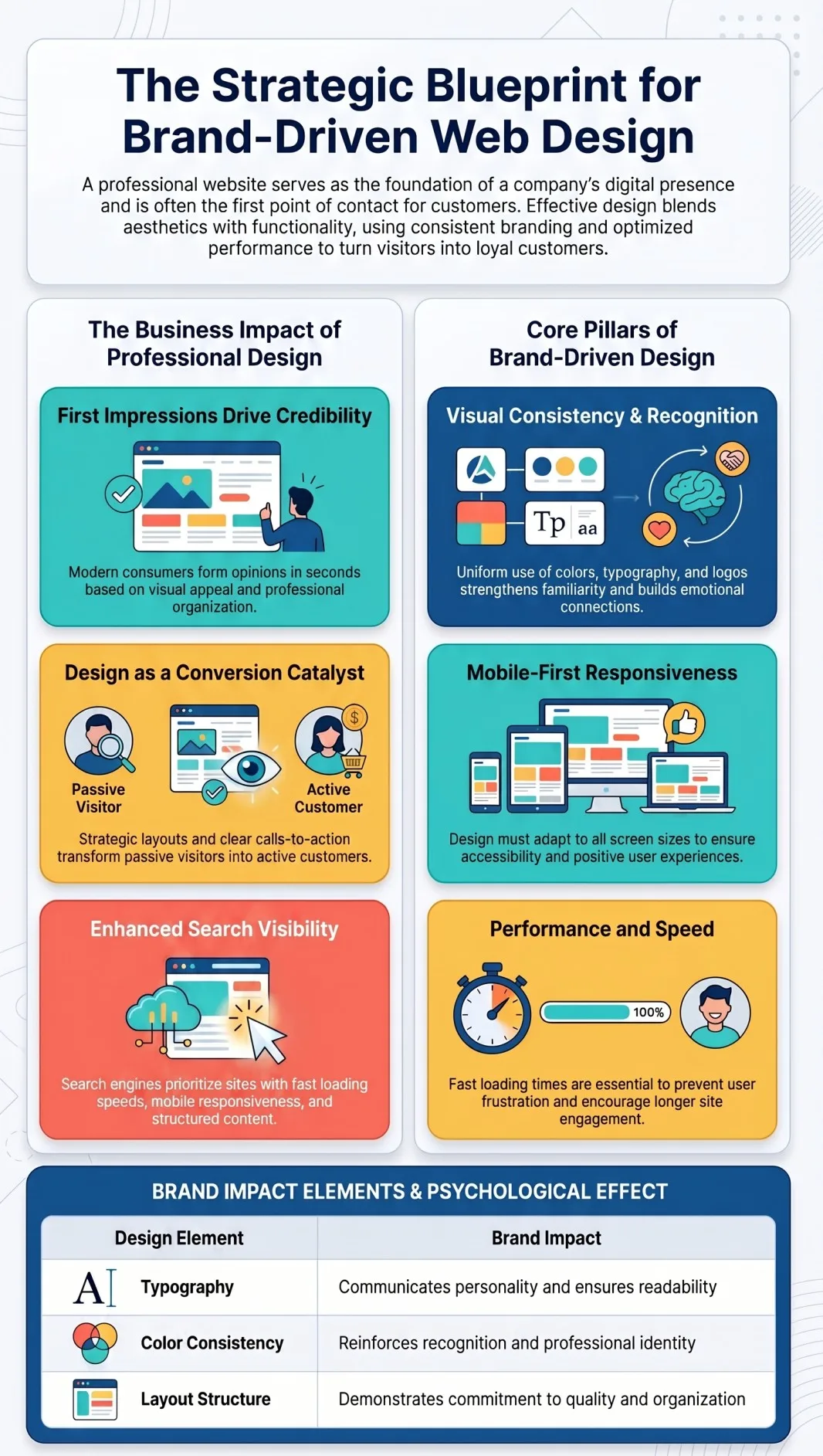
Beyond attracting visitors, website design also supports conversions and business expansion. Strategic layouts, clear calls to action, and user focused elements help transform visitors into customers. A well designed website becomes a powerful asset that supports sales, lead generation, and customer retention.
Create a Strong First Impression
First impressions have a lasting effect on customer behavior. A website often serves as the digital storefront of a business, making appearance one of the most important factors influencing trust.
A clean and visually appealing layout immediately communicates professionalism and reliability. Visitors who encounter organized content and attractive design elements are more likely to continue exploring the website. In contrast, outdated or cluttered websites may create doubts about the credibility of a business.
Professional design helps companies demonstrate their commitment to quality. When customers feel confident in the appearance of a website, they are more willing to engage with the brand and consider its products or services.
Use Consistent Colors and Visual Elements
Consistency is one of the most valuable tips on website design because it strengthens brand recognition and improves the user experience. Using the same colors, typography, logos, and design elements throughout the website creates a unified appearance.
Visual consistency helps customers associate specific elements with a brand. Over time, these familiar elements contribute to stronger recognition and improved trust. Consistent design also creates a smoother browsing experience because visitors know what to expect as they move between pages.
Businesses with strong visual consistency often appear more professional and organized. This positive perception can influence purchasing decisions and encourage long term customer loyalty.
Prioritize User Experience
User experience remains one of the most important factors in successful website design. Visitors expect websites to be simple, responsive, and easy to navigate. When users encounter unnecessary obstacles, they are likely to leave and seek alternatives.
Clear menus, logical page structures, and well organized content make it easier for users to locate information quickly. Positive experiences encourage visitors to remain on the site longer and interact with multiple pages.
Improving user experience also benefits customer satisfaction. Happy users are more likely to revisit the website, recommend the business to others, and become loyal customers. A user centered approach strengthens both branding and long term business growth.
Maintain Mobile Responsiveness
Modern internet users access websites through smartphones, tablets, and desktop computers. Responsive design ensures that websites automatically adapt to different screen sizes and provide a consistent experience across devices.
Mobile friendly websites improve accessibility and create a better experience for users who prefer browsing on smaller screens. Since mobile traffic continues to increase, responsive design has become an essential component of professional website development.
Search engines also prioritize mobile friendly websites, making responsiveness important for both usability and visibility. Businesses that invest in responsive design can reach wider audiences and deliver a more enjoyable experience for their customers.
Strengthen Brand Recognition Through Typography
Typography plays a major role in shaping how visitors perceive a brand. Although many businesses focus heavily on colors and images, font selection also contributes significantly to the overall identity of a website.
Consistent typography creates a sense of professionalism and improves readability. The style of text used across pages helps communicate the personality of the business. Whether a brand wants to appear modern, creative, or traditional, typography influences how that message is received by visitors.
Easy to read fonts also improve the user experience by allowing customers to consume information comfortably. When typography remains consistent throughout the website, it creates visual harmony and reinforces brand recognition.
Focus on Website Speed and Performance
Website performance has a direct impact on customer satisfaction and online success. Visitors expect pages to load quickly and provide immediate access to information. Slow websites often frustrate users and increase the likelihood that they will leave before interacting with the content.
Optimized performance creates a smoother browsing experience and encourages users to spend more time on the website. Faster websites also contribute to improved customer satisfaction and stronger engagement.
Also read: How to Improve Website Load Speed Using Content Delivery Networks
Businesses that prioritize website speed demonstrate their commitment to providing a quality experience. Performance optimization supports both branding efforts and overall business growth.
Tips for Optimizing Website Loading Speed and Performance
Improving website speed begins with understanding current performance levels. Measuring performance allows businesses to identify potential issues and make informed improvements. Monitoring loading times helps ensure that visitors receive a fast and reliable experience.
Table Explaining Website Speed Factor
| Factor | Impact on Performance | Benefit to Users |
|---|---|---|
| Image Optimization | Large image files can slow down page loading times. Optimizing image sizes improves performance across different devices while maintaining visual quality. | Faster loading pages and a better browsing experience. |
| Code Optimization | Excessive scripts and unnecessary resources can create delays. Streamlined code improves website efficiency and responsiveness. | Smoother navigation and quicker access to content. |
| Caching Techniques | Caching stores frequently used resources, allowing pages to load faster for returning visitors. | Improved satisfaction and a more seamless experience. |
| Reliable Hosting | Strong hosting infrastructure provides stability and helps websites manage growing traffic effectively. | Consistent performance and reduced downtime. |
| Latency and Network Performance | Reducing latency speeds up content delivery and improves overall website responsiveness. | Faster access to information and a better user experience. |
Performance optimization benefits both customers and search engines. Websites that load quickly are more likely to retain visitors and achieve better search visibility.
Also read: Top 6 Hosting Providers with Fast Website Loading Speeds
Improve Search Visibility With SEO Friendly Design
Search engine optimization and website design work together to increase online visibility. A website that combines attractive design with SEO principles has a greater chance of reaching potential customers.
Organized structures, responsive layouts, and optimized content make it easier for search engines to understand the purpose of a website. Strong design supports better rankings while creating a positive experience for visitors.
SEO friendly websites attract more organic traffic and increase opportunities for customer engagement. Businesses that integrate optimization into the design process create a stronger online presence and improve their ability to compete in digital markets.
How Can Website Design Impact Search Engine Rankings
Website design significantly influences search engine rankings because it affects both user experience and the ability of search engines to crawl and understand content. A website that provides value to users is more likely to achieve higher visibility in search results.
Table Explaining Website Design Factor
| Factor | How It Impacts SEO | Benefit to Users |
|---|---|---|
| User Experience | Intuitive navigation, organized content, and attractive layouts encourage longer visits and positive engagement signals, which can improve search rankings. | Easier navigation and a more enjoyable browsing experience. |
| Mobile Responsiveness | Responsive designs improve accessibility across devices and help websites perform better in mobile search results. | Consistent experience on smartphones, tablets, and desktops. |
| Page Speed | Fast loading pages are favored by search engines and contribute to better search visibility. | Quicker access to content and reduced frustration. |
| Website Structure | Clear navigation and logical page organization help search engines crawl and index content more efficiently. | Faster access to relevant information and improved usability. |
| Content Readability | Well organized layouts and proper spacing improve engagement and signal content quality to search engines. | Better readability and a more comfortable reading experience. |
SEO friendly design practices such as image optimization and structured content further support search performance. Businesses that prioritize both user experience and optimization create websites that perform well for visitors and search engines alike.
Use Clear Navigation and Site Structure
Navigation serves as the roadmap of a website. Visitors should be able to move between pages easily and locate information without confusion. Complicated navigation can frustrate users and reduce engagement.
Logical structures improve usability while helping search engines understand website content. Clear menus and organized categories contribute to a better overall experience for customers.
Well structured websites encourage visitors to explore additional pages, increasing engagement and supporting business goals. Effective navigation creates confidence and strengthens customer trust.
Add Strong Calls to Action
Website design should guide visitors toward meaningful actions. Clear calls to action help users understand what steps to take next, whether contacting the business, requesting information, or making purchases.
Strategically placed calls to action improve conversions by directing visitors toward specific goals. Businesses that make actions simple and obvious often experience better engagement and stronger results.
Effective calls to action support business growth while improving the overall user experience. When visitors clearly understand their options, they are more likely to interact with the brand.
Select the Right Website Platform
Choosing the right website platform is an important decision because it influences functionality, scalability, and long term business growth. Every business has unique requirements, and selecting a platform that aligns with those needs helps create a stronger digital presence.
Businesses that prefer simplicity often benefit from platforms with user friendly interfaces and minimal technical requirements. Companies focused on branding and visual presentation may prioritize platforms that offer modern templates and design flexibility. Organizations planning to expand significantly often seek platforms that provide greater customization and long term scalability.
A suitable platform should also support essential features such as search engine optimization, analytics, and responsive design. Investing time in selecting the right platform helps businesses build a website that can grow alongside their changing goals.
Leverage Modern Design Tools
Professional website design often depends on the use of modern tools that improve efficiency and creativity. These tools help designers and developers create visually appealing websites while maintaining consistency and functionality.
Collaborative design platforms make it easier for teams to work together and ensure that projects remain aligned with brand standards. Development tools support responsive layouts and improve the overall quality of the final website.
Using modern solutions allows businesses to create engaging digital experiences while maintaining productivity. The right tools help transform ideas into professional websites that strengthen brand identity and improve customer engagement.
Build Trust Through High Quality Design
Trust is one of the most valuable assets a business can develop. Website design plays a major role in creating confidence among visitors and influencing their perception of a brand.
Professional layouts, consistent branding, and organized content help establish credibility. Visitors are more likely to interact with businesses that appear reliable and trustworthy. High quality design demonstrates attention to detail and shows that a company values customer experience.
Trust also contributes to customer loyalty. Users who feel comfortable with a website are more likely to return, recommend the brand to others, and develop long term relationships with the business.
What Role Does Website Design Play in E Commerce Success
Website design plays a crucial role in the success of e commerce businesses because it directly influences customer trust, user experience, engagement, and sales. Since an e commerce website functions as a digital storefront, its appearance and usability can determine whether visitors become customers.
First impressions are especially important in online shopping. A visually appealing and professionally organized website creates confidence and encourages visitors to continue exploring products. Strong design communicates credibility and helps reduce uncertainty among potential customers.
User experience also has a significant impact on e commerce success. Customers expect simple navigation and smooth purchasing experiences. Websites that make it easy to locate products and complete transactions help reduce frustration and encourage conversions. Positive experiences also contribute to higher customer satisfaction and repeat purchases.
Mobile responsiveness has become increasingly important because many consumers shop using smartphones and tablets. Responsive websites provide a consistent experience across devices, helping businesses reach larger audiences and retain mobile customers.

Website design also supports brand identity. Consistent colors, fonts, and visual elements reinforce recognition and create memorable experiences. Strong branding encourages customer loyalty and increases the likelihood that users will return in the future.
Search engine visibility is another advantage of professional e commerce design. Fast loading pages and organized website structures improve SEO performance and help attract organic traffic. Increased visibility creates more opportunities for sales and long term growth.
Also read: How to Choose an SEO Platform for Small Business Websites
Conversion optimization is equally important. Clear calls to action, effective product displays, and simplified checkout processes increase the likelihood that visitors will complete purchases. These improvements directly contribute to higher revenue and stronger business performance.
Modern e commerce websites are increasingly using advanced technologies to deliver personalized experiences. Customized recommendations and data driven experiences improve customer engagement and provide businesses with a competitive advantage.
Ultimately, professional website design supports every stage of the customer journey. From attracting visitors to encouraging repeat purchases, effective design contributes to sustainable growth in the competitive online marketplace.
References:
- The Best Web Design Tools of 2025: Top 10 Tools for Designers
https://www.lightflows.co.uk/blog/the-best-web-design-tools-of-2025-the-top-10/ - Best Web Design Software for Building Modern Websites
https://cpoclub.com/tools/best-web-design-software/ - 17 Essential Steps to Improve Website Speed and Performance
https://www.marketmymarket.com/17-essential-steps-to-improve-your-website-speed/ - How to Improve Website Performance and Loading Speed
https://sematext.com/blog/improve-website-performance/ - Best Website Builders for Small Businesses
https://www.webnode.com/blog/small-business-website-builder/ - How Web Design Influences SEO Rankings
https://www.boralagency.com/web-design-drives-higher-seo/ - Can Website Design Impact Search Engine Rankings? Understanding the Connection
https://www.2pointagency.com/glossary/can-web-design-impact-search-engine-rankings-understanding-the-connection/ - The Impact of Web Design on SEO Performance
https://www.neue.world/webflow/blog/the-impact-of-web-design-on-seo/
Conclusion
Following professional tips on website design helps businesses create stronger brand identities and build meaningful relationships with customers. A well designed website improves credibility, enhances user experience, increases search visibility, and supports long term business growth.
Consistent branding, responsive layouts, optimized performance, and user focused design principles all contribute to creating memorable digital experiences. Businesses that invest in quality website design position themselves for greater success and establish stronger connections with their audiences.
As competition continues to increase in the digital landscape, professional website design remains one of the most effective tools for building trust, improving visibility, and strengthening brand identity.
Frequently Asked Questions
Why are tips on website design important for businesses?
Professional website design improves brand recognition, strengthens trust, and creates better experiences for visitors.
How does website design affect brand identity?
Website design communicates a company’s personality through colors, typography, and visual consistency, helping customers recognize and remember the brand.
Can website design improve search engine rankings?
Yes. Responsive layouts, fast loading pages, and organized content help websites perform better in search results.
Why is mobile responsiveness important?
Responsive websites provide better experiences across smartphones, tablets, and desktop devices, helping businesses reach wider audiences.
How does website speed affect user experience?
Fast websites improve satisfaction and encourage visitors to remain on the site longer.
What role does website design play in e commerce success?
Website design influences trust, customer engagement, conversions, and overall business growth, making it essential for online stores.
Why are calls to action important in website design?
Calls to action guide visitors toward meaningful actions such as contacting a business or making purchases.
How does consistent branding benefit businesses?
Consistent branding improves recognition, strengthens trust, and creates memorable customer experiences.

Dony Garvasis is the founder of Search Ethics, a freelance SEO consultant, and a passionate technology blogger. With over 8 years of experience in SEO, blogging and content marketing, I provide expert content on Tech, digital marketing, SEO, Artificial intelligence, gadgets, science, automobiles, lifestyle, tips, tutorials and much more. My mission is simple: Ethical Search, Genuine Results! I will make sure people everywhere get trustworthy and helpful information.