Now Reading: The Back Button Hijacking Is a Google Spam Violation
-
01
The Back Button Hijacking Is a Google Spam Violation

Back button hijacking is now officially classified as a malicious practice under Google’s spam policies, meaning websites using it must remove such code before June 15, 2026, or risk penalties. This deceptive technique disrupts normal browser behavior, harms user trust, and negatively affects both SEO performance and overall user experience.
Understanding the New Spam Policy on Back Button Hijacking
Google has expanded its spam policies to directly address back button hijacking, identifying it as a deceptive behavior that violates user expectations. When users click the back button in their browser, they expect to return to the previous page they visited. This is a fundamental part of how web navigation works. However, back button hijacking interferes with this expectation by preventing users from leaving a page naturally.
By officially categorizing this behavior under malicious practices, Google is sending a clear message to website owners and developers. Any attempt to manipulate browser navigation in a way that traps users or redirects them unexpectedly is now considered spam. Websites that continue using such techniques after June 15, 2026, may face spam actions that could impact visibility in search results.
Read spam policy for “back button hijacking” from Google Search Central Blog
What Is Back Button Hijacking and How It Works
Back button hijacking is a deceptive web practice where a website interferes with the browser’s back button functionality, preventing users from returning to the previous page. Instead of navigating back as expected, users may be redirected to different content, advertisements, or even the same page repeatedly.
This behavior is typically achieved using JavaScript techniques that manipulate browser history. For example, a website might insert fake entries into the browsing history, making it appear as though there are multiple pages to go back through. When the user clicks the back button, they remain on the same page or are redirected elsewhere.
Also read: Google CEO Says Search Will Soon Act Like an AI Agent Manager
In some cases, users may encounter redirect loops where pressing the back button triggers continuous reloading or navigation to similar pages. This creates a frustrating experience and makes it difficult to exit the site.
The core issue with back button hijacking is that it overrides user intent. Instead of respecting the user’s choice to leave a page, it forces them to stay engaged with content they may no longer want to see.
Why Back Button Hijacking Is Considered a Malicious Practice
Google considers back button hijacking a malicious practice because it breaks a fundamental expectation of web browsing. Users rely on consistent and predictable navigation behavior. When that expectation is violated, it creates confusion, frustration, and distrust.
The intent behind this technique is often to artificially increase engagement metrics such as pageviews, session duration, or ad impressions. However, these gains come at the cost of user satisfaction. Rather than encouraging genuine interaction, back button hijacking forces users into unwanted actions.
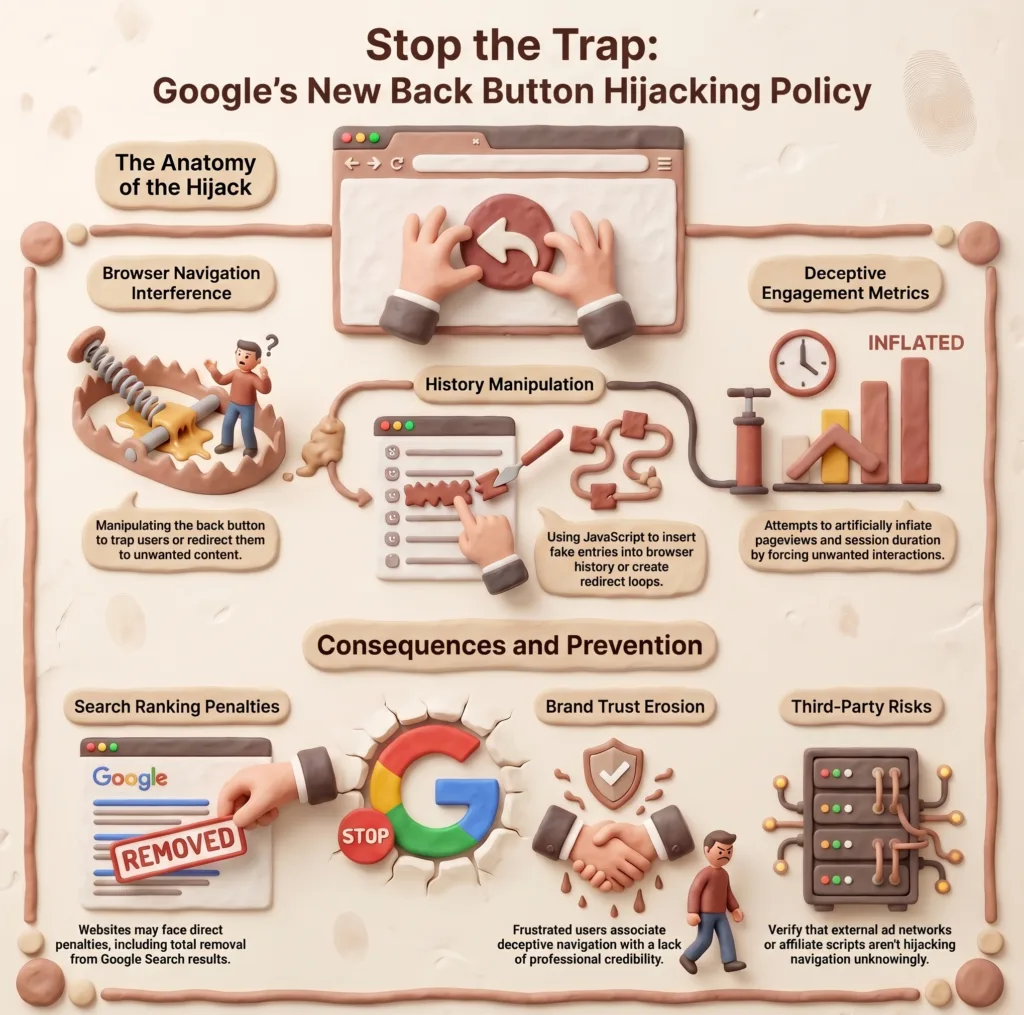
Google’s New Mandate Against Back Button Hijacking
This approach is inherently deceptive because it manipulates user behavior without their consent. It prioritizes short term gains over long term trust and credibility. As a result, Google views it as harmful not only to users but also to the overall quality of the web ecosystem.
By enforcing stricter policies, Google aims to discourage such practices and promote ethical web design that respects user autonomy.
Impact on User Experience and Trust
Back button hijacking has a direct and negative impact on user experience. When users are unable to navigate freely, they feel trapped and manipulated. This leads to frustration and often results in users abandoning the site entirely.
Trust is a critical factor in online interactions, especially in areas like e commerce. When users encounter deceptive navigation behavior, they may associate it with a lack of credibility or professionalism. This can damage the reputation of a brand and reduce the likelihood of repeat visits.
Also read: Google Workspace Studio and the Future of Enterprise AI Agents
A smooth and intuitive browsing experience is essential for retaining users. Any disruption to this flow can create friction and reduce overall satisfaction. Back button hijacking introduces unnecessary complexity and confusion, making it harder for users to achieve their goals.
Over time, repeated negative experiences can lead to a decline in user loyalty and engagement, which ultimately affects business performance.
Effects on Online Shopping and Conversions
In the context of online shopping, back button hijacking can significantly harm conversion rates. Shoppers expect to browse products, compare options, and navigate between pages. When this process is interrupted, it creates barriers to completing a purchase.
If users are unable to return to search results or previous product pages, they may feel forced into decisions or become frustrated enough to leave the site. This increases the likelihood of cart abandonment and reduces overall sales.
Additionally, the perception of being manipulated can deter users from trusting the platform with sensitive information such as payment details. This further reduces conversion rates and impacts revenue.
Also read: How to Sign a Document in Google Docs
A positive shopping experience relies on transparency and ease of use. Back button hijacking undermines both, making it a significant risk for e commerce businesses.
SEO Consequences and Search Ranking Impact
Back button hijacking does not only affect users, it also has serious implications for search engine optimization. Google uses various signals to evaluate the quality of a website, including user behavior.
When users quickly leave a site or repeatedly attempt to navigate away, it can indicate dissatisfaction. High bounce rates and negative engagement signals may lead to lower rankings in search results.
With the introduction of this new spam policy, the risks become even more significant. Websites that continue to use back button hijacking may face direct penalties, including reduced visibility or removal from search results.
Also read: Google’s New Content Rules: Why Genuine, Human Content Ranks Higher?
This makes it essential for website owners to prioritize ethical practices and ensure compliance with Google’s guidelines. Long term SEO success depends on delivering a positive user experience, not manipulating user behavior.
What Causes Back Button Hijacking
Back button hijacking is primarily caused by scripts and techniques that manipulate browser behavior. One common method involves altering the browser history by adding or replacing entries. This creates the illusion of multiple pages, even when the user is not actually navigating away.
Another cause is the use of redirects and loops. Scripts can detect when a user clicks the back button and immediately redirect them to another page. In some cases, this results in continuous loops that make it difficult to exit the site.
Also read: Getting Started With Google’s Gemini CLI
Third party code is also a significant contributor. Advertising networks, pop ups, affiliate links, and certain engagement tools may include scripts that interfere with navigation. Even if the website owner did not intentionally implement these features, they are still responsible for the behavior of their site.
Understanding these causes is essential for identifying and removing back button hijacking elements. Regular audits and careful integration of third party tools can help prevent such issues.
Compliance Deadline and What Website Owners Should Do
Google has provided a clear deadline of June 15, 2026, for website owners to remove any back button hijacking code. This gives developers and businesses time to review their sites and make necessary changes.
The first step is to audit the website for any scripts or behaviors that interfere with normal navigation. This includes reviewing custom code as well as third party integrations. Any elements that manipulate browser history or trigger unexpected redirects should be removed.
It is also important to test the user experience across different devices and browsers. Ensuring that the back button functions as expected is a key part of compliance.
By taking proactive steps, website owners can avoid penalties and improve overall user satisfaction. Compliance is not just about avoiding consequences, it is also an opportunity to build trust and credibility.
Also read: New Youtube AI Monetization Policy Explained
The Role of Browsers in Preventing Abuse
Modern browsers are also taking steps to address back button hijacking. Updates are being introduced to prevent websites from abusing navigation features. For example, browsers may ignore history changes that do not involve direct user interaction.
These changes are designed to protect users and ensure a consistent browsing experience. While they help reduce the impact of malicious practices, they do not replace the need for website owners to follow ethical guidelines.
Collaboration between search engines and browser developers highlights the importance of user centric design. Together, these efforts aim to create a safer and more reliable web environment.
Ethical Web Design and Long Term Benefits
Avoiding back button hijacking is part of a broader commitment to ethical web design. Websites that prioritize user experience, transparency, and trust are more likely to succeed in the long term.
By respecting user intent and providing clear navigation, businesses can build stronger relationships with their audience. This leads to higher engagement, better conversion rates, and improved search rankings.
Ethical practices also reduce the risk of penalties and ensure compliance with evolving guidelines. As search engines continue to emphasize user experience, maintaining high standards becomes increasingly important.
Ultimately, focusing on user needs is not just a best practice, it is a competitive advantage.
Also read: Google Meet Finally Fixes a Major Presentation Audio Problem
Conclusion
Google’s new spam policy on back button hijacking marks a significant step toward improving user experience and maintaining trust across the web. By classifying this behavior as a malicious practice, Google is reinforcing the importance of transparent and user friendly design. Website owners must act before June 15, 2026, to remove any such techniques and ensure compliance. In doing so, they not only avoid penalties but also create a better, more trustworthy experience for their users.
Frequently Asked Questions
What is back button hijacking
Back button hijacking is a deceptive technique where websites interfere with the browser’s back button, preventing users from returning to the previous page.
Why is back button hijacking harmful
It frustrates users, breaks trust, disrupts navigation, and negatively impacts both user experience and search rankings.
What is the deadline to remove back button hijacking
Website owners must remove such practices before June 15, 2026, to avoid potential penalties.
Can back button hijacking affect SEO
Yes, it can lead to poor user signals and may result in lower rankings or spam actions from Google.
What causes back button hijacking
It is caused by scripts that manipulate browser history, create redirects, or originate from third party tools like ads and pop ups.
How can I fix back button hijacking on my site
Audit your site for harmful scripts, remove any code that interferes with navigation, and ensure the back button works as expected.

Dony Garvasis is the founder of Search Ethics, a freelance SEO consultant, and a passionate technology blogger. With over 8 years of experience in SEO, blogging and content marketing, I provide expert content on Tech, digital marketing, SEO, Artificial intelligence, gadgets, science, automobiles, lifestyle, tips, tutorials and much more. My mission is simple: Ethical Search, Genuine Results! I will make sure people everywhere get trustworthy and helpful information.