Now Reading: VAR Football Technology Explained to Fans Across the Globe
-
01
VAR Football Technology Explained to Fans Across the Globe
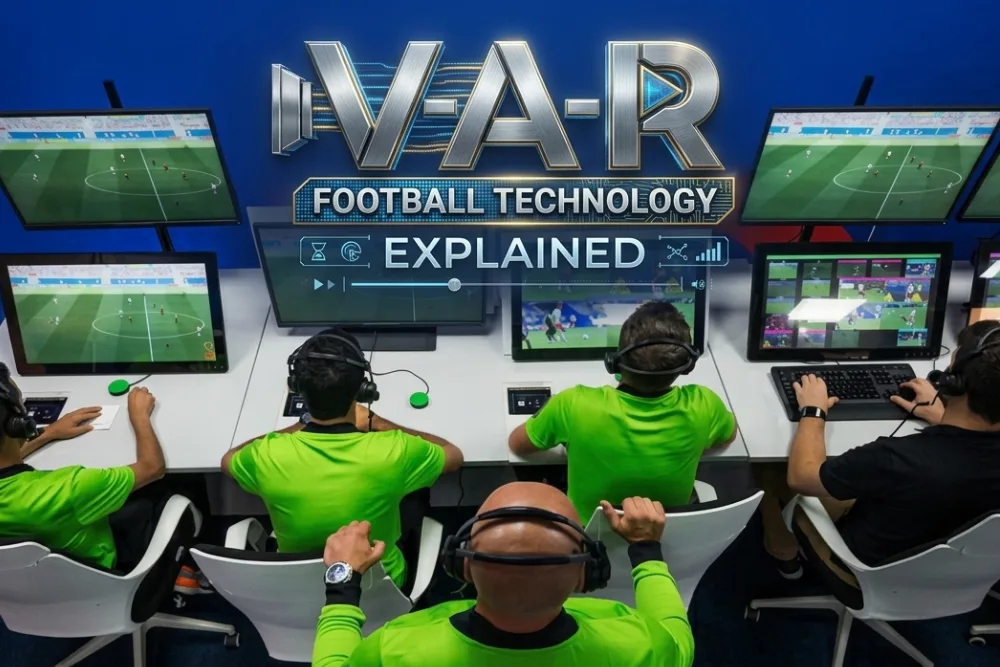
If you have ever wondered why a referee suddenly pauses a football match and points to their ear before making a crucial decision, the answer is VAR football technology.
VAR, or Video Assistant Referee, helps officials review important moments during a match to reduce human error, improve fairness, and ensure the correct decisions are made without taking away the referee’s authority.
Football is one of the most loved sports in the world, and every goal, penalty, or red card can completely change the outcome of a match. For decades, referees had only a split second to make difficult decisions while thousands of fans watched from the stadium and millions more followed on television.
Even experienced referees occasionally made mistakes because of the speed of the game.
That is where VAR football technology changed everything. Instead of relying only on what the referee sees on the pitch, officials now have access to multiple camera angles and video replays that help confirm whether an important decision was correct.
Since its official introduction into professional football, VAR has become one of the biggest technological developments in the sport.
In this complete guide, you will learn what VAR football technology is, how it works, the official rules behind it, how it improves decision making, and why it has become an important part of modern football.
What is VAR technology in football?
VAR stands for Video Assistant Referee. It is a technology assisted officiating system designed to support the on field referee during a football match. Rather than replacing the referee, VAR provides additional information through video replays whenever there is a possibility that a significant mistake has been made during an important moment of the game.
The main purpose of VAR football technology is to reduce human error while maintaining fairness and accuracy. Football is played at an extremely fast pace, making it impossible for referees to see every incident from the perfect angle. VAR provides another layer of support by allowing trained officials to review multiple camera angles before advising the referee.
One of the most important aspects of VAR is that it only becomes involved when there is a clear and obvious error or a serious missed incident. This principle helps prevent unnecessary interruptions while ensuring that major decisions are as accurate as possible.
VAR is allowed to review only four specific categories of decisions during a match.
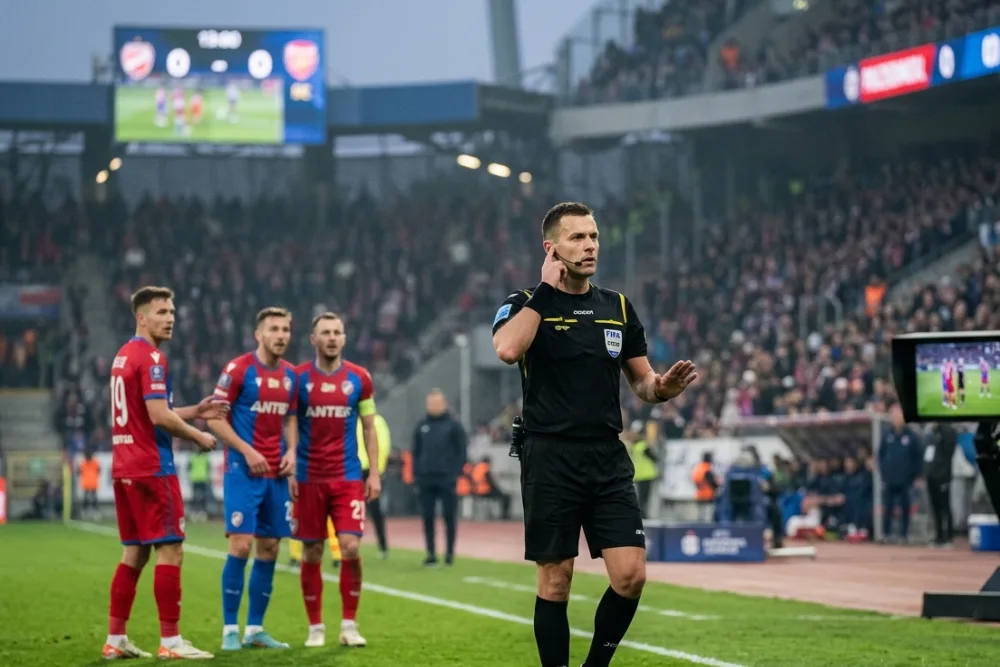
The first involves deciding whether a goal should stand. Before confirming a goal, VAR checks whether there were any offences during the attacking move. This includes possible offsides, fouls, handballs, or situations where the ball may have gone out of play before entering the goal. If any offence is detected, VAR immediately informs the referee for further review.
The second category involves penalty decisions. Football matches can often be decided by a single penalty, making these situations extremely important. VAR reviews whether a penalty should have been awarded or whether an incorrect penalty was given. It also checks if an offence actually occurred inside the penalty area.
The third category covers direct red card incidents. Serious foul play, violent conduct, dangerous tackles, biting, spitting, and other severe offences may all be reviewed through VAR. However, VAR generally does not intervene for second yellow cards unless there is mistaken identity.
The fourth category involves mistaken identity. Occasionally, a referee may accidentally caution or send off the wrong player during a crowded incident. VAR helps identify the correct player so that disciplinary action is applied fairly.
References used:
Video Assistant Referee (VAR) protocol
VAR never makes the final decision
An important point many football fans misunderstand is that VAR never makes the final decision. Instead, it acts as an assistant that reviews the available evidence and communicates with the referee. The referee remains the highest authority on the field and always has the final say after considering the information provided.
Sometimes the referee accepts the advice received through the communication system. In other situations, the referee walks to the pitch side monitor to conduct an on field review before making a final decision. This process ensures transparency because everyone can see that the referee personally reviewed the footage.
VAR football technology officially became part of the Laws of the Game after being approved by the International Football Association Board in 2018. Since then, it has been introduced across many of the world’s biggest football competitions, including the FIFA World Cup, the Premier League, and the UEFA Champions League.
Behind every VAR decision is an experienced team working together. Multiple assistant officials monitor different camera feeds while replay operators quickly provide the most suitable camera angles. Their combined effort helps ensure that every recommendation given to the referee is based on the clearest available evidence.
Ultimately, VAR football technology exists to improve the quality of officiating. While it cannot eliminate every controversial moment, it significantly reduces the number of major mistakes that could unfairly influence the outcome of a football match.
Quick Summary
| Question | Answer |
|---|---|
| How many situations can VAR review? | Only 4 specific categories. |
| Does VAR review every decision? | No. It only intervenes for a clear and obvious error or a serious missed incident. |
| Who makes the final decision? | The on-field referee always has the final say after receiving advice from VAR. |
| Can VAR review yellow cards? | Generally No. It only becomes involved if there is mistaken identity or the incident may warrant a direct red card instead. |
How does the Video Assistant Referee system operate?
Understanding how VAR football technology operates helps explain why some reviews take only a few seconds while others require more time. Although fans usually notice only the referee waiting for a decision, there is an entire team working behind the scenes in a dedicated video operation room.
The Video Assistant Referee is an officially appointed match official with independent access to live match footage. Rather than standing on the pitch, the VAR works from a specialized control room equipped with advanced technology that receives every available camera angle from the stadium.
Supporting the VAR are Assistant Video Assistant Referees, commonly known as AVARs, along with replay operators. Each member has clearly defined responsibilities that allow reviews to happen quickly and efficiently.
One assistant concentrates on monitoring the main broadcast camera, ensuring that the overall flow of play is carefully observed. Another assistant focuses specifically on offside situations, using dedicated technology and camera angles to determine whether an attacking player was in an offside position during important moments.
A third assistant watches the television broadcast feed while also helping maintain clear communication between the referee on the field and the officials inside the video operation room. Replay operators continuously select the most useful camera angles, slow motion clips, and replays that assist the VAR in analysing incidents accurately.
Also read: Meet Trionda World Cup Ball, The Smartest Football Ever Created
How Modern VAR Systems Use Multiple Stadium Cameras
Modern VAR systems rely on a network of cameras positioned around the stadium. Depending on the competition, the number of cameras may range from four to dozens of high definition cameras covering every possible angle. Some advanced competitions also use high speed cameras that capture incidents with greater detail, making it easier to analyse difficult situations involving player contact or offside decisions.
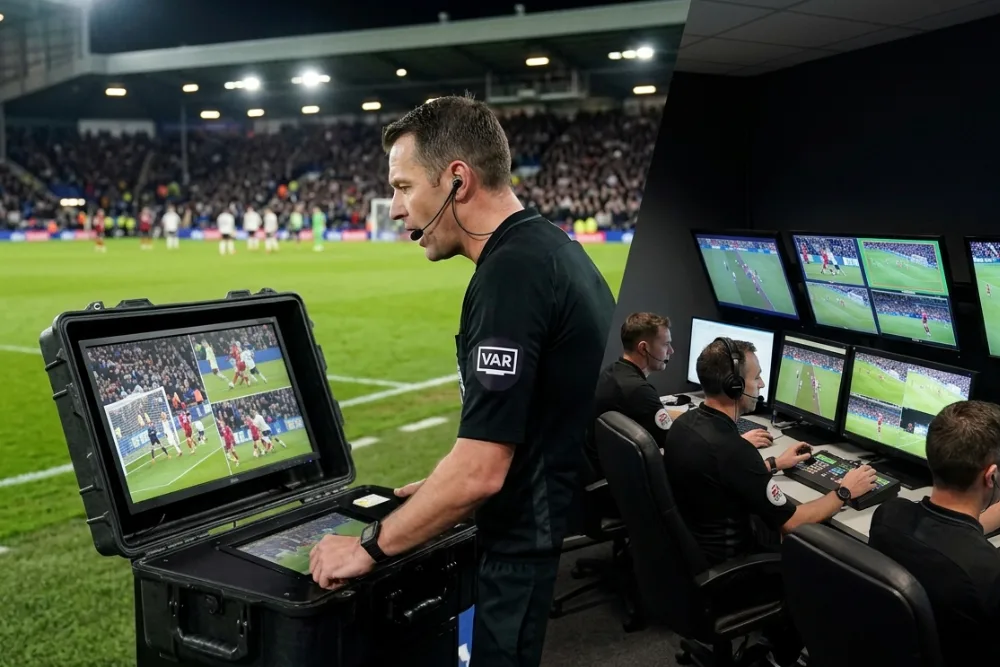
Throughout the entire football match, the VAR automatically checks every important decision made by the referee. Players, coaches, and team officials cannot request a review. Unlike sports where coaches challenge decisions, football follows a completely different approach. Every important incident is automatically monitored without requiring anyone to ask for assistance.
If the VAR identifies what appears to be a clear and obvious error or a serious missed incident, communication with the referee begins immediately. The VAR recommends that the referee review the situation.
Even at this stage, the referee remains fully responsible for the decision making process. Only the referee has the authority to initiate an official review. According to the official protocol, the referee must always make an initial decision during live play. The referee cannot simply wait for VAR before making a call.
Once the review begins, there are generally two possible outcomes;
In some situations, the available evidence is completely factual and straightforward. For example, confirming whether a player was clearly offside or whether the ball crossed the goal line may only require the VAR to provide factual information. In these cases, the referee may accept the advice without leaving the field.
For more subjective decisions, such as determining whether a challenge deserves a penalty or a direct red card, the referee often conducts an on field review. The referee walks to a monitor placed near the touchline and personally watches the replay from several camera angles before making the final decision.
This on field review has become one of the most recognizable features of VAR football technology. Fans inside the stadium and viewers watching on television can clearly see that the referee is carefully reviewing the evidence before announcing the final decision.
One of the principles behind VAR is transparency. The referee remains visible throughout the review process, reinforcing that the final authority continues to rest with the person officiating the match rather than with the officials inside the video operation room.
No strict time limit for review completion
Another interesting feature of the system is that there is no strict time limit for completing a review. Although everyone prefers quick decisions, accuracy always takes priority over speed. Officials take the necessary time to examine every relevant camera angle before confirming the outcome. Any additional time spent reviewing incidents is usually added to stoppage time at the end of each half.
There are also important limitations that help prevent misuse of the system. Players and coaching staff are not allowed to surround the referee or attempt to influence the review. Doing so may result in disciplinary action.
Another important rule involves play restarting after an incident. Once play has stopped and restarted, previous incidents usually cannot be reviewed. However, certain exceptions exist for mistaken identity or serious offences such as violent conduct, biting, spitting, or extremely offensive actions that may still require disciplinary action even after play resumes.
The technology itself continues to evolve as football develops. New camera systems, improved communication equipment, and advanced replay technology allow officials to analyse incidents more accurately than ever before. These improvements help ensure that VAR football technology continues supporting referees while preserving the spirit of the game.
Even though debates occasionally continue among supporters, the operating process behind VAR demonstrates that every important decision follows a structured protocol rather than being based on guesswork. Every review involves multiple trained officials, numerous camera angles, and clearly defined rules before the referee reaches the final verdict.
How does VAR improve decision making in football matches?
VAR football technology was introduced to make football fairer without taking away the authority of the referee. Football is a fast paced sport where a single decision can determine the result of an entire match. Even the most experienced referees can miss incidents because they have only one view of the action. VAR provides an additional layer of support by reviewing key moments from multiple camera angles before advising the referee. The goal is not to interrupt the game unnecessarily, but to ensure that major decisions are as accurate as possible.
Focusing on the most important match changing incidents
Unlike some sports where almost every decision can be reviewed, VAR is intentionally limited to only the most important situations. This approach prevents unnecessary interruptions and keeps the game flowing naturally. The system only becomes involved when there is a clear and obvious error or a serious missed incident involving a goal, a penalty, a direct red card, or mistaken identity.
By limiting reviews to these four categories, VAR concentrates on decisions that have the greatest impact on the outcome of a match. Whether it is confirming a goal, checking a penalty appeal, reviewing a dangerous tackle, or ensuring the correct player receives disciplinary action, VAR focuses on moments that truly matter.
Correcting clear and obvious errors
One of the core principles of VAR football technology is correcting clear and obvious errors. This principle ensures that the system is not used to analyse every minor decision made during a match.
The referee always makes the original decision on the field based on what they see in real time. The VAR continuously monitors every important incident, but only recommends a review if there is convincing evidence that the original decision was incorrect or that an important incident was completely missed.
This balance allows referees to continue managing matches naturally while still receiving support during difficult situations that may benefit from additional video evidence.
Improving accuracy through multiple camera angles
A referee standing on the pitch has only one viewing angle at any given moment. Players may block the referee’s view, or an incident may happen too quickly to judge accurately.
VAR solves this problem by providing access to numerous camera angles positioned throughout the stadium. These cameras capture every important moment from different perspectives, making it easier to identify fouls, handballs, offsides, player contact, and other incidents.
In many professional competitions, high definition and high speed cameras provide extremely detailed footage that helps officials analyse even the smallest movements. This comprehensive view significantly reduces the likelihood of mistakes caused by limited visibility.
Supporting the referee without replacing them
One common misunderstanding among football fans is that VAR makes the decisions instead of the referee. In reality, the opposite is true.
VAR acts purely as an assistant. Its responsibility is to review footage, analyse incidents, and communicate recommendations whenever necessary. The referee remains the only official with the authority to make the final decision.
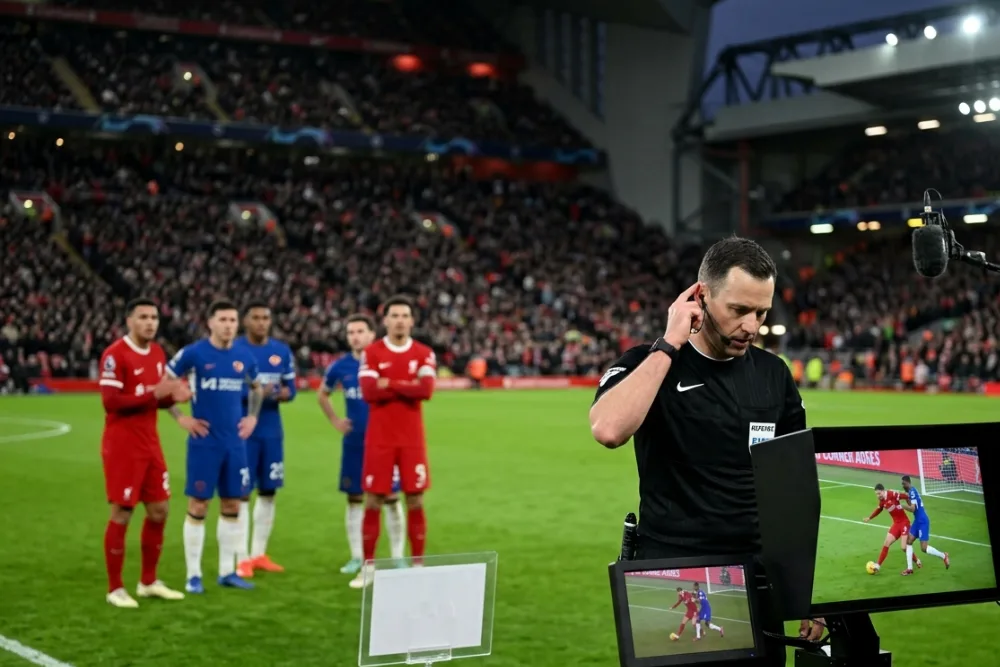
When the VAR believes a review is necessary, the referee may either accept the factual information provided or conduct an on field review using the pitch side monitor. After examining the available evidence, the referee confirms or changes the original decision.
This process preserves the referee’s authority while ensuring that important decisions benefit from additional information.
Increasing transparency during reviews
Transparency is another important benefit of VAR football technology. During the review process, the referee remains visible on the field while communicating with the officials inside the video operation room.
When an incident requires further examination, the referee may walk to the pitch side monitor where players, coaches, spectators, and television viewers can clearly see that the footage is being reviewed.
This visible review process helps increase confidence that decisions are being made carefully rather than arbitrarily. Fans may not always agree with every outcome, but they can understand that the referee personally examined the evidence before reaching a conclusion.
Providing continuous monitoring throughout the match
Unlike traditional officiating, where only the referee and assistant referees monitor play, VAR adds another dedicated team that watches every important incident from start to finish.
The Video Assistant Referee and supporting officials continuously analyse the match using live video feeds from multiple cameras. Every goal, penalty appeal, possible red card offence, and disciplinary incident is automatically checked without requiring requests from players or coaches.
This constant monitoring ensures that important incidents receive immediate attention whenever necessary.
Prioritising accuracy over speed
Football is an emotional sport, and supporters naturally want quick decisions. However, VAR follows the principle that accuracy is more important than speed.
There is no strict time limit for completing a review. Officials carefully analyse every available camera angle before advising the referee. Although some reviews take longer than others, this careful approach helps reduce the chances of incorrect decisions affecting the final result.
Any additional time spent reviewing incidents is added to stoppage time, ensuring that teams do not lose playing time because of the review process.
Improving fairness for players and teams
Every football team expects matches to be decided by skill rather than officiating mistakes. VAR contributes to this goal by reducing the number of incorrect decisions during crucial moments.
A wrongly awarded penalty, an incorrectly disallowed goal, or an unnoticed serious foul can completely change the outcome of a match. By reviewing these situations, VAR helps ensure that teams receive fair treatment throughout the competition.
Although no technology can guarantee absolute perfection, VAR significantly reduces the likelihood of game changing mistakes that might otherwise influence league standings, tournament progression, or championship results.
Challenges and criticism of VAR
Despite its advantages, VAR football technology continues to generate debate among players, coaches, and supporters.
One of the most common criticisms is that reviews can interrupt the rhythm of the game. Football has traditionally been valued for its continuous flow, and pauses for video reviews can reduce some of the excitement during important moments.
Another concern involves extremely close offside decisions. While technology provides accurate measurements, some supporters feel that marginal offsides reduce the spontaneity of goal celebrations.
There are also occasions where subjective decisions, such as determining the severity of a foul or whether sufficient contact occurred for a penalty, continue to divide opinions even after video review.
However, most football organisations believe that these concerns are outweighed by the benefits of making more accurate decisions during the most important moments of a match.
Why VAR remains an important part of modern football
Football continues to evolve alongside technology, and VAR has become one of the sport’s most significant innovations. Rather than attempting to eliminate every controversial decision, the system focuses on correcting the mistakes that have the greatest impact on matches.
By combining experienced referees with advanced video technology, multiple camera angles, and structured review procedures, VAR helps create a fairer playing environment while maintaining the authority of the referee.
As technology continues to improve, VAR football technology is expected to become even faster, more accurate, and more efficient, ensuring that football remains both competitive and fair for players, clubs, and supporters around the world.
What are the official rules governing VAR usage in professional matches?
The use of VAR football technology is governed by strict regulations established by the International Football Association Board, commonly known as IFAB. These official protocols ensure that VAR is applied consistently across professional competitions while protecting the authority of the referee and maintaining the spirit of the game.
VAR officially became part of the Laws of the Game in 2018 after IFAB approved its inclusion following extensive testing. Since then, FIFA has worked closely with IFAB to implement and oversee VAR protocols across domestic leagues and international tournaments.
Unlike many people believe, VAR is not designed to review every decision made during a football match. Instead, the official rules clearly define when video reviews are allowed, who can initiate them, and how the review process must be conducted.
References used:
VAR Frequently Asked Questions
The purpose of VAR under the Laws of the Game
The primary purpose of VAR is to act as a safety net for match officials. Football matches are played at incredible speed, making it impossible for referees to see every incident perfectly.
Rather than replacing human judgement, VAR exists to correct clear and obvious errors or serious missed incidents during match changing situations.
The official philosophy behind the system is often described as minimal interference, maximum benefit. This means the technology should only become involved when absolutely necessary, allowing football to maintain its natural flow while improving decision making.
The four situations where VAR can be used
According to the official VAR protocol, video reviews are limited to only four categories of incidents.
Goal and no goal decisions
Every goal scored during a match is automatically checked by the VAR team before play restarts.
Officials review whether there was an offside offence, a handball, a foul during the attacking move, whether the ball went out of play, or whether any offence occurred before the goal was scored.
If the review identifies a clear problem, the referee is informed immediately before the match continues.
Penalty and no penalty decisions
Penalty decisions often have a major influence on football matches, making them one of the most important areas covered by VAR.
Officials review whether a penalty should have been awarded, whether one was awarded incorrectly, whether the offence occurred inside or outside the penalty area, and whether any attacking offence took place before the incident.
This process helps reduce mistakes involving some of the most significant decisions in football.
Direct red card incidents
VAR can review incidents involving direct red cards for serious offences.
These include serious foul play, violent conduct, denying an obvious goal scoring opportunity, biting, spitting, or offensive and abusive behaviour.
However, the system generally does not intervene for second yellow cards unless mistaken identity is involved.
Mistaken identity
Crowded situations sometimes make it difficult for referees to identify the correct player who committed an offence.
VAR allows officials to correct situations where the wrong player has been cautioned or sent off, ensuring disciplinary action is applied fairly.
This protects both players and the integrity of the competition.
The clear and obvious error principle
One of the most important rules governing VAR football technology is the clear and obvious error standard.
The referee’s original decision remains valid unless video evidence clearly demonstrates that an obvious mistake has been made.
This principle prevents constant interruptions for minor disagreements and ensures that the referee’s judgement continues to play the central role during matches.
For factual decisions, such as offsides or determining whether the ball crossed the goal line, this standard does not apply in the same way because these situations can be confirmed objectively using technology.
Also read: World’s First Humanoid Robot Football Match
The official VAR review process
Every football match that uses VAR follows a carefully structured review process. The protocol is designed to ensure consistency, fairness, and transparency while allowing the referee to remain in complete control of the match.
Every important incident is automatically checked
One of the biggest misconceptions about VAR football technology is that players or coaches can ask for a review. In reality, this never happens.
The VAR team automatically checks every goal, penalty incident, possible direct red card offence, and potential case of mistaken identity throughout the match. These checks happen in the background while play continues, meaning many reviews are completed without fans even noticing.
If the VAR determines that the referee’s original decision appears to be correct, the match continues without interruption.
The referee is the only person who can initiate a formal review
Although the VAR continuously monitors the match, only the on field referee has the authority to begin an official review.
The VAR can recommend that a review should take place, but it cannot force the referee to change a decision. This rule ensures that technology remains a support tool rather than replacing the referee’s judgement.
Another important rule states that the referee must always make an initial decision during live play. Officials are not allowed to avoid making a decision simply because VAR is available.
On field review
When an incident requires further examination, the referee may conduct an on field review.
The referee walks to a monitor positioned beside the pitch and watches the available replays from several camera angles. This allows the referee to personally evaluate the incident before confirming or changing the original decision.
This process also improves transparency because everyone inside the stadium and watching on television can clearly see that the referee is reviewing the evidence before reaching a final verdict.
The referee always has the final decision
Perhaps the most important rule governing VAR football technology is that the referee always has the final authority.
Even after receiving advice from the Video Assistant Referee, the decision ultimately belongs to the referee on the field. The VAR cannot overrule the referee.
This preserves the traditional authority of match officials while providing them with valuable additional information during difficult situations.
No time limit for reviews
Unlike some sports that impose strict review limits, football places greater importance on accuracy.
There is no official time limit for completing a VAR review. Officials carefully analyse every available replay before providing their recommendation.
Although supporters naturally prefer quick decisions, ensuring the correct outcome is considered more important than rushing the review process.
Any time lost during a review is added to stoppage time at the end of the half.
Rules for players and team officials
The official VAR protocol also establishes clear expectations for player and coach behaviour.
Players and team officials are not allowed to surround the referee during a review or attempt to influence the decision making process. Respecting the referee remains an important part of football.
Similarly, coaches and players cannot request a VAR review, challenge a decision, or demand that a particular incident be examined.
These rules help maintain order while ensuring that reviews are conducted fairly and without outside pressure.
Reviews after play has restarted
Another important limitation involves situations where play has already restarted.
In most cases, once the match resumes after an incident, previous situations cannot be reviewed.
There are only a few exceptions, including mistaken identity and serious offences such as violent conduct, biting, spitting, or extremely offensive behaviour that may still require disciplinary action.
These exceptions ensure that serious misconduct does not go unpunished simply because play continued.
The role of VAR officials
The Video Assistant Referee works inside a dedicated video operation room equipped with multiple live camera feeds.
Supporting the VAR are Assistant Video Assistant Referees, commonly known as AVARs, along with replay operators.
Each assistant performs a specific task. One monitors the primary broadcast camera, another specialises in offside decisions, while another assists with communication and television feeds. Replay operators quickly locate the best camera angles so incidents can be reviewed efficiently.
Together, this team provides the referee with accurate and reliable information whenever a review becomes necessary.
Also read: Messi OpenAI Collaboration and the Future of the World Cup
Which companies provide VAR systems for football leagues?
VAR football technology depends not only on trained officials but also on advanced hardware and software developed by specialised technology companies. Several organisations have become recognised worldwide for providing reliable VAR systems to domestic leagues and international competitions.
These companies continue improving their technology to deliver faster reviews, better camera integration, and more accurate decision making.
Hawk Eye Innovations
Hawk Eye Innovations is one of the most recognised names in football technology.
The company provides both VAR systems and Semi Automated Offside Technology for professional football competitions around the world. Its technology uses multiple calibrated cameras positioned throughout the stadium to analyse player positions with exceptional precision.
Hawk Eye has partnered with several major football organisations and leagues, providing complete VAR solutions that include equipment, operator training, referee education, and technical support.
Another advantage of Hawk Eye systems is their ability to coordinate operations remotely from specialised VAR centres, allowing multiple matches to be monitored efficiently.
Dartfish
Dartfish has built a strong reputation through more than two decades of experience in sports video analysis.
Its VAR solutions are designed to support football as well as several other sports that require accurate video assisted officiating.
Dartfish focuses on delivering reliable replay technology that helps referees review incidents quickly while maintaining fairness and consistency throughout competitions.
The company’s experience in performance analysis has also contributed to the development of flexible VAR systems suitable for different levels of football.
SLOMO.TV
SLOMO.TV is considered one of the pioneers of video assisted refereeing.
The company has worked alongside FIFA and IFAB since the early stages of VAR development, helping shape many of the technologies used today.
Its videoReferee system is certified for professional football and can be configured for competitions of different sizes. Some leagues may use smaller systems with fewer cameras, while larger international tournaments can operate using extensive camera networks that provide exceptional coverage.
SLOMO.TV also offers integrated referee communication systems, multiple operator workstations, and comprehensive training programmes that help officials become familiar with the technology.
VOGO
VOGO provides FIFA certified VAR solutions designed for both top level competitions and leagues with smaller budgets.
One of its most notable products is VAR Light, which offers a simplified version of the full VAR system while maintaining many of the same core features.
VAR Light allows developing football competitions to introduce video assisted officiating without the significant infrastructure required for larger systems.
This makes the technology more accessible for leagues that want improved officiating while managing financial constraints.
Choosing the right VAR provider
Football leagues select VAR providers based on several important considerations.
The size of the competition, available budget, stadium infrastructure, camera requirements, technical support, operator training, and long term maintenance all influence the final decision.
Large international tournaments often require highly advanced systems capable of handling dozens of camera feeds simultaneously, while smaller domestic competitions may prefer simplified solutions that still deliver reliable performance.
Regardless of the provider, every approved VAR system must meet strict standards to ensure consistency, reliability, and accurate decision making throughout the competition.
What equipment is typically used in a VAR control room setup?
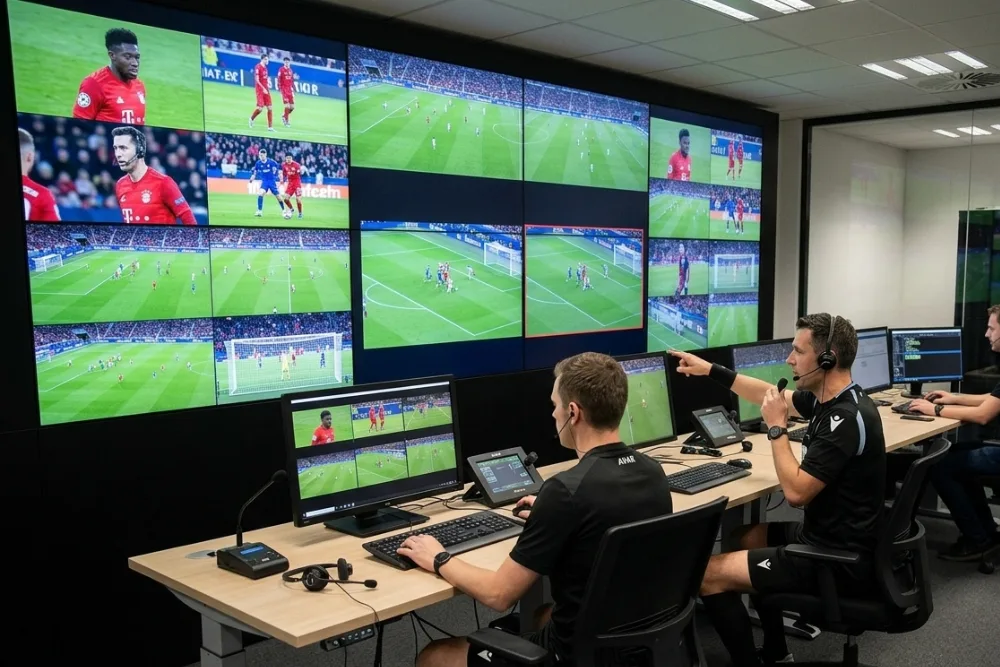
Behind every successful VAR decision is a highly advanced control room equipped with specialised technology. Although supporters usually see only the referee on the pitch, an entire technical environment operates behind the scenes to support every important decision.
The VAR control room functions as the central hub where officials monitor live footage, communicate with the referee, and analyse incidents from multiple camera angles.
High resolution video walls
Large video walls form the centrepiece of most VAR control rooms.
These high resolution displays allow officials to watch numerous camera feeds simultaneously, providing a complete overview of everything happening during the match.
Different camera angles can be displayed at the same time, allowing officials to compare views and identify incidents more accurately.
Many professional systems also include automatic display calibration that maintains consistent image quality throughout long matches.
Graphic controllers
Graphic controllers manage the enormous amount of visual information shown across the video wall.
These specialised devices combine multiple camera feeds and organise them into layouts that allow officials to monitor every important angle efficiently.
Without graphic controllers, handling dozens of simultaneous video sources would be extremely difficult.
Video wall management software
Modern VAR control rooms rely on advanced software to manage all visual content.
This software allows operators to switch between layouts, organise different camera feeds, create customised viewing arrangements, and control the entire display system with remarkable efficiency.
Quick access to the correct replay often makes the difference between a smooth review and unnecessary delays.
Ergonomic workstations
VAR officials often work for long periods while maintaining complete concentration.
For this reason, professional control rooms use ergonomically designed workstations that prioritise comfort and efficiency.
Height adjustable desks, carefully positioned monitors, and organised workspaces help reduce fatigue while improving focus throughout the match.
Comfortable seating with proper lumbar support also helps officials remain alert during extended working hours.
Integrated cable management
A modern control room contains numerous computers, monitors, communication devices, and networking equipment.
Integrated cable management keeps the workspace organised, reducing clutter while improving safety and making equipment easier to maintain.
An organised environment also allows officials to work more efficiently during high pressure situations.
Lighting and environmental controls
Comfort plays an important role inside a VAR control room.
Professional workstations often allow operators to adjust lighting, temperature, and other environmental settings according to their preferences.
A comfortable working environment helps maintain concentration during lengthy football matches where every decision matters.
Communication systems
Clear communication is essential for effective VAR operations.
The control room contains advanced communication equipment that connects the Video Assistant Referee directly with the on field referee.
Officials can discuss incidents instantly while replay operators continue supplying additional camera angles whenever required.
Reliable communication ensures that recommendations are delivered clearly and without unnecessary delays.
Multiple camera systems
One of the most important components of VAR football technology is the network of cameras installed throughout the stadium.
Professional competitions may use numerous high definition cameras positioned at strategic locations around the pitch.
Some competitions also include high speed cameras that capture extremely detailed footage, making it easier to analyse difficult incidents involving player contact or tight offside decisions.
The greater the number of available camera angles, the more accurately officials can evaluate important moments.
KVM solutions
Many professional VAR centres also use KVM technology to simplify operations.
KVM systems allow officials to manage multiple computers and servers from a single workstation.
This reduces equipment clutter while enabling operators to switch quickly between different systems during a review.
Networking infrastructure
A powerful networking system forms the foundation of every VAR control room.
High speed connections ensure that live video feeds, replay footage, communication systems, and official match data are transmitted instantly without interruption.
Reliable networking allows the entire VAR operation to function smoothly from the first whistle until the final minute of the match.
References used:
Conclusion
VAR football technology has transformed modern football by combining experienced referees with advanced video replay systems to improve fairness and accuracy during the game’s most important moments. Rather than replacing the referee, VAR serves as a valuable assistant that helps correct clear and obvious errors involving goals, penalties, direct red cards, and mistaken identity.
The system follows strict rules established by IFAB, operates through a dedicated team of officials inside a specialised video operation room, and relies on sophisticated camera technology, communication systems, and replay equipment. Although debates about VAR continue among football supporters, its contribution to reducing major officiating errors has made it an essential part of professional football around the world.
As technology continues to evolve, VAR football technology will likely become even faster, more accurate, and more efficient, helping preserve the integrity of football while ensuring that important decisions are based on the clearest evidence available.
Frequently Asked Questions
What does VAR mean in football?
VAR stands for Video Assistant Referee. It is a technology assisted system that helps referees review important match incidents using video replays.
Who makes the final decision after a VAR review?
The on field referee always makes the final decision. VAR only provides advice and recommends reviews when necessary.
What incidents can VAR review?
VAR reviews only four situations, goals, penalties, direct red card incidents, and mistaken identity.
Can players request a VAR review?
No. Players, coaches, and team officials cannot request a VAR review. Every important incident is automatically checked by the VAR team.
Does VAR review every decision during a match?
No. VAR only intervenes when there is a clear and obvious error or a serious missed incident involving one of the four reviewable categories.
Why do some VAR reviews take longer?
Officials carefully examine multiple camera angles to ensure the most accurate decision. Accuracy is prioritised over speed, and there is no official time limit for completing a review.
Is VAR used in every football competition?
No. VAR is mainly used in professional competitions that have the required technology and infrastructure, including many major domestic leagues and international tournaments.
What equipment is used in a VAR control room?
A VAR control room typically includes high resolution video walls, multiple monitors, replay systems, communication equipment, ergonomic workstations, networking infrastructure, and specialised software for managing live camera feeds.

Dony Garvasis is the founder of Search Ethics, a freelance SEO consultant, and a passionate technology blogger. With over 8 years of experience in SEO, blogging and content marketing, I provide expert content on Tech, digital marketing, SEO, Artificial intelligence, gadgets, science, automobiles, lifestyle, tips, tutorials and much more. My mission is simple: Ethical Search, Genuine Results! I will make sure people everywhere get trustworthy and helpful information.