Now Reading: These AI Rewording Tools Make Academic Writing Faster
-
01
These AI Rewording Tools Make Academic Writing Faster
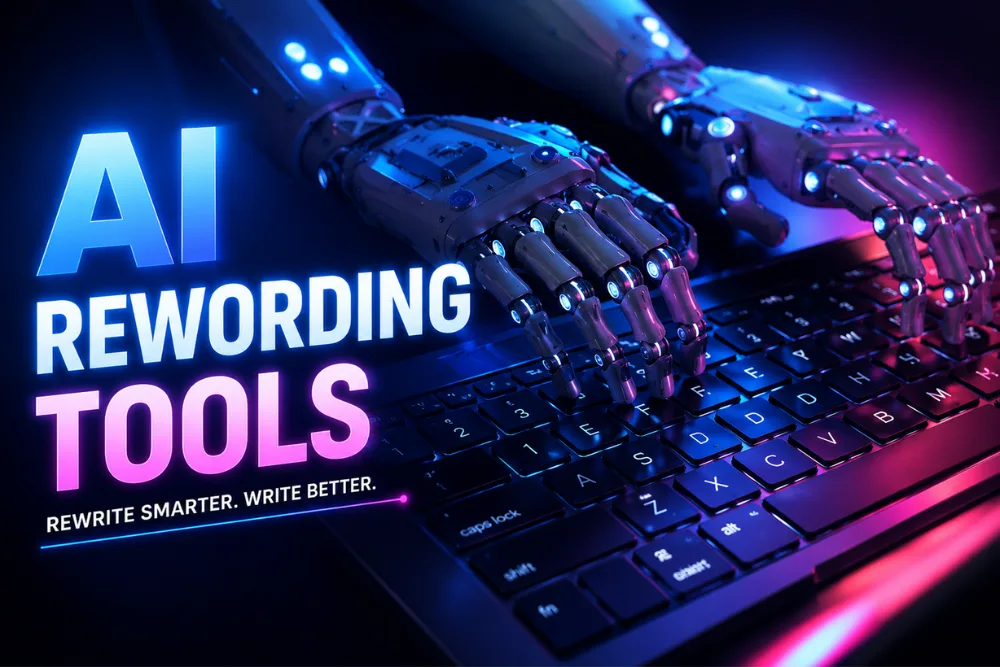
Academic writing becomes faster, clearer, and more professional with the help of a reliable rewording tool. These AI powered tools help students, researchers, and professionals rewrite content naturally while preserving the original meaning. They improve readability, reduce repetitive wording, enhance grammar, and support originality, making academic tasks easier and more efficient.
Understanding What a Rewording Tool Is
A rewording tool is an online application designed to rewrite existing text while keeping the original meaning intact. It is also commonly called a paraphrasing tool because its primary purpose is to express the same idea using different words and sentence structures. These tools use advanced artificial intelligence, natural language processing, and machine learning to analyze text and create improved versions of the content.
In academic writing, students and researchers often need to rewrite sentences for clarity, improve readability, or avoid repetitive language. A rewording tool helps simplify this process by generating alternative versions of paragraphs, essays, and research content in seconds. Instead of manually rewriting large sections of text, users can quickly receive multiple rewritten versions that sound more polished and professional.
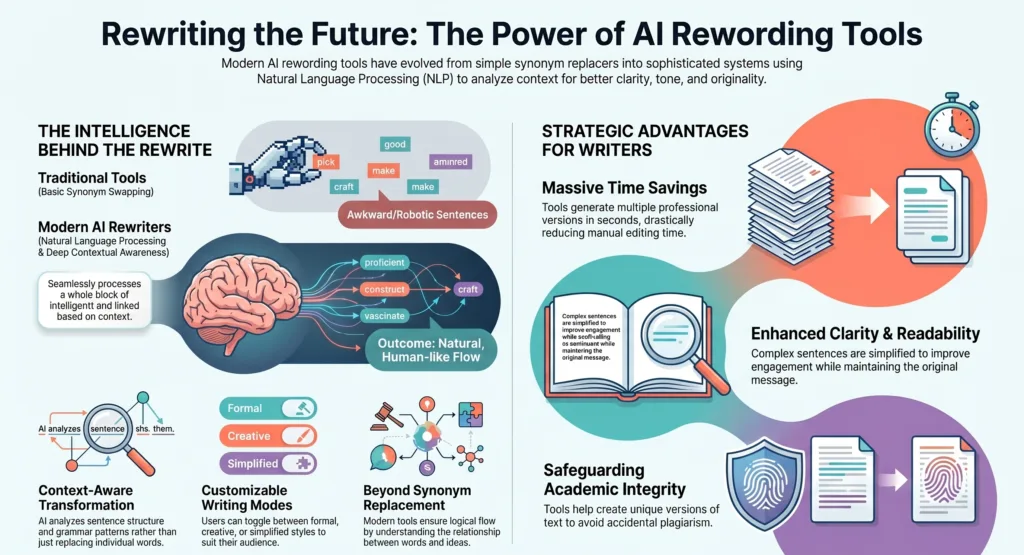
Modern AI powered rewording tools have become much more advanced than traditional synonym replacers. Earlier tools simply swapped words with synonyms, often creating awkward sentences. Today’s tools understand sentence context, grammar, tone, and structure. This allows them to produce natural sounding academic content that maintains logical flow and readability.
Many rewording tools also allow users to customize the style and tone of the rewritten text. For example, users can select formal, academic, creative, or simplified writing modes depending on the purpose of the document. This flexibility makes rewording tools useful for essays, research papers, journal submissions, reports, emails, and professional communication.
How AI Rewording Tools Work
AI rewording tools work by analyzing the input text and understanding its context before generating an alternative version. Users typically paste their original content into the tool, choose a preferred tone or rewriting mode, and then allow the system to process the text.
The artificial intelligence engine studies sentence structure, grammar patterns, vocabulary usage, and contextual meaning. Instead of simply replacing individual words, the tool restructures sentences intelligently while preserving the intended message. This process ensures the rewritten content remains coherent and academically appropriate.
Some advanced rewording tools provide multiple rewriting modes that change the style of the output. A formal mode may produce scholarly language suitable for academic essays, while a fluency mode focuses on smoother readability and grammar improvement. Creative modes may introduce more engaging vocabulary and sentence variety.
The Mechanics and Merits of AI Rewording Tools
Many tools also include adjustable synonym controls. Users can decide how much the wording should change from the original text. A lower setting creates minimal changes for clarity, while a higher setting produces more extensive rewriting.
Modern AI systems also integrate grammar checking, plagiarism awareness, and readability analysis into the rewriting process. This combination allows users to improve sentence quality while ensuring the rewritten content remains original and academically acceptable.
Why Rewording Tools Are Becoming Essential in Academic Writing
Academic writing often requires precision, clarity, originality, and proper structure. Students and researchers frequently struggle with repetitive wording, complex sentence formation, and maintaining a formal academic tone. AI rewording tools help solve these challenges efficiently.
One major reason for the popularity of rewording tools is the increasing workload faced by students and professionals. Essays, assignments, dissertations, reports, and research papers demand extensive writing and editing. A reliable rewording tool reduces the time needed for rewriting and refinement.
These tools are also helpful for non native English speakers who may understand the subject matter but struggle with academic language expression. AI rewriting tools help improve sentence flow, vocabulary usage, and grammatical accuracy while maintaining the intended meaning.
Another important factor is originality. Academic institutions place strong emphasis on avoiding plagiarism and ensuring unique writing. Rewording tools help users create fresh versions of existing content while maintaining proper academic integrity. However, users should still review the final output carefully and cite sources appropriately.
AI based rewriting systems also support learning. Students can compare original and rewritten versions to understand better sentence structure, vocabulary choices, and academic writing styles. Over time, this can improve writing skills and confidence.
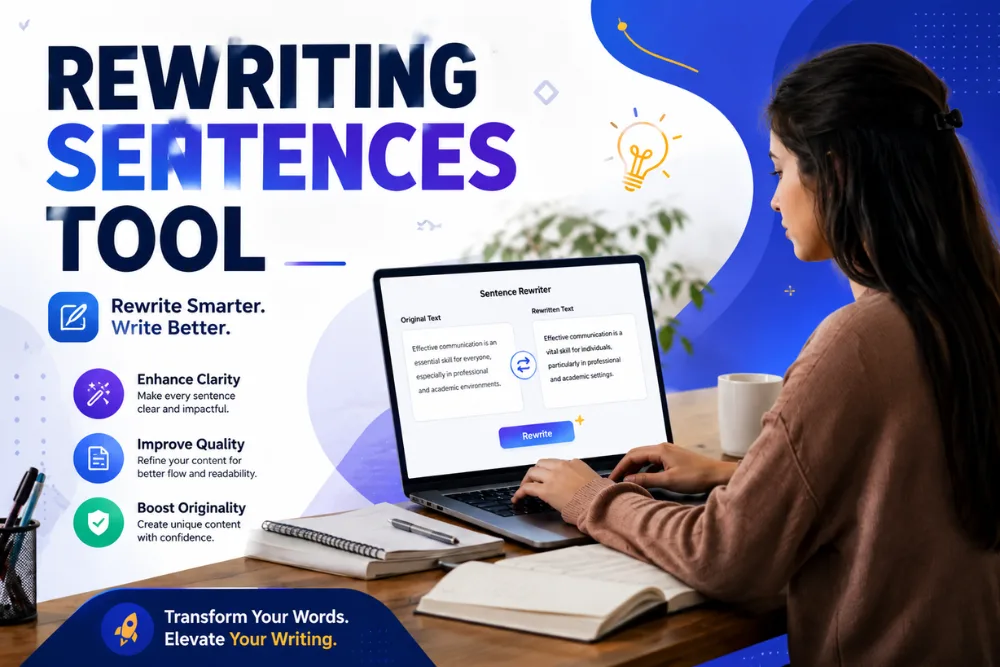
Also read about: What Is a Rewriting Sentences Tool? Best AI Tools and Usage Guide
Key Benefits of Using a Rewording Tool
One of the biggest advantages of using a rewording tool is time saving. Manually rewriting long academic paragraphs can take hours, especially when trying to maintain clarity and originality. AI tools can complete the task within seconds, allowing users to focus on research and critical thinking instead of repetitive editing.
Another major benefit is improved readability. Academic writing can sometimes become overly complicated or difficult to understand. Rewording tools simplify sentence structure and improve flow without changing the intended meaning. This makes essays and reports more engaging and easier to read.
A rewording tool also helps maintain consistency in tone and writing style. Academic papers require a formal and professional tone throughout the document. AI rewriting systems can adjust sentence patterns and vocabulary to match scholarly writing standards.
Grammar improvement is another important feature. Many rewording tools automatically identify grammatical issues, punctuation problems, and awkward phrasing. This reduces the need for separate grammar correction software.
Vocabulary enhancement is also valuable for academic writing. AI tools introduce varied word choices and more sophisticated phrasing, helping writers avoid repetition and create stronger academic expression.
These tools also support originality by generating unique sentence structures. This reduces the risk of accidental plagiarism while helping users produce fresh academic content.
Improving Readability and Clarity Through AI Rewriting
Clarity is one of the most important aspects of academic writing. Even well researched papers can lose impact if the writing is difficult to understand. Rewording tools improve clarity by restructuring overly complex or confusing sentences into more readable forms.
Many students unintentionally write long sentences with excessive detail or poor structure. AI rewriting tools break down complicated ideas into more manageable and coherent statements. This improves comprehension for readers and strengthens the overall quality of the paper.
Rewording tools also help eliminate redundant wording. Academic writers sometimes repeat the same phrases multiple times throughout a document. AI systems can introduce alternative vocabulary and varied sentence patterns to improve readability and engagement.
Another important aspect is flow. Effective academic writing should move smoothly from one idea to the next. AI tools analyze transitions and sentence connections to create a more natural reading experience.
For researchers presenting technical concepts, readability becomes even more important. Rewording tools can simplify complex explanations without removing critical information. This helps broader audiences understand specialized topics more easily.
How Rewording Tools Help Reduce Accidental Plagiarism
Plagiarism is a serious concern in academic writing. Students and researchers must ensure that their work is original and properly referenced. A rewording tool can assist by creating alternative versions of existing text while preserving the intended meaning.
Accidental plagiarism often occurs when writers rely too heavily on source material or unintentionally copy sentence structures. AI rewriting tools reduce this risk by generating fresh wording and reorganized sentence patterns.
However, it is important to understand that a rewording tool is not a replacement for proper citation practices. Users must still acknowledge original sources and follow academic guidelines for referencing.
Many advanced tools also integrate plagiarism checking features that compare rewritten content against online databases. This provides additional confidence before submitting academic work.
Responsible use is essential. Ethical academic writing involves using rewording tools as support systems rather than shortcuts for copying existing content. Writers should always review and refine AI generated text to ensure accuracy and originality.
Different Writing Modes and Customization Options
One reason AI rewording tools are highly effective is their customization capabilities. Different academic tasks require different writing styles, and modern tools provide flexible rewriting modes to match those needs.
Formal mode is commonly used for essays, research papers, and scholarly documents. It focuses on professional vocabulary, structured sentence formation, and academic tone.
Fluency mode improves readability and natural flow. This is useful when the original text sounds awkward or overly complicated.
Creative mode introduces more varied vocabulary and engaging sentence structures. Although less common in academic writing, it can be useful for presentations, introductions, or broader audience communication.
Some tools also include shortening and expanding modes. Shortening mode condenses lengthy paragraphs into concise statements, while expanding mode elaborates on brief ideas to create more detailed explanations.
Tone adjustment is another valuable feature. Writers can select tones such as professional, friendly, persuasive, or academic depending on the target audience.
These customization features allow users to tailor rewritten content precisely to their writing goals and academic requirements.
Best Rewording Tools for Academic Writing
Several AI powered rewording tools have gained popularity for academic use due to their reliability, accuracy, and advanced rewriting capabilities.
Ref n Write
Ref n Write is specifically designed for academic writing and integrates directly with Microsoft Word. It focuses on preserving scholarly tone while improving clarity and originality. The platform includes phrase templates, paraphrasing support, grammar correction, and plagiarism awareness features.
Its academic focus makes it highly suitable for research papers, dissertations, and journal writing. The tool helps users rewrite technical content without losing important terminology or meaning.
QuillBot
QuillBot is one of the most widely used rewording tools among students and professionals. It offers multiple rewriting modes including Standard, Fluency, Formal, and Academic. Users can adjust synonym intensity using a dedicated slider to control the extent of vocabulary changes.
QuillBot also includes grammar checking, AI detection support, and integration with various writing platforms. Its combination of flexibility and ease of use makes it suitable for essays, assignments, and professional writing tasks.
Grammarly Paraphraser
Grammarly’s paraphrasing tool focuses on clarity, grammar accuracy, and natural sounding writing. It helps users rewrite sentences while preserving original meaning and improving readability.
The platform allows tone selection and supports multiple languages. Integrated grammar checking and plagiarism support further strengthen its value for academic use.
Scribbr Paraphrasing Tool
Scribbr is particularly popular among students because of its academic orientation and simple interface. It allows users to rewrite sentences and paragraphs while providing interactive synonym suggestions.
The tool is free, ad free, and does not require sign up for basic use. It is especially useful for essays, academic articles, and research papers.
Other Notable AI Rewording Tools
Several additional tools also provide useful features for academic rewriting and content improvement.
MyEssayWriter.ai and PerfectEssayWriter.ai are recognized for generating natural sounding academic content with confident sentence structure and professional tone.
Wordtune is known for its intelligent tone adjustments and creative rewriting options. It is especially useful for improving sentence engagement and readability.
Paraphraser.io offers quick rewriting support with different style modes and simple usability. It can help students create alternative versions of essays and reports efficiently.
Choosing the best rewording tool depends on individual needs, writing style, academic level, and preferred features.
What to Look for in a Reliable Rewording Tool
Selecting the right rewording tool requires careful evaluation of several important factors.
| Factor | Why It Matters |
|---|---|
| Output Quality | The rewritten text should sound natural and human like instead of robotic or repetitive. A reliable rewording tool must preserve the original meaning while improving readability and sentence structure. |
| Academic Awareness | Academic writing requires proper scholarly tone and accurate handling of technical terms, references, and citations. A good tool should maintain academic integrity without changing important concepts. |
| Customization Features | Flexible rewriting modes, tone selection, and vocabulary controls help users tailor content according to academic requirements and writing goals. |
| Grammar Improvement | Integrated grammar correction helps improve sentence clarity, punctuation, and overall writing quality while reducing manual editing time. |
| Plagiarism Awareness | Tools with plagiarism support features help users maintain originality and avoid accidental duplication in academic writing. |
| Ease of Use | A clean and user friendly interface improves productivity and allows users to rewrite content quickly without a complicated learning process. |
| Word Limits and Pricing | Students and researchers working on large projects may need tools with higher word limits, affordable premium plans, or unlimited rewriting access. |
| Transparency and Ethical Use | Reliable AI tools clearly explain their features, limitations, and ethical usage guidelines while encouraging responsible academic writing practices. |
The Importance of Reviewing AI Generated Content
Although AI rewording tools are highly advanced, human review remains essential. No tool can fully replace critical thinking, subject knowledge, and academic judgment.
Users should carefully review rewritten content for accuracy, clarity, and contextual correctness. AI systems may occasionally misunderstand technical concepts or produce awkward phrasing.
Academic writing also requires logical argument development and proper citation practices. Writers must ensure that rewritten content aligns with the overall purpose and structure of the paper.
Editing AI generated text also helps maintain a personal writing voice. Combining AI efficiency with human refinement produces the strongest academic results.
Proofreading is especially important for research papers and formal submissions. Even minor grammar or formatting issues can affect academic credibility.
Ethical Use of Rewording Tools in Academic Settings
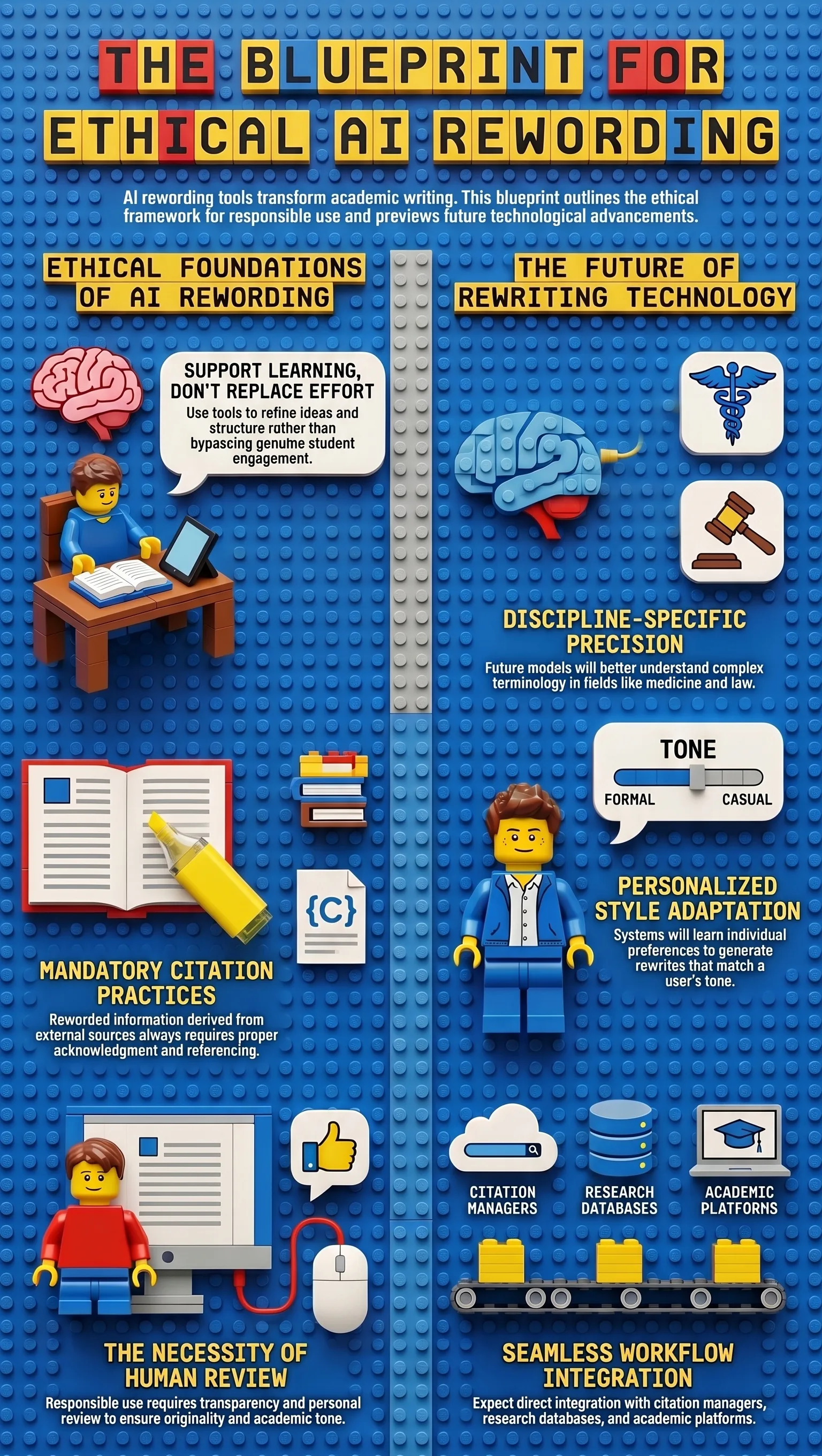
Using a rewording tool responsibly is essential for maintaining academic integrity. These tools should support learning and writing improvement rather than replace genuine effort.
Students should use AI rewriting systems to improve clarity, understand better sentence structure, and refine their own ideas. Simply copying rewritten text without understanding the content defeats the educational purpose of academic writing.
Principles and Progress of Academic AI Rewording
Proper citation practices must always be followed. Reworded information derived from external sources still requires acknowledgment and referencing.
Educational institutions increasingly recognize the role of AI tools in modern writing. Ethical usage involves transparency, originality, and personal engagement with the material.
When used correctly, rewording tools can become valuable educational assistants that enhance productivity and writing quality without compromising integrity.
The Future of AI Rewording Technology
AI rewording technology continues to evolve rapidly. Future tools are expected to become even more accurate, context aware, and personalized. Advanced language models will likely improve understanding of discipline specific terminology, allowing more precise academic rewriting across subjects such as medicine, law, engineering, and science.
Voice and style adaptation may also become more sophisticated. Future systems could learn individual writing preferences and generate customized rewrites that closely match a user’s natural tone. Integration with academic platforms, citation managers, and research databases may further streamline the writing process.
As AI continues to develop, rewording tools will likely become an essential part of academic and professional writing workflows worldwide.
Conclusion
AI powered rewording tools have transformed academic writing by making the process faster, clearer, and more efficient. These tools help students, researchers, and professionals improve readability, refine grammar, maintain originality, and preserve academic tone. From simplifying complex sentences to reducing accidental plagiarism, a reliable rewording tool offers valuable support for modern academic communication. However, responsible use remains important. Human review, proper citation, and ethical writing practices should always accompany AI generated content. When used thoughtfully, rewording tools can significantly improve both writing quality and productivity.
Frequently Asked Questions
What is a rewording tool?
A rewording tool is an AI powered application that rewrites text using different words and sentence structures while preserving the original meaning.
Are rewording tools useful for academic writing?
Yes, they help improve clarity, readability, grammar, and originality in essays, research papers, and academic assignments.
Can a rewording tool prevent plagiarism?
A rewording tool can reduce accidental plagiarism by generating unique sentence structures, but proper citation is still necessary.
Which rewording tool is best for students?
Popular options include Ref n Write, QuillBot, Grammarly, and Scribbr because of their academic focused features.
Do rewording tools change the meaning of content?
Reliable AI tools are designed to preserve the original meaning while improving sentence structure and readability.
Are free rewording tools effective?
Many free tools provide useful rewriting support, although premium versions often include advanced features and higher word limits.
Should AI generated text be reviewed manually?
Yes, users should always review and edit rewritten content to ensure accuracy, clarity, and academic relevance.
Can rewording tools improve grammar?
Most modern AI rewriting tools include grammar correction features that improve sentence quality and readability.
Is it ethical to use a rewording tool?
Yes, when used responsibly for writing improvement, clarity enhancement, and learning support while maintaining academic integrity.
What features should I look for in a rewording tool?
Important features include natural rewriting quality, academic tone support, grammar checking, plagiarism awareness, customization options, and ease of use.

Dony Garvasis is the founder of Search Ethics, a freelance SEO consultant, and a passionate technology blogger. With over 8 years of experience in SEO, blogging and content marketing, I provide expert content on Tech, digital marketing, SEO, Artificial intelligence, gadgets, science, automobiles, lifestyle, tips, tutorials and much more. My mission is simple: Ethical Search, Genuine Results! I will make sure people everywhere get trustworthy and helpful information.