Now Reading: Scientists Unveil Third Ancestral Group in Japanese DNA
-
01
Scientists Unveil Third Ancestral Group in Japanese DNA
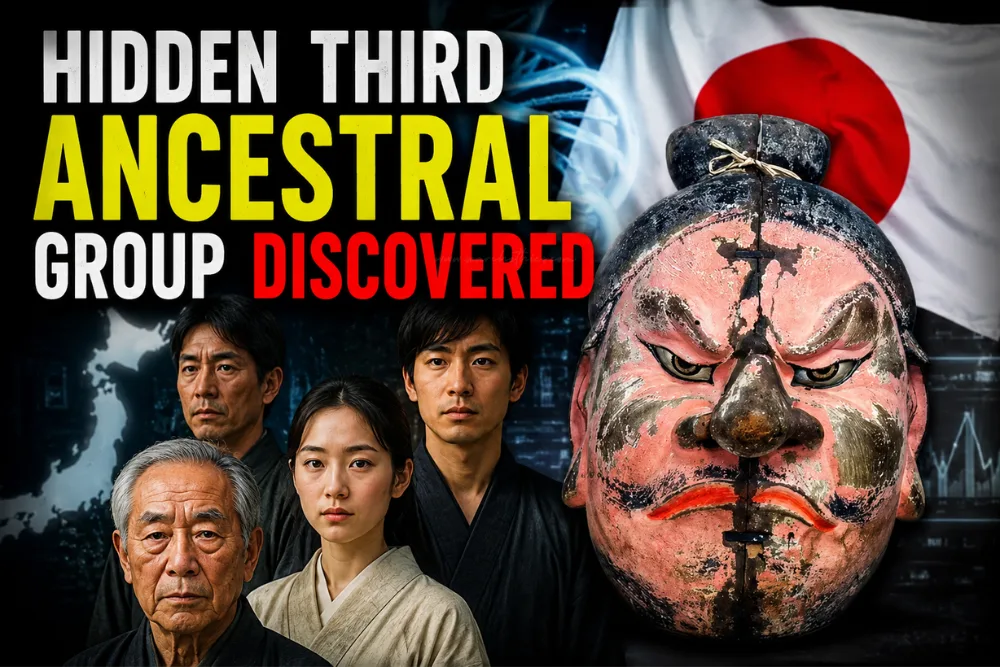
The Japanese people descend from not two but three ancestral groups, according to a groundbreaking 2026 genetic study. By analyzing over 3,200 genomes, scientists discovered a hidden third lineage alongside the Jomon and Yayoi, fundamentally reshaping our understanding of Japan’s origins, migration patterns, and even modern health risks.
The Long Held Theory of Japanese Origins
For decades, scientists believed that the origins of modern Japanese people could be explained through a simple dual ancestry model. This theory suggested that two main groups, the Jomon and the Yayoi, formed the entire genetic foundation of Japan’s population. While this model provided a convenient framework, it now appears to have overlooked a deeper and more complex history.
The dual origin theory gained acceptance because early genetic studies and archaeological findings seemed to align with it. However, as scientific tools improved, especially with the introduction of whole genome sequencing, researchers began to notice inconsistencies. These inconsistencies hinted that Japan’s population history might involve more than just two ancestral groups.
The Jomon Hunter Gatherers
The Jomon people were the earliest known inhabitants of Japan, living in the archipelago for more than 10,000 years. They were primarily hunter gatherers, relying on fishing, hunting, and foraging for survival. Their culture is widely recognized for its distinctive pottery, which is considered among the oldest in the world.
Genetically, the Jomon formed the deep ancestral layer of the Japanese population. Their influence is still visible today, particularly in regions like Okinawa, where higher proportions of Jomon ancestry have been preserved. Their long period of relative isolation allowed their genetic traits to remain distinct, creating a foundational layer that continues to shape modern Japanese genetics.
The Yayoi Migrants from East Asia
Around 2,300 years ago, a significant migration wave arrived in Japan from continental East Asia. These people, known as the Yayoi, brought transformative changes that reshaped Japanese society. They introduced rice farming, metal tools, and more advanced social and political systems.
The interaction between the Yayoi migrants and the indigenous Jomon population led to widespread genetic mixing. For many years, scientists believed this blending fully explained the origins of modern Japanese people. The Yayoi contribution is especially prominent in mainland Japan, where their agricultural practices and technologies had the greatest impact.
© Avalon.red
What the New DNA Study Discovered
A large scale genetic study analyzing over 3,200 individuals across Japan has challenged the long standing dual origin theory. Using advanced whole genome sequencing, researchers were able to examine nearly all genetic information within each individual, providing a level of detail that older methods could not achieve.
Instead of confirming the existing model, the study revealed clear evidence of a third ancestral group. This discovery introduced a new framework known as the tripartite origin theory. It suggests that Japan’s population history is far more layered and complex than previously believed.
This finding does not simply add another group to the narrative, it transforms the entire understanding of how populations formed and evolved in the region.
The Hidden Third Ancestral Group Explained
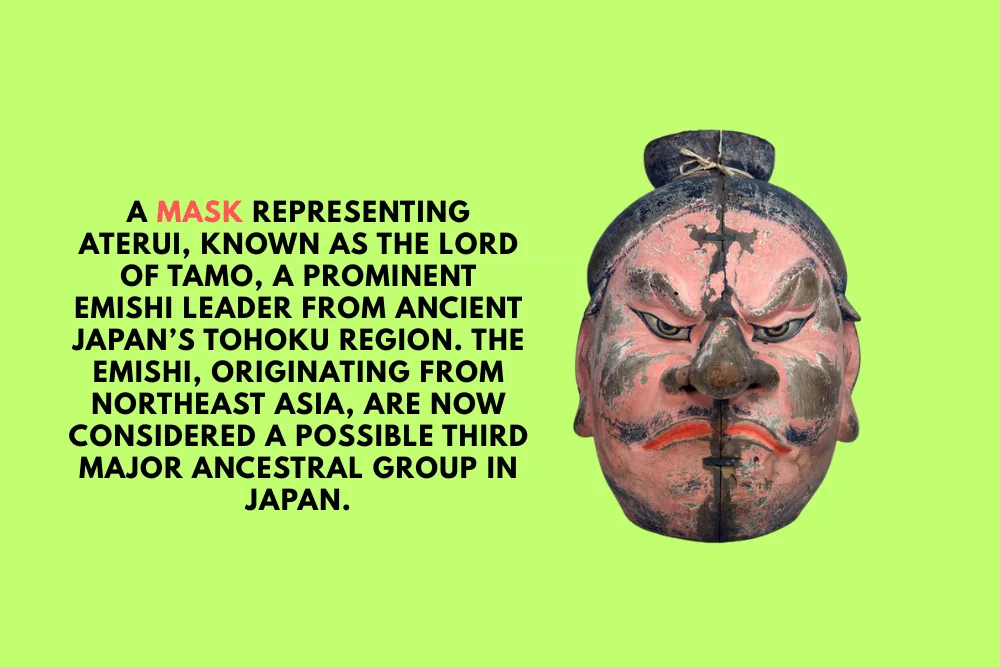
The newly identified ancestral component is believed to be linked to the Emishi, an ancient population that lived in northeastern Japan. Historically, the Emishi were known for their cultural and political independence from early Japanese states. They were often described as distinct in both lifestyle and identity.
Genetic evidence now supports the idea that the Emishi contributed significantly to the modern Japanese gene pool. This third ancestry also shows connections to northeastern Asian populations, indicating that an additional migration wave reached Japan, one that had previously gone undetected.
The discovery of this hidden ancestry fills important gaps in the historical and genetic record, offering a more complete picture of Japan’s population development.
Evidence Supporting the Tripartite Origin Theory
The tripartite origin theory is supported by several key genetic findings. Researchers identified distinct genetic markers that are highly concentrated in northeastern Japan. These markers cannot be explained solely by Jomon and Yayoi ancestry, indicating the presence of an additional lineage.
Regional genetic variations further reinforce this conclusion. Patterns observed in the data align with earlier ancient DNA studies that suggested multiple waves of migration into Japan. Together, these findings provide strong evidence that the dual origin model was too simplistic to capture the true complexity of Japanese ancestry.
Dual Origin vs Tripartite Origin Theory
The difference between the dual origin and tripartite origin theories lies in their level of complexity and accuracy. The older model, which included only the Jomon and Yayoi, presented a simplified view of population history. While useful at the time, it failed to account for emerging genetic evidence.
In contrast, the tripartite origin theory includes a third ancestral component, likely linked to the Emishi or Kofun period populations. This updated model reflects a more nuanced understanding, incorporating multiple migration waves and regional diversity.
Scientists are updating the theory because modern genetic data clearly reveals greater diversity within Japan. It shows that population formation occurred over centuries, involving repeated interactions and movements rather than a single blending event.
A Timeline of Japanese Ancestry
The history of Japanese ancestry can be understood through three major periods. The Jomon period, which lasted from 14,000 BCE to 300 BCE, was characterized by indigenous hunter gatherers who lived in relative isolation. Their genetic influence remains strong in certain regions, especially Okinawa.
The Yayoi period, from 300 BCE to 300 CE, marked the arrival of migrants from East Asia. This period introduced agriculture, technology, and significant genetic mixing. It represents a major turning point in Japan’s demographic history.
The Kofun period, from 300 CE to 700 CE, saw increased political centralization and additional migration influences. This period is now considered a likely source of the third ancestral component identified in the recent study.
How DNA Reveals Japan’s Regional Differences
One of the most striking findings from the study is that Japan is not genetically uniform. Instead, there are clear regional differences that reflect the complex history of migration and interaction.
Okinawa, for example, shows a higher proportion of Jomon ancestry, preserving the genetic traits of the earliest inhabitants. In contrast, mainland Japan exhibits stronger Yayoi influence, reflecting the impact of agricultural migration.
Northeastern Japan stands out for its higher concentration of the newly identified third ancestry. This region shows a strong genetic link to the ancient Emishi population, supporting the idea that they played a significant role in shaping modern genetics.
These variations challenge the long held assumption that Japan is genetically homogeneous, revealing a far more diverse population structure.
Neanderthal and Denisovan DNA in Modern Japanese
Neanderthals and Denisovans were ancient human relatives who lived tens of thousands of years ago. During that time, they interbred with early modern humans, leaving behind genetic traces that still exist today.
Modern Japanese populations carry small amounts of this archaic DNA. Researchers have identified 44 distinct regions in the Japanese genome that originate from these ancient humans. These genetic fragments are not random, they are linked to specific biological functions.
Denisovan DNA has been associated with metabolic traits, while Neanderthal DNA is often linked to immune system responses. Many of these genetic variants are unique to East Asian populations, highlighting the importance of regional studies in understanding human evolution.
How Ancient DNA Affects Health Today
The discovery of archaic DNA in modern populations has important implications for health and medicine. Certain inherited genetic regions have been linked to conditions such as type 2 diabetes and coronary artery disease.
Researchers have also found connections between these genetic variants and diseases like prostate cancer and rheumatoid arthritis. These findings suggest that ancient DNA continues to influence how the human body functions today.
Understanding these genetic links can improve medical diagnosis and treatment. It allows scientists to identify population specific risks and develop more targeted healthcare strategies. This approach, often referred to as precision medicine, represents a major advancement in modern healthcare.
Why This Discovery Matters
This discovery fundamentally changes how we understand Japanese identity. The idea that modern Japanese people come from only two ancestral groups is no longer accurate. Instead, the population reflects multiple migrations, regional diversity, and complex genetic layering.
The implications extend beyond Japan. This research contributes to a growing body of evidence that human populations worldwide are far more interconnected than previously believed. It highlights the dynamic nature of migration and the continuous shaping of genetic identity over time.
The Future of Genetic Research in Japan
The study also underscores the need for more diverse genetic research. Historically, many genetic studies have focused on European populations, leaving gaps in our understanding of other regions.
By expanding genome databases in Asia, scientists can gain a more accurate and inclusive view of human genetics. This will enable the development of better medical treatments, improved disease prediction, and more effective public health strategies.
The future of genetic research in Japan looks promising, with the potential to unlock new insights into both history and medicine.
Conclusion
The question of who the Japanese are no longer has a simple answer. What was once believed to be a straightforward dual ancestry has evolved into a far more complex and fascinating story. The discovery of a hidden third ancestral group reveals a history shaped by multiple migrations, regional diversity, and ancient genetic influences.
As science continues to advance, it becomes increasingly clear that human history is not defined by simplicity, but by complexity and connection. This new understanding not only reshapes Japan’s past, but also opens the door to a more informed and personalized future in medicine and research.
Frequently Asked Questions
Are Japanese people genetically homogeneous
No, modern research shows significant regional genetic variation across Japan, reflecting multiple ancestral influences.
What is the third ancestral group in Japan
It is likely linked to the ancient Emishi population and possibly migration during the Kofun period.
Do Japanese people have Neanderthal DNA
Yes, like many human populations, Japanese people carry small amounts of Neanderthal DNA.
How accurate is DNA ancestry research
With modern whole genome sequencing, ancestry research is highly accurate, though interpretations continue to evolve as new data emerges.
What is the tripartite origin theory
It is the idea that modern Japanese people descend from three ancestral groups, rather than just two, making their genetic history more complex.
References:
Content provided by RIKEN. Edited for clarity and length.
Ancient genomics reveals tripartite origins of Japanese populations. Science Advances, 2021; 7 (38) DOI: 10.1126/sciadv.abh2419
Decoding triancestral origins, archaic introgression, and natural selection in the Japanese population by whole-genome sequencing. Science Advances, 2024; 10 (16) DOI: 10.1126/sciadv.adi8419
You may also love to hear about Scientists Reveal How FTL1 Is Linked with Aging Brain

Dony Garvasis is the founder of Search Ethics, a freelance SEO consultant, and a passionate technology blogger. With over 8 years of experience in SEO, blogging and content marketing, I provide expert content on Tech, digital marketing, SEO, Artificial intelligence, gadgets, science, automobiles, lifestyle, tips, tutorials and much more. My mission is simple: Ethical Search, Genuine Results! I will make sure people everywhere get trustworthy and helpful information.