Now Reading: Can Apps Make You Money Daily? Here’s the Top 10 Earning Apps
-
01
Can Apps Make You Money Daily? Here’s the Top 10 Earning Apps

Yes, apps can make you money daily, but the amount depends on the app type, your effort, and your skills. Some apps offer small daily earnings through simple tasks, while others provide long term income through freelancing, investing, or content creation. Choosing the right combination is the key to earning consistently.
The idea that apps can generate income has gained massive popularity in recent years. With the growth of digital platforms, smartphones have become more than communication tools. They are now gateways to earning opportunities. However, not all apps are equal, and understanding how they work is essential before relying on them for income.
Can Apps Make You Money in Reality
The question can apps make you money is not just about possibility, it is about practicality. The reality is that many apps do pay users, but the income varies significantly. Some apps are designed for quick micro earnings, while others require effort, skill, or even investment.
For example, survey and reward based apps typically provide small payouts for simple activities like watching videos or completing tasks. On the other hand, freelance platforms allow users to earn significantly more, depending on their expertise. Similarly, gig economy apps offer flexible earning opportunities that can generate daily income if used consistently.
The key takeaway is that apps can make you money, but they should not be viewed as instant wealth generators. Instead, they are tools that can supplement your income or, in some cases, become a primary source of earnings.
Top 10 Earning Apps That Actually Pay
There are many apps available today that claim to offer real income, but only a few have proven track records. Some apps focus on quick earnings, while others provide scalable income opportunities.
Swagbucks is one of the most popular reward based platforms. It allows users to earn money by completing surveys, watching videos, and performing simple online tasks. Over the years, it has paid out millions to users, making it a trusted option for beginners.
Sharetown offers a unique earning model where users can resell gently used furniture and mattresses. Top earners on this platform have reported monthly earnings that can reach thousands, depending on their effort and sales skills.
Fundrise is an investment based app that allows users to earn passive income through real estate. With a low entry point, it makes investing accessible to beginners who want long term returns.
Survey Junkie, InboxDollars, and Freecash are ideal for users looking for small, consistent earnings. These apps pay users for completing surveys, playing games, and engaging in simple activities during their spare time.
Upwork and Fiverr are among the most reliable freelancing platforms. They connect users with clients who need services such as writing, graphic design, and programming. These apps offer the potential for steady income, especially for skilled individuals.
DoorDash, Uber, and Lyft represent the gig economy model. These apps allow users to earn money by delivering food or providing transportation services. They are particularly useful for those seeking flexible working hours.
Rakuten, Ibotta, and Fetch Rewards are cashback and rewards apps that help users earn money while shopping. They provide rebates and points that can be converted into cash or gift cards.
Scrambly is another reward based app that pays users for playing games and trying new applications. It is known for its fast payouts and low withdrawal thresholds.
YouTube, TikTok, and Instagram have transformed content creation into a viable income stream. Users can earn through advertisements, brand collaborations, live gifts, and subscriptions. These platforms support creators at different levels.
Printify is a platform designed for those interested in selling custom products. It allows users to create and sell items without managing inventory, making it a scalable income option.
These apps collectively demonstrate that there are multiple ways to earn money through mobile platforms. The choice depends on your goals, whether you want quick cash, passive income, or a full time opportunity.
How Different Types of Apps Generate Income for Users
Understanding how these apps generate income helps clarify why earnings vary. Each category operates on a different business model, which directly impacts how much users can earn.
Reward based apps rely on user engagement. They earn money through advertising and partnerships, and they share a portion of that revenue with users. Freelancing platforms generate income by connecting clients with service providers, often taking a commission from completed projects.
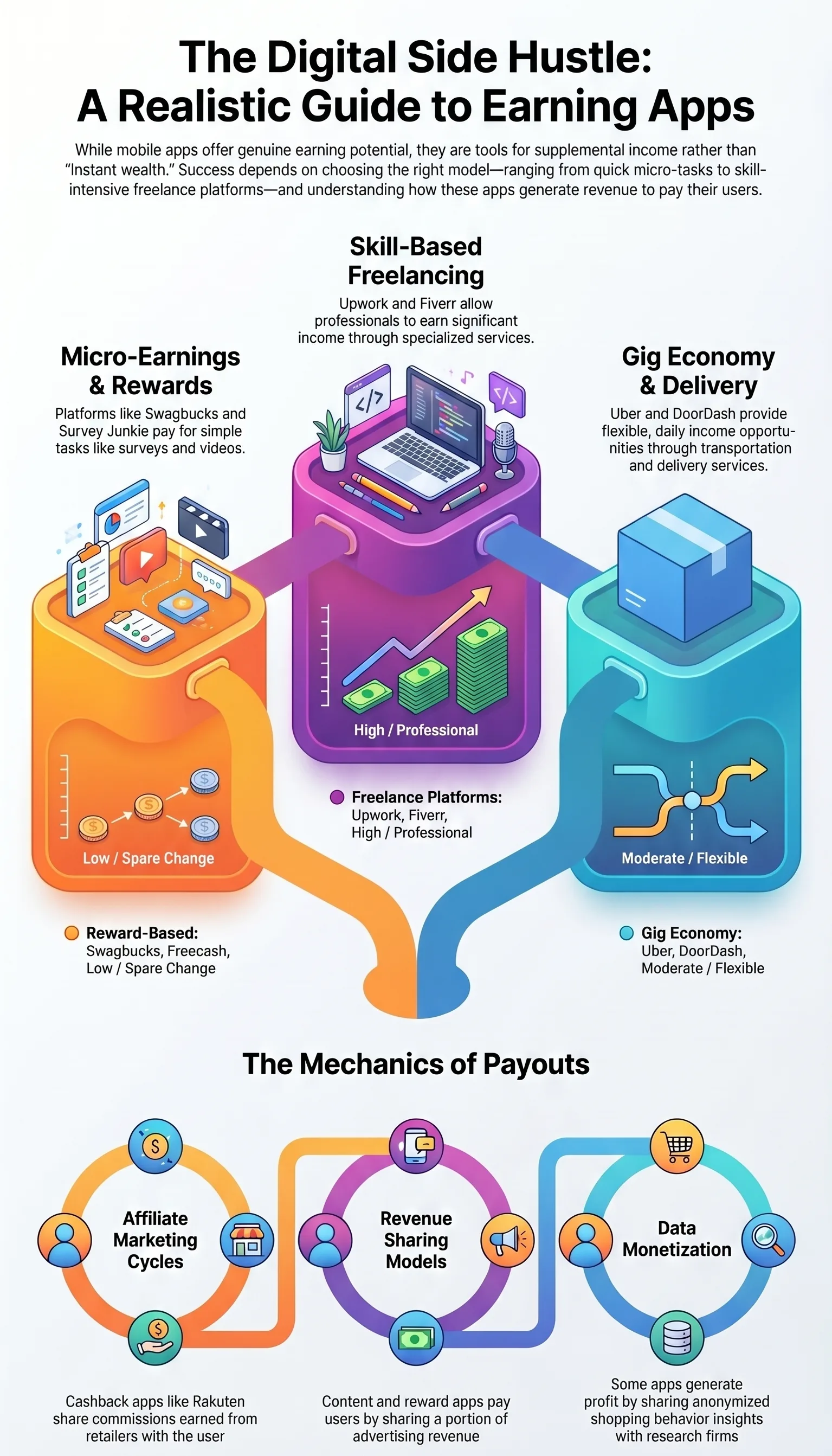
The Digital Economy Guide to Real Earning Apps
Gig economy apps operate by charging service fees from customers and distributing payments to workers. Investment apps generate returns based on market performance, while cashback apps share commissions earned from retailers.
Content creation platforms rely on advertising revenue, brand deals, and user engagement metrics. Meanwhile, print on demand platforms like Printify enable users to earn by selling customized products without handling production or logistics.
This diversity in earning models explains why some apps offer small daily payouts while others provide long term income potential.
How Do Cashback Apps Work to Make Money for Users
Cashback apps operate on a system that benefits both users and businesses. When users shop through these apps or their affiliated retailers, they receive a percentage of their spending back as cash or rewards. This creates an incentive for users to continue shopping through the platform.
The primary way cashback apps make money is through affiliate marketing commissions. Retailers pay these apps a percentage for driving customers to their stores. The app then shares part of this commission with the user as cashback, while keeping the remaining portion as profit. This structure creates a win win situation where retailers gain customers, users save money, and the app generates revenue.
In addition to commissions, some cashback apps offer subscription plans that provide higher cashback rates, exclusive deals, or faster payouts. These subscriptions create a steady revenue stream for the app.
Another important revenue source comes from featured listings and advertisements. Retailers may pay to have their products or stores highlighted within the app, increasing visibility and sales. Apps also display targeted advertisements based on user behavior, which contributes to their income.
Partnerships with financial institutions further enhance revenue generation. Cashback apps may earn fees when users make purchases using specific payment methods linked to partner banks or payment gateways.
Data monetization also plays a role. By analyzing anonymized user data, apps gain insights into shopping behavior. These insights can be used to improve services or shared with market research firms, while maintaining privacy standards.
Overall, cashback apps make money primarily through commissions and supplementary revenue streams, allowing them to offer attractive rewards to users while remaining profitable.
What Are the Risks of Using Money Making Applications
While the idea that apps can make you money is appealing, it is equally important to understand the risks involved. These applications often handle financial transactions and personal data, which introduces potential vulnerabilities.
| Risk Factor | Reason |
|---|---|
| Limited Insurance Protection | Unlike traditional banks, many payment apps do not provide the same level of protection for stored funds. If an app faces financial issues or fraud, users may not be able to recover their money. |
| Security Concerns | Although most apps implement safety measures, they are not completely safe from cyberattacks. Hackers continuously look for vulnerabilities, and some apps may have weaker security if developers prioritize speed over safety. |
| Fraud and Scams | Fraud and scams are common in digital payment systems. Scammers often target users through fake requests or misleading notifications, so verifying transactions is essential to avoid losses. |
| Privacy Concerns | Many apps collect data such as spending habits, preferences, and location. This information may be used for targeted advertising or shared with third parties, which can expose personal details. |
| Transaction Errors | Technical glitches or user mistakes can lead to incorrect transactions. Fixing these issues may take time and effort, unlike traditional banking systems, causing inconvenience and stress. |
Understanding these risks is crucial for anyone considering using money making apps. Being informed helps users take necessary precautions and use these platforms more safely.
Choosing the Right Apps Based on Your Goals
Selecting the right app depends on what you want to achieve. If your goal is to earn small amounts of money quickly, reward based and survey apps are suitable. They require minimal effort and can be used during free time.
For those seeking higher income potential, freelancing platforms provide better opportunities. They allow users to monetize their skills and build long term careers. Similarly, gig economy apps are ideal for individuals who want flexible work schedules and consistent daily earnings.
Investment apps are better suited for users looking for passive income. They require patience and a willingness to accept market risks. On the other hand, cashback apps are perfect for saving money on everyday purchases.
Creative individuals may find social media platforms more rewarding. These apps offer opportunities to build audiences and generate income through multiple monetization channels.
Ultimately, the best approach is to combine multiple apps. This diversification reduces dependency on a single income source and increases overall earning potential.
Strategies to Maximize Earnings from Apps
Maximizing earnings requires more than simply downloading apps. Consistency plays a crucial role, especially for reward based and gig economy platforms. Regular usage ensures steady income, even if the amounts are small.
Skill development is another important factor. Users who invest time in improving their abilities can earn significantly more on freelancing platforms. Learning new skills can open doors to higher paying opportunities.
Also read: How Can I Start Earning Money From Home Using Online Platforms
Time management also contributes to better results. Allocating specific time slots for different apps helps maintain productivity and prevents burnout. For example, users can complete surveys during breaks and focus on freelance work during dedicated hours.
Taking advantage of bonuses and referral programs can further increase earnings. Many apps offer incentives for inviting new users or completing specific tasks.
Combining different types of apps creates multiple income streams. This approach not only increases earnings but also provides stability in case one platform becomes less profitable.
Conclusion
The answer to can apps make you money is clearly yes, but with realistic expectations. These apps provide a wide range of earning opportunities, from small daily rewards to full time income streams. The key lies in understanding how each app works and choosing the ones that align with your goals.
While the earning potential varies, combining multiple apps, staying consistent, and being aware of risks can significantly improve results. With the right approach, money making apps can become a valuable part of your financial strategy.
Frequently Asked Questions
Can apps make you money daily
Yes, some apps allow daily earnings, especially reward based and gig economy apps, but the amount depends on usage and effort.
Which apps are best for beginners to earn money
Apps like Swagbucks, Survey Junkie, and cashback apps are easy to use and suitable for beginners.
Do freelancing apps provide steady income
Freelancing apps can provide steady income if you have in demand skills and maintain consistent work.
Are cashback apps really profitable
Cashback apps help save money on purchases, which effectively increases your overall savings rather than direct income.
Is it safe to use money making apps
Most apps are safe, but users should be cautious about security, scams, and data privacy.
Can social media apps generate income
Yes, social media platforms allow users to earn through ads, brand deals, and audience engagement.
Do I need investment to start earning from apps
Many apps require no investment, but some, like investment platforms, need initial funds.
How much can you realistically earn from apps
Earnings vary widely, from small daily amounts to substantial income depending on the app and effort.
What is the best way to increase earnings from apps
Using multiple apps, improving skills, and staying consistent can significantly increase earnings.
Are money making apps a reliable income source
They can be reliable as a side income, but relying on them fully requires careful selection and consistent effort.

Dony Garvasis is the founder of Search Ethics, a freelance SEO consultant, and a passionate technology blogger. With over 8 years of experience in SEO, blogging and content marketing, I provide expert content on Tech, digital marketing, SEO, Artificial intelligence, gadgets, science, automobiles, lifestyle, tips, tutorials and much more. My mission is simple: Ethical Search, Genuine Results! I will make sure people everywhere get trustworthy and helpful information.