Now Reading: AI Tools for Product Managers to Impress Your Boss
-
01
AI Tools for Product Managers to Impress Your Boss

Are you a product manager who wants to work smarter and faster? Do you want to impress your boss quickly? If yes, this article is for you. AI tools for product managers are changing the way products are built, analyzed, and delivered.
These tools help you automate daily tasks, understand data better, and make smarter decisions in less time. In today’s fast moving world, learning the right AI tools can boost your productivity, improve teamwork, and help you make a bigger impact in your organization.
Why AI Tools for Product Managers Matter Today
The role of product managers has become increasingly complex, requiring a balance between strategy, execution, user research, and stakeholder communication. These AI tools always play a critical role in simplifying these responsibilities by automating repetitive tasks, analyzing large datasets, and providing actionable insights. As organizations become more data driven, product managers who leverage AI tools are better equipped to make informed decisions and deliver value efficiently.
AI tools for product managers also help bridge gaps between cross functional teams, ensuring that communication flows smoothly and priorities remain aligned. From identifying bottlenecks in workflows to generating detailed reports and summarizing user feedback, these tools allow product managers to focus more on strategy and innovation rather than manual tasks.
Project and Workflow Management with AI
One of the most impactful uses of AI tools for product managers lies in project and workflow management. Tools like monday.com and Wrike have introduced AI driven features that help prioritize tasks, detect inefficiencies, and recommend next steps. These capabilities enable product managers to stay on top of complex projects without getting overwhelmed by operational details.
Automation platforms such as Zapier and Make further enhance productivity by connecting different applications and automating repetitive workflows. With these AI tools, teams can eliminate manual data transfers, reduce errors, and maintain consistent processes across tools. This not only saves time but also ensures that workflows remain scalable as the organization grows.
Roadmap Planning and Strategic Alignment
Strategic planning is at the core of product management, and AI tools for product managers are making this process more efficient and data driven. Tools like Aha! are specifically designed to help product managers create and manage roadmaps while aligning them with business goals.
Productboard takes this a step further by using AI to analyze customer feedback and connect insights directly to feature prioritization. These AI tools allow teams to make strategic decisions based on real user needs rather than assumptions. By integrating feedback into the roadmap planning process, product managers can ensure that their products deliver maximum value to customers.
User Feedback and Research Simplified
Understanding user needs is essential for building successful products, and AI tools for product managers have revolutionized how feedback is collected and analyzed. Tools like Granola can join user calls, transcribe conversations, and summarize key insights automatically. This eliminates the need for manual note taking and ensures that important details are not missed.
Dovetail enhances this process by clustering qualitative feedback and identifying patterns across multiple interviews. Additionally, Best AI like ChatGPT and Claude help product managers distill large volumes of feedback into meaningful themes and actionable insights. These AI tools make it easier to understand customer pain points and prioritize improvements effectively.
Related search: Top 6 AI Like Claude for Business Automation
Enhancing Communication and Content Creation
Effective communication is a critical skill for product managers, and AI tools for product managers can significantly improve how messages are crafted and delivered. Tools like Superhuman enhance email productivity by offering AI powered rewriting suggestions and smart reminders, ensuring that important communications are clear and timely.
Related search: Top 5 Must Have Tools for Content Creators
Gamma is another valuable tool that helps create visually engaging presentations and product roadmaps efficiently. With these AI tools , professionals can communicate ideas more effectively, whether they are presenting to stakeholders, collaborating with teams, or sharing updates with leadership.
Execution and Documentation Made Easy
Execution is where strategy turns into reality, and these tools play a vital role in ensuring smooth implementation. Tools like ChatPRD assist in drafting product requirement documents with AI powered logic checks and contextual understanding. This helps product managers create comprehensive and accurate documentation without spending excessive time.
Lovable enables rapid prototyping of applications and websites, allowing teams to build minimum viable products quickly. These AI Tools streamline the execution phase by reducing manual effort and enabling faster iterations, ultimately accelerating product development cycles.
Data Analysis and Decision Support
Data driven decision making is essential in modern product management, and AI tools for product managers provide powerful analytics capabilities. Mixpanel allows product managers to query data using natural language, making it easier to analyze metrics and identify trends without requiring technical expertise.
Perplexity supports research and market validation by gathering information from multiple sources, helping product managers make informed decisions. These AI tools for product managers empower teams to understand user behavior, detect anomalies, and optimize product performance based on real data.
What Are the Essential Skills for a Successful Product Manager?
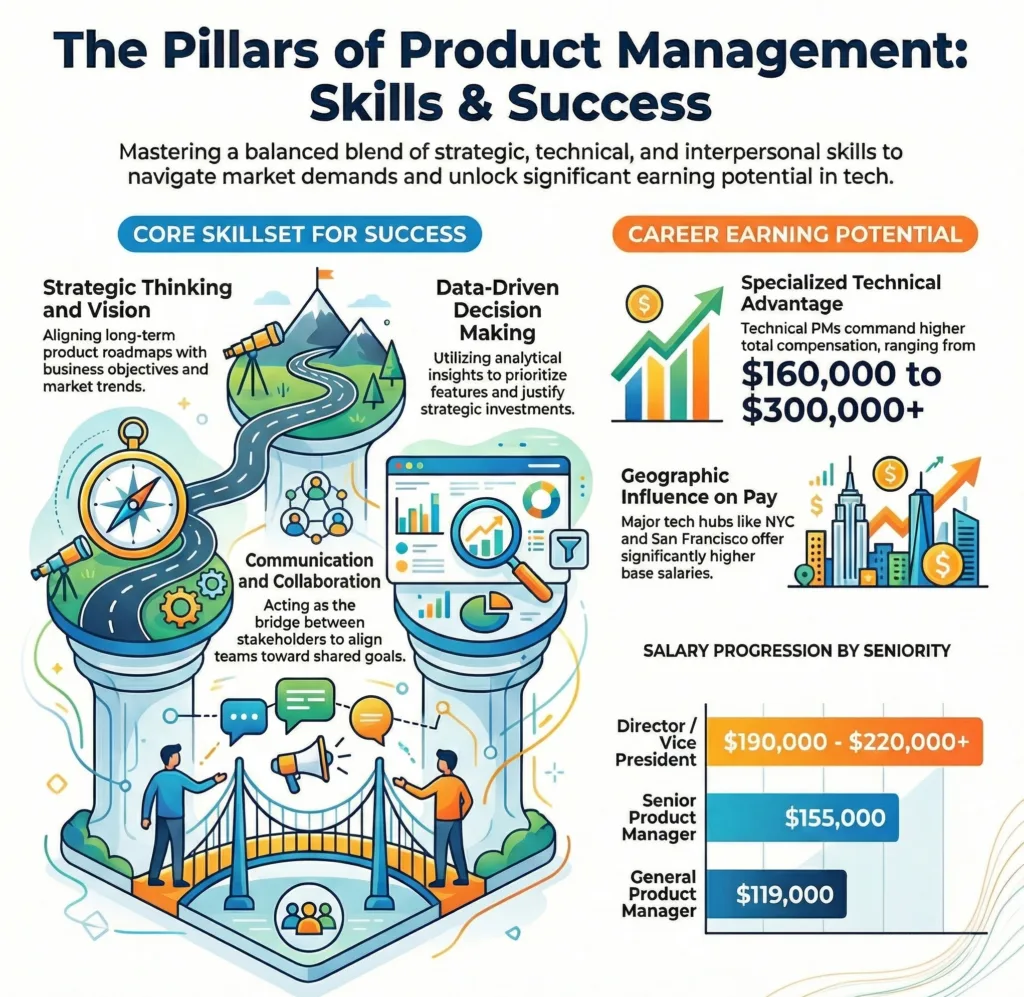
A successful product manager needs a combination of strategic thinking, communication, leadership, and analytical skills to guide product development and deliver value. They must understand user needs, align teams, and make data driven decisions while managing priorities effectively, ensuring that the product evolves with market demands and business goals.
Becoming a successful product manager requires a well balanced mix of skills that combine business understanding, technical awareness, and strong interpersonal abilities. The role is dynamic and challenging, as product managers are responsible for defining product vision, shaping strategy, and ensuring that teams execute efficiently. They act as the bridge between different departments, ensuring that everyone is aligned toward a shared goal. A product manager must continuously adapt to changing market conditions, evolving user expectations, and emerging technologies, making skill development an ongoing process rather than a one time effort.
Strategic Thinking and Vision
Strategic thinking is one of the most critical skills for any product manager. It involves the ability to define a clear long term vision for a product while aligning it with business objectives. A strong strategic mindset helps product managers understand where their product fits in the market and how it can evolve over time to meet user needs. This includes setting measurable goals, planning roadmaps, and ensuring that every feature contributes to the overall success of the product.
A product manager must also stay aware of market trends and competitive dynamics. By continuously evaluating opportunities and risks, they can make informed decisions that drive sustainable growth. Strategic thinking is not just about planning but also about execution, ensuring that the product roadmap is realistic, achievable, and aligned with organizational priorities.
Communication and Stakeholder Management
Effective communication is at the heart of product management. Product managers must interact with a wide range of stakeholders, including developers, designers, marketing teams, and executives. Strong communication skills allow them to clearly articulate ideas, share updates, and align everyone toward common objectives.
Stakeholder management involves balancing different perspectives and expectations. A product manager must be able to listen actively, address concerns, and build consensus across teams. Clarity and brevity are essential when communicating complex ideas, ensuring that everyone understands the product vision and their role in achieving it. This skill is particularly important when presenting strategies, reporting progress, and resolving conflicts.
Leadership and Team Collaboration
Leadership in product management goes beyond assigning tasks. A successful product manager inspires and motivates teams by providing clear direction and context. They empower team members to take ownership of their work while fostering a collaborative environment.
Team collaboration is essential because product development involves multiple functions working together. Product managers must coordinate efforts across departments, ensuring that everyone contributes effectively to the final outcome. By building strong relationships and encouraging open communication, they can create a culture of trust and accountability, which is crucial for delivering successful products.
The Essential Pillars of Successful Product Management
Data Driven Decision Making and Analytical Skills
Modern product management relies heavily on data driven decision making. Product managers must be able to collect, analyze, and interpret both quantitative and qualitative data to guide their strategies. This includes understanding user behavior, measuring performance metrics, and identifying areas for improvement.
An analytical mindset helps product managers move beyond assumptions and make evidence based decisions. By leveraging data, they can prioritize features, justify investments, and evaluate the impact of their actions. This approach not only improves product outcomes but also builds credibility with stakeholders, as decisions are backed by clear and measurable insights.
Technical Understanding
While product managers are not always required to write code, having a solid technical understanding is essential. This knowledge enables them to communicate effectively with engineering teams, understand system limitations, and make informed decisions about product development.
Technical awareness also helps product managers set realistic expectations and timelines. By understanding how systems work, they can anticipate challenges, identify potential risks, and ensure that the product is built efficiently. This skill is particularly valuable when working on complex products that require close collaboration between technical and non technical teams.
Prioritization and Time Management
Product managers often juggle multiple responsibilities, making prioritization and time management critical skills. They must decide which features to build, which tasks to focus on, and how to allocate resources effectively. This requires a clear understanding of business priorities, user needs, and available resources.
Effective time management ensures that deadlines are met and projects stay on track. Product managers must plan ahead, manage their schedules efficiently, and delegate tasks when necessary. By focusing on high impact activities and minimizing distractions, they can maximize productivity and deliver better results.
User Empathy and Customer Focus
Understanding the user is fundamental to product success. Product managers must develop strong empathy for their customers, gaining insights into their needs, challenges, and expectations. This involves engaging with users, analyzing feedback, and continuously seeking ways to improve the product experience.
Related search: Best AI Tools for Automating Customer Support in Small Businesses
A customer focused approach ensures that products deliver real value and solve meaningful problems. By staying connected to the user perspective, product managers can make decisions that enhance satisfaction, reduce pain points, and create positive experiences. This skill also helps in building products that stand out in competitive markets.
How Much Does Product Managers Make
The salary of product managers varies depending on experience, role, and company, but it is generally considered one of the most rewarding careers in the technology industry. In the United States, a general product manager typically earns an average base salary of around 119000 dollars per year, while senior product managers earn approximately 155000 dollars annually. Higher level roles such as directors and vice presidents can earn between 190000 and 220000 dollars or more.
Technical product managers often command higher salaries due to their specialized skills. Their average base salary ranges from 140000 to 160000 dollars, with total compensation including bonuses and stock options reaching from 160000 to over 300000 dollars. At leading technology companies, total compensation can go even higher, with some roles reaching between 320000 and 580000 dollars.
Location and company also play a significant role in determining salary. Product managers working in major technology hubs such as San Francisco, New York, and Seattle tend to earn higher compensation. For example, a technical product manager in New York City can earn an average base salary of around 168900 dollars, with total compensation reaching approximately 207000 dollars.
Overall, product management offers strong earning potential, especially for those who gain experience, develop specialized skills, and work at top tier companies.
Product management is a dynamic and rewarding career that requires a diverse set of skills and a commitment to continuous learning. From strategic thinking and communication to data analysis and user empathy, each skill plays a vital role in driving product success. In addition to these capabilities, the role offers impressive earning potential, particularly in leading technology companies. By mastering these essential skills and staying adaptable in a rapidly evolving industry, aspiring product managers can build successful and impactful careers.
How to Choose the Right AI Tools for Product Managers
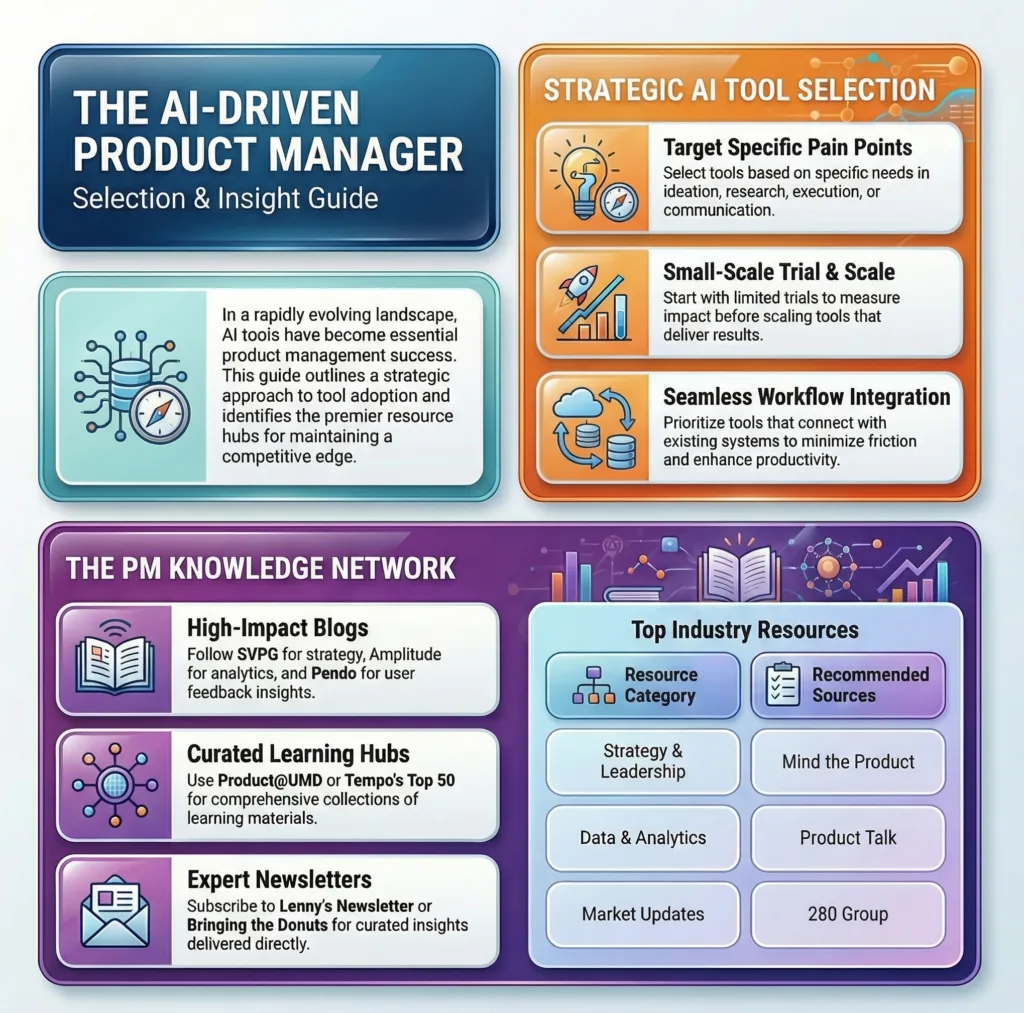
Selecting the right AI tools for product managers requires a clear understanding of your specific needs and challenges. It is important to focus on tools that address your pain points, whether they relate to ideation, research, execution, or communication.
The Product Manager’s Blueprint for AI Adoption and Industry Insight
Integration is another key factor to consider, as AI tools should work seamlessly with your existing systems to minimize friction. Starting with small trials and measuring the impact of each tool can help determine which solutions provide the most value. By scaling the tools that deliver results, product managers can build an effective and efficient AI powered workflow.
Where to Read Industry News Relevant to Product Managers
Staying updated with industry trends is essential for leveraging AI tools for product managers effectively. There are several blogs and resources that provide valuable insights into product management practices, strategy, and innovation.
The Silicon Valley Product Group Insights Blog offers deep expertise from experienced product leaders, covering topics such as product strategy and risk management. The Amplitude Blog focuses on product analytics and how teams can use data to build better products, while the Pendo Blog provides insights into user feedback and best practices.
Other valuable resources include the Product Talk, Mind the Product, and 280 Group, which offer a mix of practical advice, interviews, and industry updates. Newsletters such as Lenny’s Newsletter, Product Managers At Work, and Bringing the Donuts deliver curated insights directly to your inbox, making it easier to stay informed.
Additionally, curated hubs like Tempo’s Top 50 Product Management Blogs and the Product@UMD Resource Hub provide comprehensive collections of learning materials. Regularly engaging with these resources helps product managers stay ahead in a rapidly evolving field and maximize the benefits of AI tools for product managers.
Final Thoughts
AI tools for product managers are no longer optional but essential for success in todays situation. From managing workflows and analyzing data to improving communication and accelerating execution, these tools empower product managers to work smarter and deliver better results. By carefully selecting and integrating the right tools into their workflow, product managers can enhance productivity, make data driven decisions, and ultimately impress their bosses with improved performance and innovation.
Frequently Asked Questions
What are AI tools for product managers
AI Tools for Product Managers are software solutions that use artificial intelligence to automate tasks, analyze data, and support decision making in product management.
How do AI tools for product managers improve productivity
They automate repetitive tasks, streamline workflows, and provide insights that help product managers focus on strategic activities.
Which AI tools for product managers are best for beginners
Tools like monday.com, ChatGPT, and Productboard are user friendly and offer powerful features suitable for beginners.
Are AI tools for product managers expensive
Costs vary depending on the tool, but many offer scalable pricing plans and free trials to help teams evaluate their value.
How can I choose the right AI Tools for these product experts
Focus on your specific needs, ensure compatibility with existing systems, and start with trials before scaling the tools that deliver the best results.
What skills are most important for a product manager
The most important skills include strategic thinking, communication, leadership, data analysis, technical understanding, prioritization, and user empathy.
Do product managers need technical skills
Yes, a basic technical understanding is important to collaborate effectively with engineering teams and make informed decisions.
Is product management a good career choice
Yes, it offers strong career growth, high earning potential, and opportunities to work on innovative products.
Also read: Secret Power of an AI Chatbot that Sends Pictures

Dony Garvasis is the founder of Search Ethics, a freelance SEO consultant, and a passionate technology blogger. With over 8 years of experience in SEO, blogging and content marketing, I provide expert content on Tech, digital marketing, SEO, Artificial intelligence, gadgets, science, automobiles, lifestyle, tips, tutorials and much more. My mission is simple: Ethical Search, Genuine Results! I will make sure people everywhere get trustworthy and helpful information.