Now Reading: What Happened to Metaverse? The Truth Behind Meta’s Big Shift
-
01
What Happened to Metaverse? The Truth Behind Meta’s Big Shift
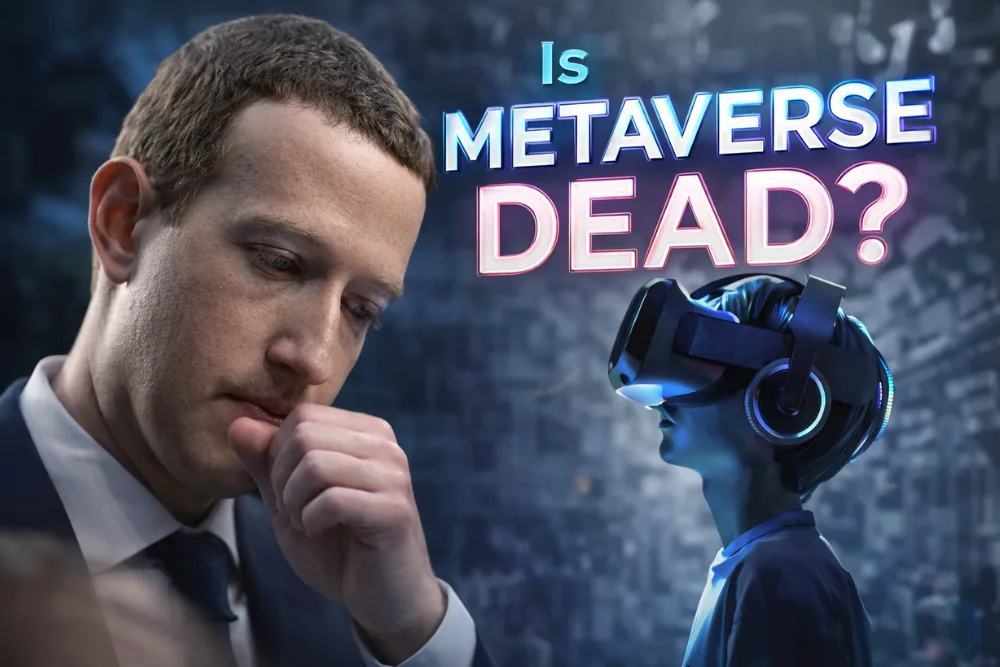
What Happened to Metaverse? The metaverse, once promoted as the future of digital interaction, has largely collapsed due to high costs, limited technology, and weak user adoption. By 2026, Meta has scaled back its ambitions, shutting down the VR version of Horizon Worlds and shifting its focus toward AI and mobile platforms.
The Initial Hype Around the Metaverse
The metaverse gained massive attention when it was introduced as a revolutionary digital space where people could work, socialize, and live immersive virtual experiences. It was positioned as the next evolution of the internet, promising a fully interactive environment powered by virtual reality. Meta, formerly Facebook, led this vision with significant investments and bold claims about transforming human interaction.
Read about: Updates to Your Meta Quest Experience in 2026
However, despite the excitement, the concept relied heavily on technologies that were still developing. Virtual reality hardware remained expensive, and the overall experience lacked the seamless usability required for mass adoption. While the idea captured global imagination, the execution failed to meet expectations.
Why the Metaverse Failed to Take Off
One of the biggest reasons behind the decline answers the question, what happened to metaverse, lies in its inability to attract a broad user base. The VR experience required costly headsets and offered limited practical value for everyday users. Many virtual environments were described as empty and underwhelming, which discouraged consistent engagement.
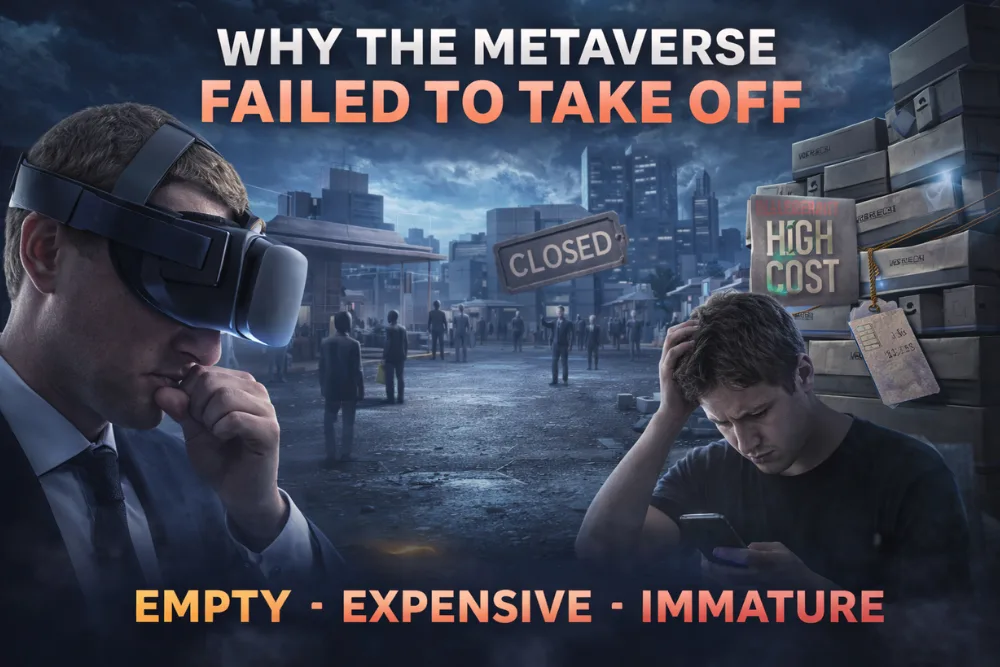
Additionally, the technology itself was not mature enough to deliver the immersive and smooth experience that was promised. Technical limitations, combined with high entry costs, created a barrier that prevented the metaverse from becoming mainstream. As a result, user adoption remained low, and the hype quickly faded.
Meta’s Massive Investment and Financial Losses
Meta invested heavily in building the metaverse through its Reality Labs division, spending between 70 billion and 80 billion dollars since 2021. These investments were aimed at developing both hardware and software to support immersive virtual environments.
Related search: Reality Labs division has lost more than $70.00 billion since 2021
Despite this massive spending, the returns were minimal. The company faced significant operating losses with little growth in user engagement. This financial strain played a major role in Meta’s decision to scale back its metaverse ambitions, marking one of the most expensive bets in tech history that failed to deliver expected results.
Horizon Worlds Shutdown and Strategic Shift
A key turning point in understanding what happened to metaverse is the shutdown of the VR version of Horizon Worlds. Meta announced that it will discontinue the VR platform on June 15, 2026, transitioning instead to a limited mobile version. This move signals a clear departure from the original VR first strategy.
The shutdown also follows the discontinuation of Horizon Workrooms, which was designed as a virtual office space. These decisions highlight a broader retreat from immersive virtual environments. Meta is now focusing on more accessible and scalable technologies, particularly mobile platforms and artificial intelligence.
The Shift Toward AI and New Technologies
As the metaverse vision fades, artificial intelligence has emerged as the new priority for the tech industry. Meta’s shift reflects a broader trend where companies are investing in AI driven solutions that offer immediate value and wider adoption.
Unlike the metaverse, AI does not require expensive hardware and can be integrated into existing platforms easily. This makes it more practical and appealing for both businesses and consumers. While elements of spatial computing may continue to evolve, the idea of a single, dominant virtual world has largely been abandoned.
Final Thoughts: What Happened to Metaverse?
The story of what happened to metaverse is a clear example of how hype alone cannot sustain a technological revolution. Despite ambitious goals and massive investments, the metaverse failed to overcome practical challenges such as cost, usability, and user engagement. Meta’s decision to shut down its VR platform marks the end of an era, while also signaling a shift toward more accessible innovations.
Frequently Asked Questions
What happened to metaverse
The metaverse declined due to high costs, limited technology, and low user adoption, leading Meta to scale back its efforts and shut down key VR platforms.
Is the metaverse completely dead
The original vision of a fully immersive VR social world has largely failed, but some technologies like spatial computing may still evolve.
Why did Meta shut down Horizon Worlds VR
Meta shut it down due to low engagement, high costs, and a strategic shift toward AI and mobile platforms.
How much money did Meta lose on the metaverse
Meta spent around 70 billion to 80 billion dollars on its metaverse efforts, with significant financial losses.
What is replacing the metaverse
Artificial intelligence has become the main focus for tech companies, offering more practical and scalable solutions.
Related product: Meta Smart Glasses: Next-Gen Smart Wearables

Dony Garvasis is the founder of Search Ethics, a freelance SEO consultant, and a passionate technology blogger. With over 8 years of experience in SEO, blogging and content marketing, I provide expert content on Tech, digital marketing, SEO, Artificial intelligence, gadgets, science, automobiles, lifestyle, tips, tutorials and much more. My mission is simple: Ethical Search, Genuine Results! I will make sure people everywhere get trustworthy and helpful information.