Now Reading: Can the Whatsapp be Hacked? Truth About Phishing Attacks
-
01
Can the Whatsapp be Hacked? Truth About Phishing Attacks
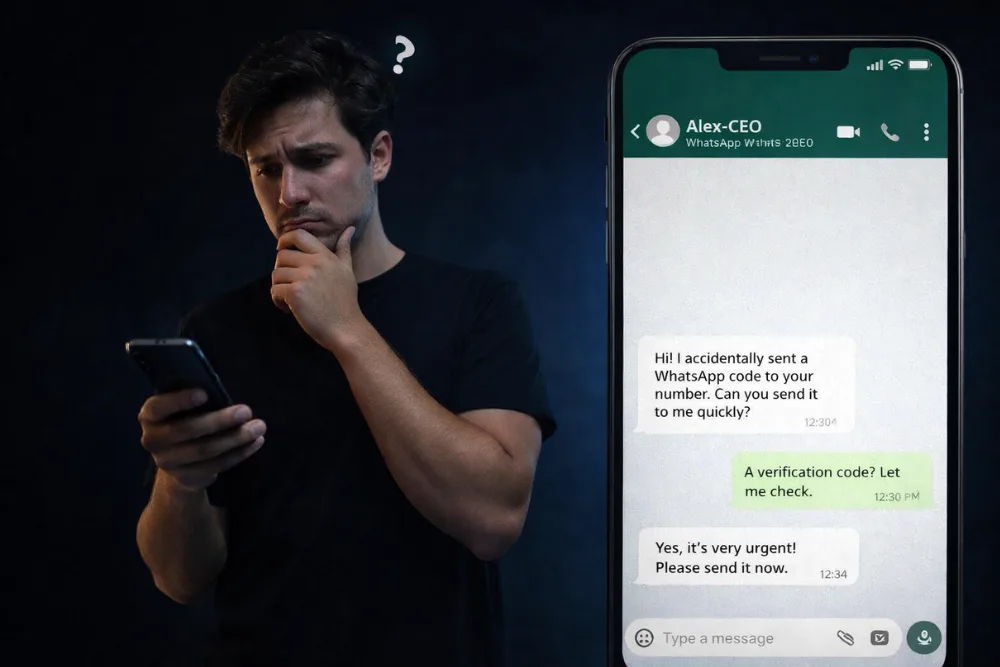
Can the whatsapp be hacked through phishing attacks? Yes, WhatsApp accounts can be hacked through phishing attacks when users are tricked into linking an attacker’s device or sharing verification details. These attacks do not require password cracking or SIM swapping. Instead, they exploit trust, fake login pages, and WhatsApp’s own device pairing features to gain full account access.
Understanding How Phishing Attacks Target WhatsApp Accounts
The question, Can the whatsapp be hacked, has become increasingly relevant as phishing attacks grow more sophisticated. Phishing is a form of social engineering where attackers trick users into revealing sensitive information or performing actions that compromise their accounts. In the case of WhatsApp, attackers do not necessarily break encryption or exploit technical vulnerabilities. Instead, they manipulate users into voluntarily granting access.
Learn about What Is Phishing and Why It Is So Dangerous
These attacks typically begin with a message that appears to come from a trusted contact. The message often includes an emotional or urgent lure, such as a claim that a photo was found or that verification is required. The goal is to prompt immediate action without careful scrutiny. Once the victim clicks the link provided in the message, they are redirected to a fake page designed to look legitimate.
What makes this tactic particularly dangerous is that it exploits familiarity. The interface may resemble a Facebook login page or a WhatsApp verification page, creating a false sense of security. The victim believes they are completing a routine security step, when in reality they are giving the attacker control over their account.
The GhostPairing Attack Explained
One of the most notable methods used in phishing campaigns against WhatsApp users is known as the GhostPairing attack. When discussing whether Can the whatsapp be hacked, understanding this technique is essential.
In a GhostPairing attack, the attacker sends a phishing link that directs the victim to a fake verification page. The page requests the victim’s phone number and then displays a WhatsApp pairing code. The victim is instructed to enter this code into their WhatsApp application, believing it is part of a security check or account verification process.
Read more about GhostPairing Attack
However, this pairing code is actually generated by the attacker’s device. By entering it into their own app, the victim unknowingly links the attacker’s device to their WhatsApp account using WhatsApp’s legitimate device pairing feature. This is not a breach of encryption. Instead, it is the misuse of a built in function.
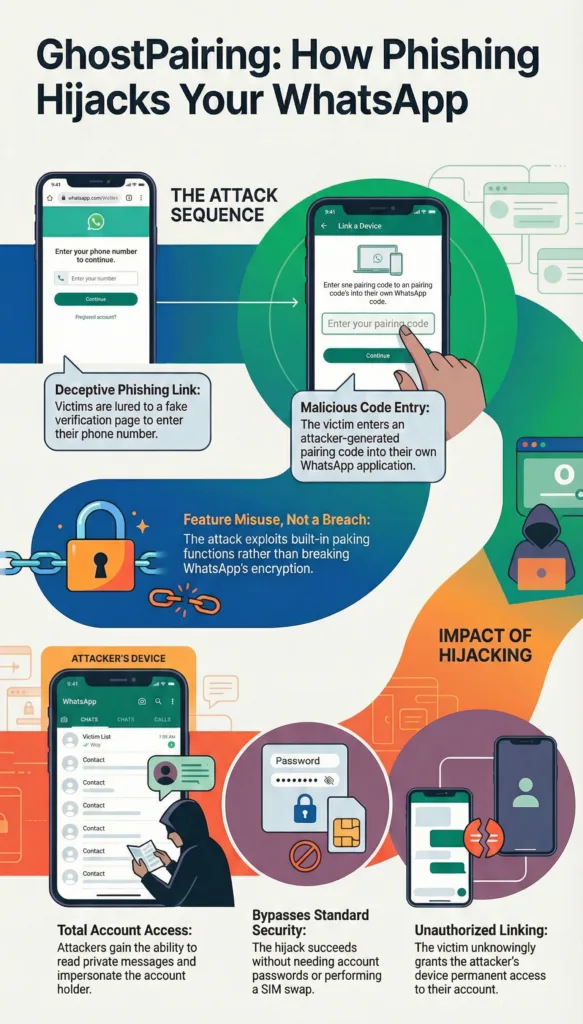
GhostPairing Infographic Guide
Once the pairing is complete, the attacker gains full access to the victim’s WhatsApp account. They can read private messages, send messages, and impersonate the account holder. Importantly, this method does not require the attacker to know the account password or perform a SIM swap. The victim effectively grants access themselves, under false pretenses.
How Malicious QR Codes Enable Account Hijacking
Another serious method that answers the question, Can the whatsapp be hacked, involves malicious QR codes. WhatsApp allows users to link devices through companion mode by scanning a QR code. While this feature is convenient for legitimate use, it can also be exploited.
Attackers may send QR codes that appear harmless or necessary for verification. When scanned, these codes silently link the attacker’s device to the victim’s account. Because the process uses WhatsApp’s official linking system, it may not trigger immediate security warnings. The victim may not even realize that another device now has access to their messages.
This method is particularly effective in business environments where WhatsApp is used for sensitive communications. Once linked, the attacker can monitor conversations continuously. The lack of obvious alerts makes this tactic especially dangerous, as the compromise can persist for an extended period before detection.
What Attackers Can Do After Gaining Access
When asking, Can the whatsapp be hacked, it is important to understand the consequences of a successful attack. Once attackers gain access through phishing or device linking, they effectively control the account.
They can read private conversations, which may include personal information, financial details, or confidential business discussions. They can send messages posing as the account holder, which allows them to scam friends, family, or colleagues. This impersonation can damage reputations and cause financial loss.
In many cases, attackers use compromised accounts to spread further phishing messages. By leveraging the trust between contacts, they increase the likelihood that others will click malicious links. This creates a chain reaction of compromised accounts, amplifying the impact of a single successful phishing attempt.
The fact that these attacks rely on user actions rather than technical exploits makes them harder to prevent through software alone. Awareness and vigilance are critical components of defense.
Why Phishing Attacks Are So Effective
The effectiveness of phishing in answering the question, Can the whatsapp be hacked, lies in human psychology. Attackers rely on urgency, curiosity, and trust. Messages such as “Hey, I just found your photo!” are designed to provoke an immediate response.
When a message appears to come from a known contact, skepticism decreases. Users are less likely to question the authenticity of the link. Additionally, fake pages are often carefully designed to mimic legitimate login or verification screens, further reducing suspicion.
Another factor is the misunderstanding of WhatsApp’s security features. Many users believe that end to end encryption makes their accounts immune to hacking. While encryption protects messages in transit, it does not prevent a user from voluntarily linking an attacker’s device. This misconception creates a false sense of security.
The combination of social engineering and technical familiarity makes phishing attacks highly successful, even among users who consider themselves cautious.
How to Protect Your WhatsApp Account from Phishing
To address the concern, Can the whatsapp be hacked, prevention strategies must be clearly understood and consistently applied.
| # | Security Rule / Practice | Strategy |
|---|---|---|
| 1 | Avoid Clicking Suspicious Links | Never click on suspicious links. Even if a message appears to come from a trusted contact, verify its authenticity before taking action. |
| 2 | Do Not Share Personal Information | Never provide your phone number or personal information on untrusted websites. Legitimate verification processes will not require sensitive details on unfamiliar pages. |
| 3 | Never Share WhatsApp Verification Code | Your WhatsApp verification code is meant only for confirming your identity on your own device. Never share it with anyone. |
| 4 | Enable Two-Step Verification | Activate two-step verification in WhatsApp to add an extra layer of security. It requires a PIN when registering your phone number again. |
| 5 | Check Linked Devices Regularly | Review the Linked Devices section in WhatsApp settings to see connected devices. Log out immediately if you notice an unfamiliar device. |
| 6 | Use Device Security Features | Enable FaceID, TouchID, or other device security features to prevent unauthorized access to WhatsApp. |
| 7 | Be Cautious of Verification Requests | Be wary of messages asking for verification codes or promising content in exchange for entering codes. Legitimate services rarely operate this way. |
What to Do If You Suspect Your Account Has Been Hacked
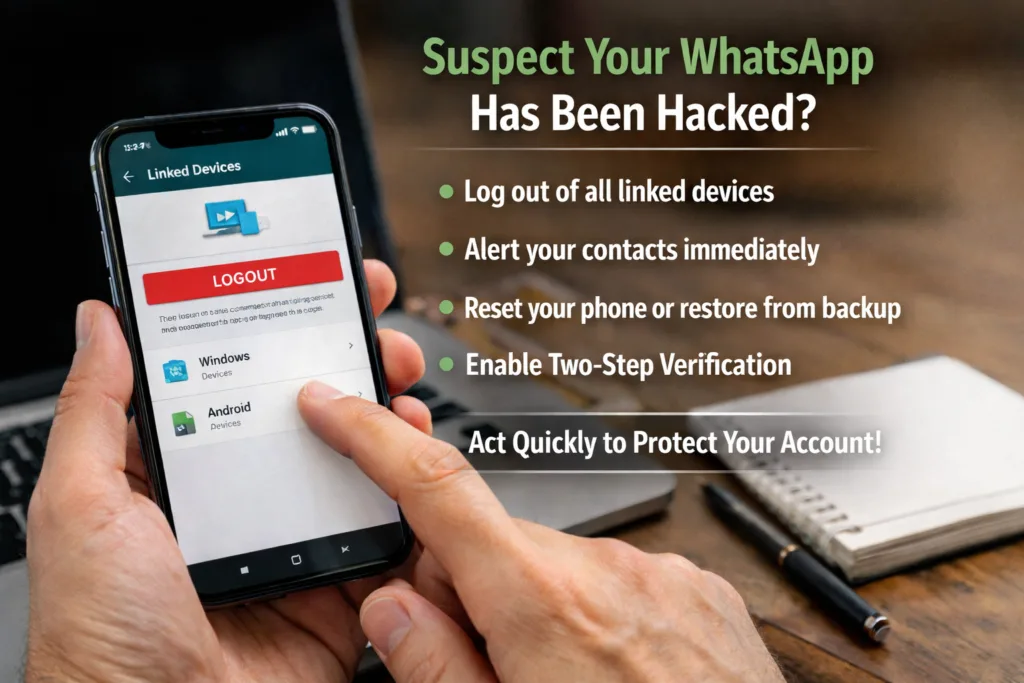
If you suspect that the answer to Can the whatsapp be hacked applies to your own account, immediate action is essential. The first step is to log out of all linked devices through the Linked Devices section in WhatsApp settings. This can immediately revoke the attacker’s access.
Next, inform your contacts that your account may have been compromised. Advise them not to trust any unusual messages or requests for money or information. This helps prevent further spread of the attack.
Consider resetting your phone or restoring it from a backup created before the suspected compromise. This step can remove any lingering malicious elements. It is also wise to review your security settings, enable two step verification if it is not already active, and ensure that your device’s operating system is up to date.
Prompt action can limit the damage and prevent long term consequences.
The Importance of Ongoing Vigilance
The recurring question, Can the whatsapp be hacked, highlights a broader issue in digital security. Technology alone cannot eliminate risk. Even platforms with strong encryption and advanced protections remain vulnerable to human error.
Phishing attacks evolve continuously. Attackers refine their messages, improve the design of fake pages, and adapt to new security features. As a result, users must remain vigilant. Regularly reviewing account settings, staying informed about emerging threats, and maintaining a cautious mindset are essential habits.
In business environments, where WhatsApp is often used for client communication and sensitive data exchange, training employees about phishing risks is especially important. A single compromised account can have far reaching consequences.
Ultimately, awareness is the strongest defense. Recognizing that phishing targets user behavior, not just software, empowers individuals to make safer choices online.
Conclusion
Can the whatsapp be hacked through phishing attacks? The answer is yes, and these attacks can lead to full account takeover when users are tricked into linking malicious devices or entering verification codes on fake pages. Techniques such as GhostPairing and malicious QR code linking exploit legitimate features rather than breaking encryption. By avoiding suspicious links, enabling two step verification, monitoring linked devices, and acting quickly if compromise is suspected, users can significantly reduce their risk and maintain control of their accounts.
Frequently Asked Questions
Can the whatsapp be hacked without a password?
Yes. Through phishing methods like GhostPairing, attackers can gain access without knowing your password. They trick you into linking their device using legitimate pairing features.
What is a GhostPairing attack?
A GhostPairing attack is a phishing technique where a victim is deceived into entering a WhatsApp pairing code that links the attacker’s device to their account, granting full access.
How do malicious QR codes compromise WhatsApp?
Malicious QR codes can link an attacker’s device to your WhatsApp account through companion mode. Once scanned, the attacker gains ongoing access to messages.
How can I check if my WhatsApp is linked to unknown devices?
Open WhatsApp settings and review the Linked Devices section. If you see an unfamiliar device, log it out immediately.
What should I do first if I think my account is hacked?
Immediately log out of all linked devices, notify your contacts about the potential compromise, and enable or update two step verification to secure your account.
Related search: How to Translate on WhatsApp Instantly Without Leaving the Chat

Dony Garvasis is the founder of Search Ethics, a freelance SEO consultant, and a passionate technology blogger. With over 8 years of experience in SEO, blogging and content marketing, I provide expert content on Tech, digital marketing, SEO, Artificial intelligence, gadgets, science, automobiles, lifestyle, tips, tutorials and much more. My mission is simple: Ethical Search, Genuine Results! I will make sure people everywhere get trustworthy and helpful information.