Now Reading: Secretly Filmed by Smart Glasses? This App Can Alert You
-
01
Secretly Filmed by Smart Glasses? This App Can Alert You
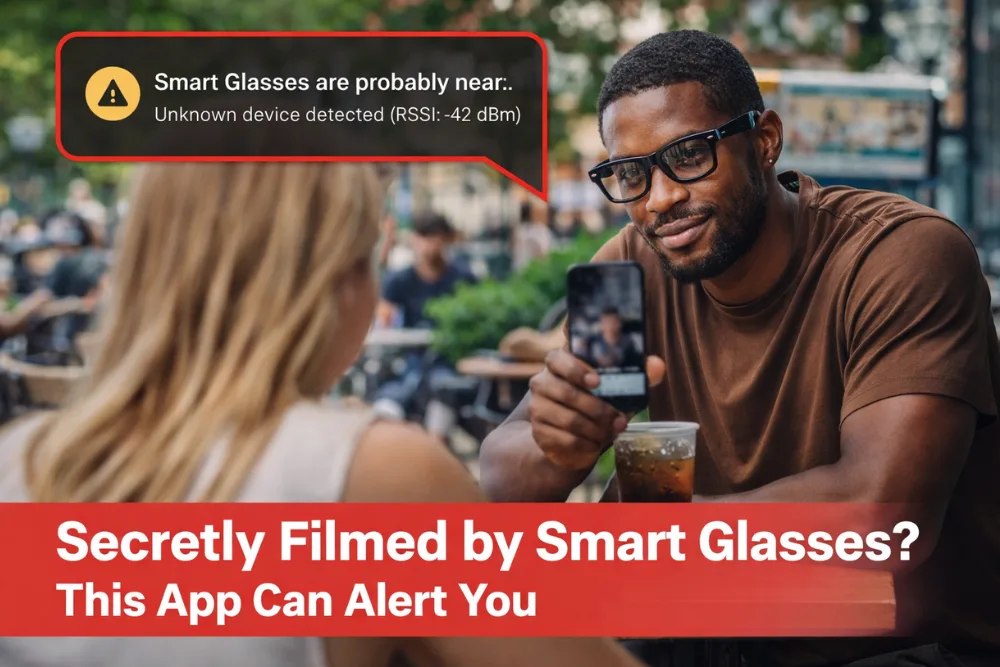
Is someone secretly recording you with their glasses? Smart glasses with built in cameras, including models like the Ray-Ban Meta, can be used to capture photos and videos without obvious signs. A new app called Nearby Glasses helps detect certain smart glasses by scanning for Bluetooth signals nearby, alerting you if compatible devices are present.
The Growing Concern Around Smart Glasses and Privacy
Smart glasses with integrated cameras are becoming more common in public spaces, social settings, and everyday conversations. While these devices are marketed as innovative wearable technology, privacy concerns are rising, especially as reports emerge of women being recorded without their consent.
Unlike traditional smartphones, smart glasses can discreetly capture video while the wearer appears to be maintaining normal eye contact.
Devices such as the Ray Ban Meta smart glasses blend into everyday fashion, making it difficult to tell whether someone is simply wearing eyewear or actively recording. This subtle design raises ethical questions about consent, transparency, and personal boundaries. As surveillance technology becomes more normalized, individuals are increasingly looking for ways to protect themselves and regain a sense of control.
How the Nearby Glasses App Works
In response to these concerns, a new app called Nearby Glasses has been developed to help people identify certain smart glasses in their vicinity. The Nearby Glasses app is available on the Google Play Store and is designed with transparency in mind, as its code is open source and publicly accessible on the GitHub platform.
Nearby Glasses works by scanning for Bluetooth signals emitted by specific smart glasses. Many wearable devices use Bluetooth to connect to smartphones or other hardware. When the app detects compatible Bluetooth signals nearby, it alerts the user, indicating that smart glasses may be present in the area. This gives individuals an additional layer of awareness during in person interactions.
The concept is straightforward. Your phone continuously scans for detectable Bluetooth signals. If certain smart glasses are broadcasting identifiable signals, the app recognizes them and provides a warning. While this does not confirm that recording is taking place, it does signal that recording capable hardware may be nearby.
Smart glasses are becoming a common part of everyday life. However, they often look just like normal glasses, so it can be hard to tell the difference. This app scans for their Bluetooth signals and checks their unique company identifiers. If it finds smart glasses nearby, it sends you a notification. You can also adjust the distance settings based on your preference, so you can take action if needed.
Limitations and Developer Transparency
The developer behind Nearby Glasses, hobbyist creator Yyes Jeanrenaud, has been clear about the app’s limitations. The detection system is not perfect and can generate false positives. For example, some virtual reality headsets and other Bluetooth enabled devices may trigger alerts, even if they are not smart glasses designed for recording.
Jeanrenaud has emphasized that users should not walk away with a false sense of security. The app can only detect certain devices that emit recognizable Bluetooth signals. If a device does not broadcast in a detectable way, or if Bluetooth is disabled, the app may not identify it. This transparency aligns with responsible development practices and helps users understand both the benefits and constraints of the technology.
By openly sharing the app’s code on GitHub, the developer invites scrutiny and collaboration. Open source access allows other developers and security experts to review how the app functions, suggest improvements, and verify that it operates as described. This openness strengthens trust and aligns with best practices in digital safety tools.
A Broader Pushback Against Surveillance Technology
The emergence of Nearby Glasses reflects a broader social response to the normalization of surveillance technology. As wearable cameras become more discreet and more widely adopted, concerns about consent and privacy naturally intensify. Tools like this app represent grassroots efforts to rebalance power between technology users and those who may be unknowingly recorded.
Although the app is not flawless, its existence signals a shift in public awareness. People are no longer passively accepting the expansion of recording devices into everyday life. Instead, developers and users alike are exploring ways to identify, question, and respond to potentially invasive technology.
This development underscores a larger conversation about digital ethics. As smart devices become more integrated into daily routines, clear norms around transparency and consent will be essential. Apps that detect nearby hardware are one small but meaningful step in that direction.
Final Thought
Smart glasses such as Ray Ban Meta models can discreetly record video, raising legitimate privacy concerns. The Nearby Glasses app offers a practical, though imperfect, method of detecting certain Bluetooth emitting smart glasses nearby. While it cannot guarantee protection, it provides added awareness in an era where wearable surveillance technology is increasingly common. Ultimately, awareness, transparency, and informed use of technology remain key to protecting personal privacy.
Frequently Asked Questions
What are smart glasses with cameras?
They are wearable glasses equipped with built in cameras that can capture photos and videos discreetly.
How does the Nearby Glasses app detect devices?
It scans for Bluetooth signals emitted by certain smart glasses and alerts users when compatible signals are detected.
Is the Nearby Glasses app completely reliable?
No, it can generate false positives and may not detect all smart glasses, especially if Bluetooth signals are limited or disabled.
Where is the app available?
It is available on the Google Play Store, and its open source code can be reviewed on GitHub.
Does detecting smart glasses mean someone is recording me?
Not necessarily. Detection only indicates that recording capable hardware may be nearby, not that recording is actively happening.

Dony Garvasis is the founder of Search Ethics, a platform dedicated to transparency, authenticity, and ethical digital practices. With over 8 years of experience in SEO and digital marketing, I provide expert content on Tech, digital marketing, SEO, Artificial intelligence, gadgets, science, automobiles, lifestyle, tips, tutorials and much more. My mission is simple: Ethical Search, Genuine Results! I will make sure people everywhere get trustworthy and helpful information.