Now Reading: Science Says Sleeping in a Really Dark Room Will Make You Smarter
-
01
Science Says Sleeping in a Really Dark Room Will Make You Smarter
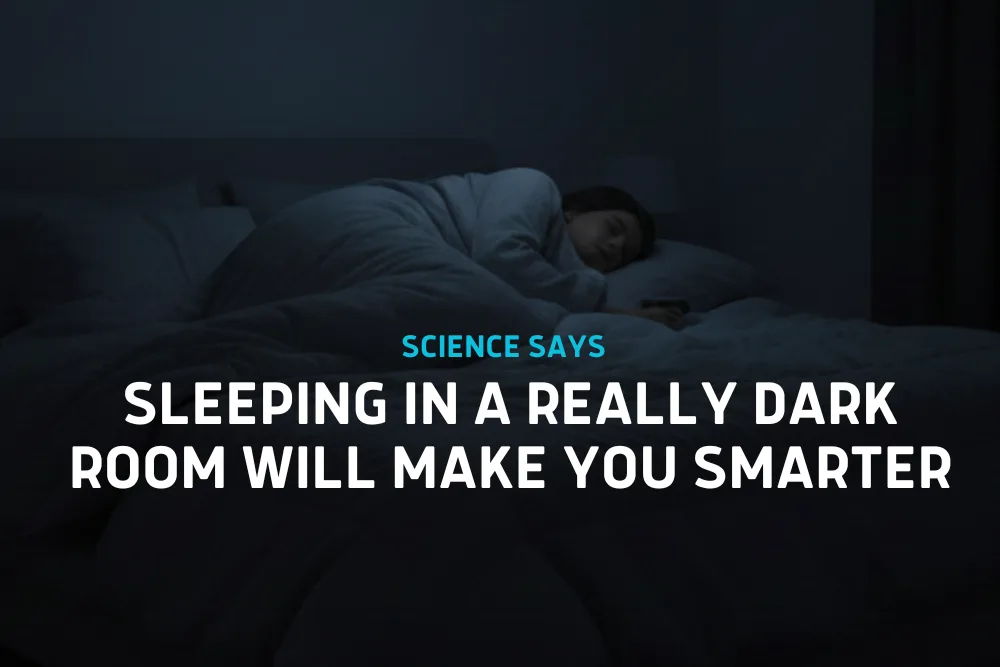
Quality sleep has long been linked to better health and performance, but emerging research shows that the level of darkness in your bedroom may play an even greater role than previously believed. Studies now suggest that sleeping in near total darkness can significantly enhance memory, alertness, and cognitive performance. For anyone seeking a mental edge, from entrepreneurs to students to busy professionals, the solution may be as simple as turning off the lights.
Why Sufficient Sleep Already Boosts Performance?
Most adults need at least seven hours of sleep per night to think clearly and perform at their best. Research published in Cell Research confirms that only a tiny percentage of people function well on less than seven hours. For the vast majority, regularly sleeping only five to six hours reduces productivity by up to nineteen percent. Dropping to five hours of sleep pushes that number closer to thirty percent.
Sleep deprivation affects decision making as well. Studies in Entrepreneurship Theory and Practice and Journal of Business Venturing show that lack of sleep leads to impulsive business decisions, weaker ideas, and a tendency to believe poor ideas are actually good ones. In short, adequate sleep is more than rest, it is a competitive advantage.
Why Darkness Matters for Better Brain Function?
New findings highlight an additional factor in sleep quality the absence of light. A 2022 study published in Sleep found that sleeping in near total darkness can improve learning ability, reaction speed, and memory. Participants experienced these benefits after just two nights of sleeping with a light-blocking mask.
The science behind this may involve the synaptic homeostasis hypothesis. Darkness promotes slow-wave sleep, a stage in which the brain reorganizes and resets synapses that became overloaded during the day. This process restores the brain’s ability to encode new information, making you more alert, more focused, and better equipped to learn both cognitive and motor skills the following day.
How Even Small Amounts of Light Disrupt Sleep?
Many people underestimate how sensitive the brain is to light at night. Even minimal exposure from a phone screen, television, or streetlamp can interfere with melatonin production. Melatonin helps regulate deep sleep stages, and when it is suppressed, the brain cannot fully recover.
Long term exposure to nighttime light is linked to higher stress, emotional imbalance, anxiety, and daytime fatigue. Instead of entering full restorative sleep, the brain stays partially alert, preventing complete recovery and diminishing focus and memory.
Simple Ways to Create a Truly Dark Sleep Environment
Achieving a darker room is straightforward and does not always require a sleep mask. Researchers found that even when participants felt a mask was uncomfortable, it did not reduce their sleep quality or alertness. Still, you can improve your environment without wearing one.
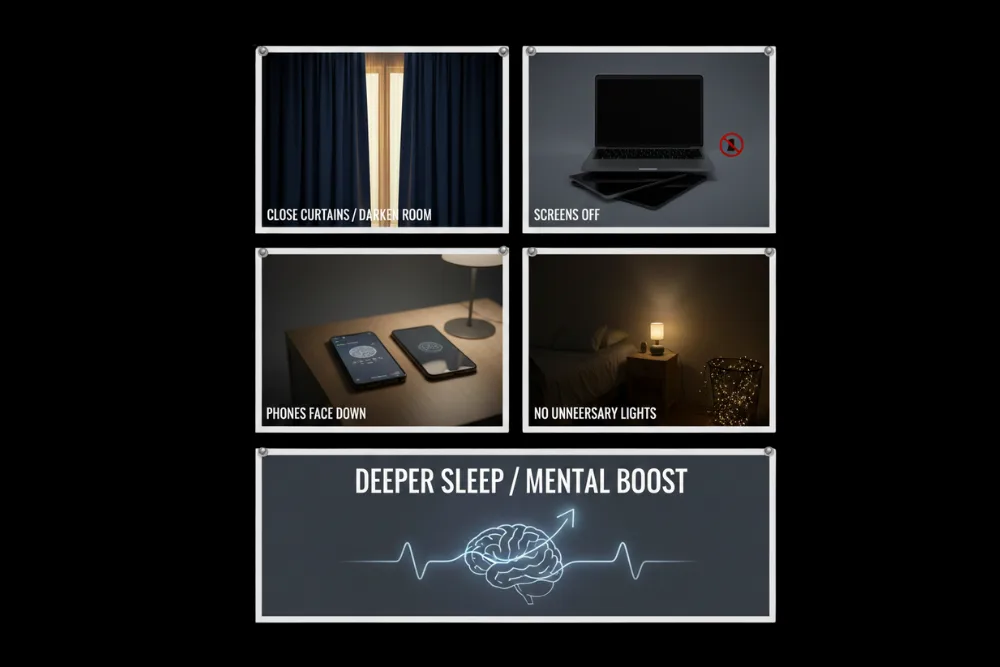
- Close curtains fully or use room darkening options
- Turn off screens and device notifications
- Place phones face down to minimize intermittent light
- Remove unnecessary light sources
- Reducing ambient light helps your brain enter deeper, more restorative sleep cycles, which boosts mental performance the following day.
Read about Wearing an eye mask during overnight sleep improves episodic learning and alertness
Bottom Line
Science is clear that both the amount and quality of sleep play crucial roles in cognitive function. Sleeping in a dark room enhances your brain’s ability to reset, learn, and stay alert. Whether through blackout curtains, removing light sources, or using a sleep mask, creating darkness at night offers a simple and effective way to support better mental performance.
FAQ
Does sleeping in complete darkness really improve memory?
Yes. Research shows that darkness supports deeper sleep, which enhances memory and learning ability.
Can small lights like a phone screen disrupt sleep?
Even minimal light can reduce melatonin and prevent the brain from entering restorative sleep stages.
Do I need a sleep mask to benefit from darkness?
A mask helps, but you can also block light by darkening your room with curtains and eliminating light sources.
How quickly do the benefits appear?
Studies show improvements in alertness and learning after just two nights of sleeping in darkness.
Is sleeping in darkness good for everyone?
Most people benefit from a darker room unless advised otherwise by a doctor.
Get more Lifestyle news from Search Ethics.

Dony Garvasis is the founder of Search Ethics, a platform dedicated to transparency, authenticity, and ethical digital practices. With over 8 years of experience in SEO and digital marketing, I provide expert content on Tech, digital marketing, SEO, Artificial intelligence, gadgets, science, automobiles, lifestyle, tips, tutorials and much more. My mission is simple: Ethical Search, Genuine Results! I will make sure people everywhere get trustworthy and helpful information.