Now Reading: Namecheap vs Hostinger: Which Is Better?
-
01
Namecheap vs Hostinger: Which Is Better?
When comparing Namecheap vs Hostinger for domain registration and hosting, the right choice depends on your priorities. Namecheap is widely known for affordable domains and free privacy protection, while Hostinger stands out with innovative AI domain tools and highly rated hosting services. Both offer strong features, but they serve slightly different needs.
Choosing a domain registrar and hosting provider is one of the most important decisions when building a website. Your domain name represents your brand identity, while your hosting provider determines your website performance, reliability, and scalability. In this detailed Namecheap vs Hostinger guide, we examine pricing, features, hosting performance, support quality, and long term value to help you make a confident and informed decision.
Overview of Namecheap
Namecheap has built a strong reputation as one of the best overall domain registrars. It is frequently recognized for offering a wide range of domain extensions at competitive prices, along with a simple and user friendly domain search experience. For individuals, startups, and small businesses seeking affordability and reliability, Namecheap often becomes a natural starting point.
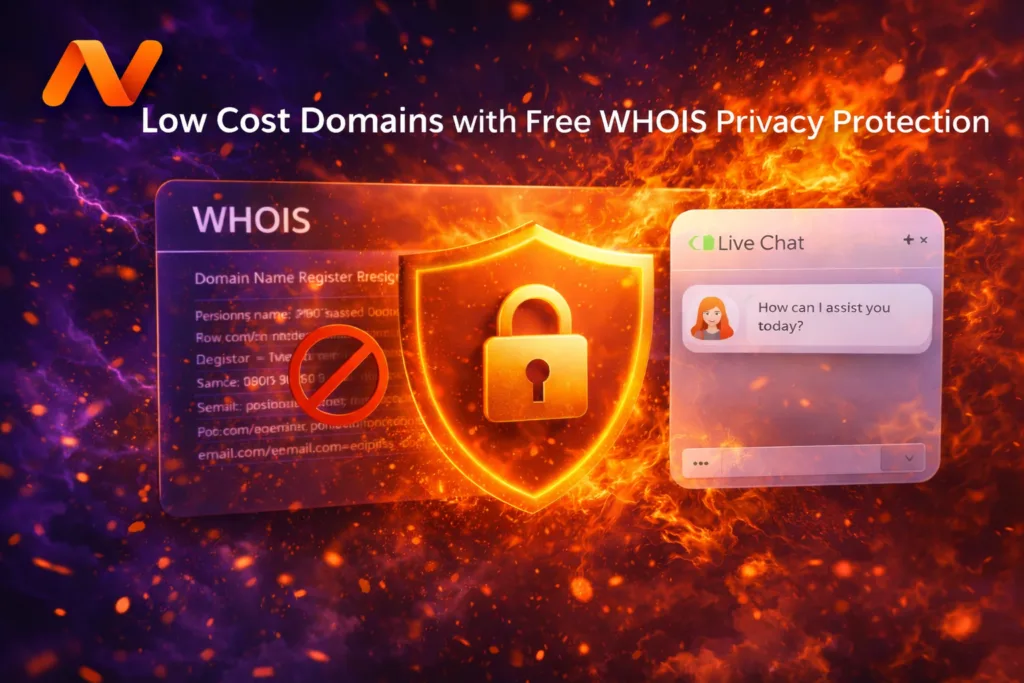
A major advantage of Namecheap is its focus on low cost domain registration without sacrificing essential features. One of its standout benefits is free WHOIS privacy protection, which helps protect personal contact details from public databases. Many registrars charge extra for this feature, so its inclusion adds meaningful value. Namecheap also offers live chat support, ensuring customers can quickly resolve issues or ask questions about domain management.
Although Namecheap also provides hosting services, its strongest recognition remains in domain registration. For users whose main goal is securing a domain at an affordable rate with privacy included, Namecheap presents a straightforward and dependable option.
Overview of Hostinger
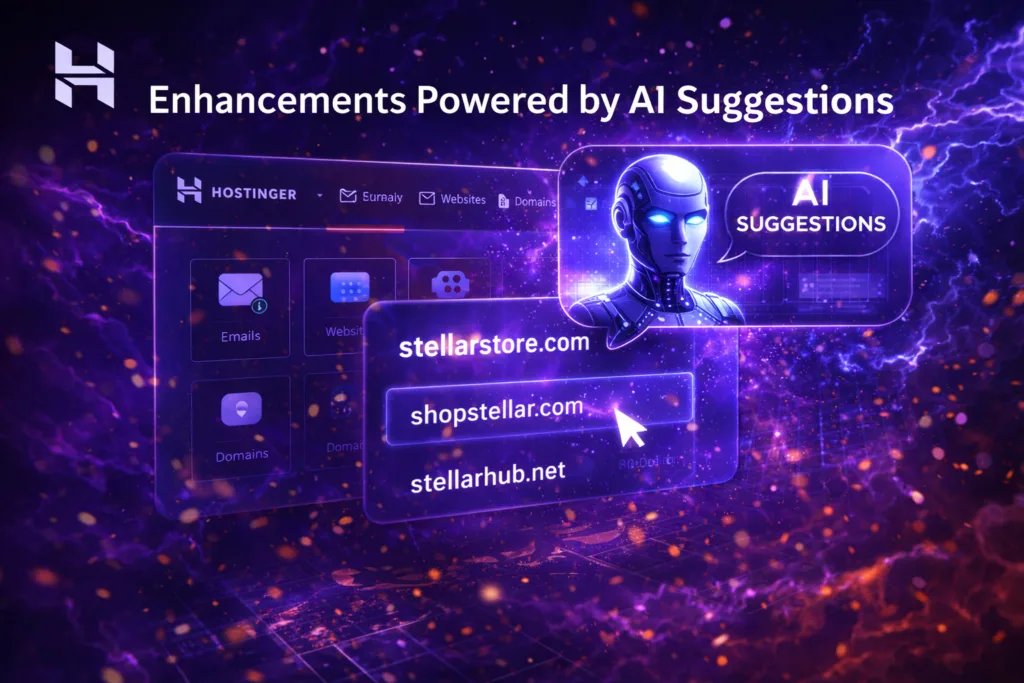
Hostinger approaches domain registration and hosting from a slightly different angle. While it offers domain registration services, it is particularly well regarded as a web hosting provider. Hostinger is known for delivering innovative features, especially its AI tools designed to help users generate creative and available domain name suggestions.
These AI tools can be especially helpful if you are struggling to find a domain that matches your brand or if your preferred name is already taken. Instead of manually searching through variations, Hostinger simplifies the brainstorming process with intelligent recommendations.
In addition to domain services, Hostinger provides multiple hosting solutions, including shared hosting, VPS hosting, cloud hosting, and dedicated hosting options. This makes it appealing for users who want to bundle domain registration and hosting in one place. Many hosting plans also include a free domain for the first year, adding further convenience and value.
When analyzing Namecheap vs Hostinger, it becomes clear that Hostinger offers a more comprehensive hosting ecosystem, especially for users planning long term website growth.
Also read: Top 6 Hosting Providers with Fast Website Loading Speeds
Pricing Comparison
Pricing is often the first factor users consider in the Namecheap vs Hostinger comparison. Namecheap is widely recognized for its competitive domain pricing. It frequently offers low introductory rates and includes free WHOIS privacy protection, which significantly improves overall value. For budget conscious users, this can be a deciding factor.
Hostinger, on the other hand, may not always provide the absolute lowest domain registration price when compared purely on initial cost. However, it often delivers strong value when domains are bundled with hosting packages. If you plan to purchase hosting anyway, the combined offering may balance out the pricing difference.
It is important to consider more than just the initial registration fee. Renewal costs, included features, and bundled benefits all contribute to long term affordability. When evaluating Namecheap vs Hostinger, users should carefully review renewal rates and package inclusions before making a final decision.
Domain Registration Features
Domain management tools and additional features play an essential role in user experience. Namecheap excels in offering a straightforward domain registration process, along with free privacy protection and an intuitive dashboard for managing domains. Its domain search tool is widely considered user friendly, allowing customers to quickly check availability and secure their preferred names.
Hostinger differentiates itself with advanced AI powered domain suggestions. These tools can generate creative name ideas based on user input, which is particularly useful during the early stages of brand development. If brainstorming is a challenge, this feature can save time and inspire unique domain concepts.
Both providers typically offer essential domain management capabilities, including DNS management and renewal controls. In the broader Namecheap vs Hostinger discussion, the key difference lies in simplicity versus innovation. Namecheap prioritizes affordability and straightforward management, while Hostinger emphasizes smart tools and integrated services.
Web Hosting Capabilities
Hosting performance is a crucial factor when building a website. While Namecheap does offer hosting services, Hostinger is especially well regarded as a web hosting provider. Hostinger provides a wide range of hosting solutions, including shared hosting for beginners, VPS hosting for growing businesses, cloud hosting for enhanced scalability, and dedicated hosting for more demanding projects.
Also read: Best Web Hosting Providers for Small Business Websites Explained
This variety allows users to scale their websites as traffic grows. Many hosting providers, including Hostinger, also include a free domain for the first year when purchasing a hosting plan. This bundling convenience makes it easier for new website owners to launch quickly.
In the Namecheap vs Hostinger comparison, Hostinger generally stands out in hosting flexibility and overall hosting reputation. For users primarily focused on high quality hosting performance and scalability, Hostinger often becomes the stronger option.
User Experience and Ease of Use
Ease of use can significantly impact your overall experience, especially if you are new to website management. Namecheap offers a clean interface and a simple domain search process. Its dashboard is designed to be accessible even for beginners, making domain management straightforward.
Also read: Best Tools to Build a Website Without Coding Skills
Hostinger also emphasizes usability, particularly within its hosting platform. The addition of AI domain suggestion tools enhances the experience by simplifying the creative process. For users who appreciate guided assistance and integrated tools, Hostinger may feel more dynamic.
When evaluating Namecheap vs Hostinger from a usability perspective, both providers offer beginner friendly experiences, but Hostinger adds a layer of innovation through automation and intelligent suggestions.
Customer Support and Reliability
Reliable customer support ensures that issues can be resolved quickly and efficiently. Namecheap offers live chat support, which provides immediate assistance for domain related concerns. This accessibility can be reassuring for users managing important digital assets.
Hostinger also maintains a reputation for dependable customer service, especially in the context of hosting support. Since hosting environments can be more technically complex than domain registration alone, responsive assistance becomes even more valuable.
In the Namecheap vs Hostinger comparison, both providers deliver support options that meet general user expectations. However, users heavily invested in hosting may benefit from Hostinger’s specialized hosting assistance.
Long Term Considerations
When choosing between Namecheap vs Hostinger, it is essential to look beyond initial pricing and features. Renewal fees, available domain extensions, privacy options, security measures, and scalability all play a role in long term satisfaction.
Also read: What Is Phishing and Why It Is So Dangerous
Namecheap is often ideal for users seeking affordable domain registration with privacy protection included. Its straightforward approach makes it a dependable choice for securing and managing domains without unnecessary complexity.
Hostinger is well suited for users who want innovative tools and a highly rated hosting environment. Its AI powered domain suggestions and diverse hosting options provide flexibility for businesses planning future growth.
Ultimately, the best choice depends on whether your primary focus is low cost domain registration or an integrated hosting ecosystem with advanced features.
Conclusion
The Namecheap vs Hostinger comparison highlights two strong but slightly different approaches to domain registration and hosting. Namecheap stands out for affordability, free WHOIS privacy protection, and a user friendly domain search experience. Hostinger excels in innovative AI domain suggestions and comprehensive hosting solutions.
| Criteria | Recommended Provider | Explanation |
|---|---|---|
| Affordable domain with essential features | Namecheap | Ideal for users who prioritize low cost domain registration with important features like privacy protection included. |
| Intelligent tools and powerful hosting bundle | Hostinger | Suitable for users who want AI powered tools and a strong hosting platform combined in one package. |
| Long term decision making | Depends on your goals | Carefully evaluate your goals, budget, and growth plans to choose the provider that best aligns with your long term vision. |
Frequently Asked Questions
What is the main difference between Namecheap and Hostinger?
The main difference in Namecheap vs Hostinger is that Namecheap focuses heavily on affordable domain registration with free privacy protection, while Hostinger is particularly strong in web hosting and offers AI tools for domain suggestions.
Is Namecheap cheaper than Hostinger?
Namecheap is generally known for more competitive domain pricing and includes free WHOIS privacy protection. Hostinger may provide better overall value when domains are bundled with hosting plans.
Does Hostinger offer free domains with hosting?
Many Hostinger hosting plans include a free domain for the first year, making it convenient for users launching a new website.
Which is better for hosting, Namecheap vs Hostinger?
In the Namecheap vs Hostinger comparison, Hostinger is often considered stronger in hosting due to its range of shared, VPS, cloud, and dedicated hosting solutions.
What should I consider before choosing a domain registrar?
You should consider renewal fees, privacy protection, available domain extensions, security features, customer support quality, and whether you plan to bundle hosting with domain registration.
Also read: How to Start a Technical Blog with Easy-to-Use Website Builders

Dony Garvasis is the founder of Search Ethics, a platform dedicated to transparency, authenticity, and ethical digital practices. With over 8 years of experience in SEO and digital marketing, I provide expert content on Tech, digital marketing, SEO, Artificial intelligence, gadgets, science, automobiles, lifestyle, tips, tutorials and much more. My mission is simple: Ethical Search, Genuine Results! I will make sure people everywhere get trustworthy and helpful information.