Now Reading: How to Compare Fuel Efficiency Among Popular Automobile Models
-
01
How to Compare Fuel Efficiency Among Popular Automobile Models
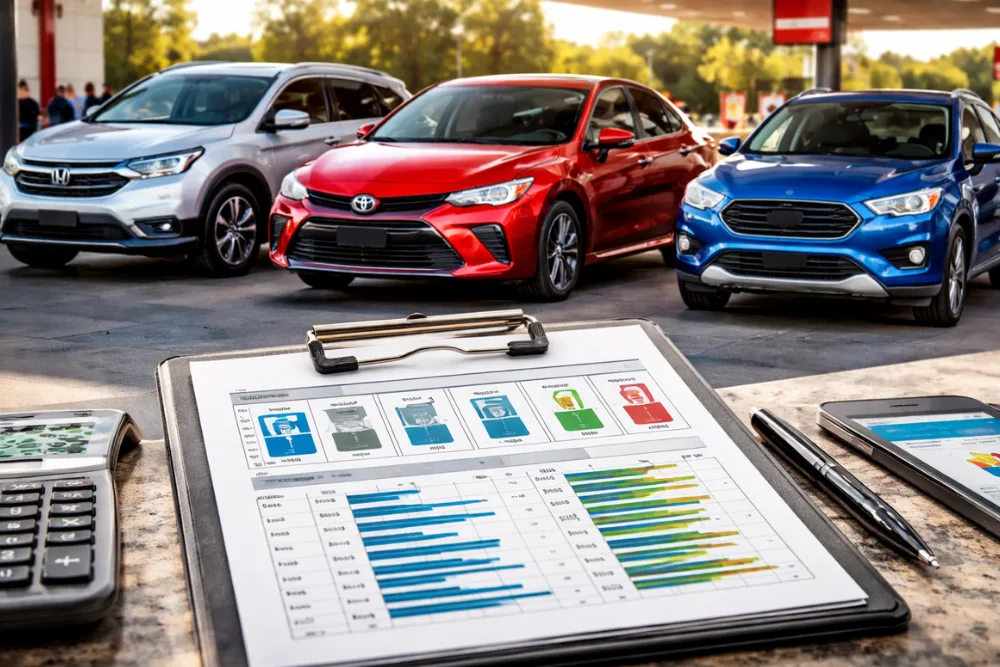
To compare fuel efficiency among popular automobile models effectively start by using official MPG ratings. These compare vehicles within the same class consider powertrain types, review real world fuel data and balance fuel savings with your budget and driving needs. This structured approach helps you choose a car that delivers long term fuel savings without compromising practicality or comfort.
Understanding Fuel Efficiency and Why It Matters
Fuel efficiency measures how far a vehicle can travel using a specific amount of fuel and it is commonly expressed as miles per gallon. Higher fuel efficiency means lower fuel costs over time and reduced environmental impact. For most buyers fuel efficiency is not just about saving money at the pump but also about choosing a vehicle that aligns with daily driving habits long term ownership goals and overall cost management.
When comparing popular automobile models fuel efficiency becomes even more important because vehicles within the same price range can have significantly different fuel consumption patterns. A car that looks affordable initially may cost much more to operate over several years if its fuel efficiency is low. Understanding the basics of fuel efficiency allows buyers to make informed and confident decisions.
Using Official MPG Ratings as a Starting Point
What Official MPG Ratings Represent?
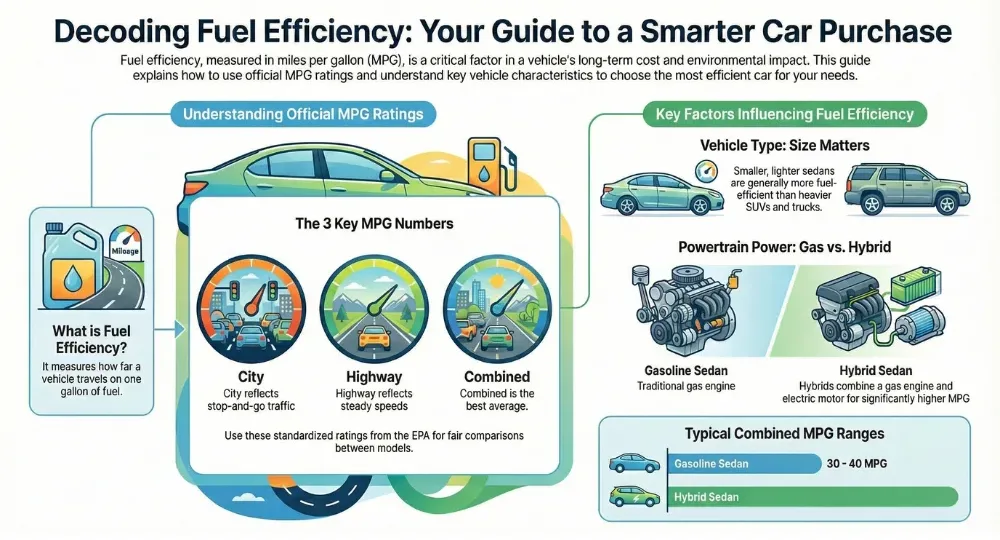
Official MPG ratings are standardized fuel economy estimates provided by regulatory authorities. In the United States these ratings are published by the Environmental Protection Agency. They include city highway and combined MPG figures which reflect different driving conditions.
City MPG estimates fuel consumption during stop and go traffic while highway MPG reflects steady speed driving. Combined MPG provides an average of both and is often the most useful single number for general comparison.
Why Official Ratings Are Reliable?
Official MPG ratings are generated under controlled testing conditions using consistent procedures. This standardization makes them ideal for comparing different models fairly. While they may not perfectly match every driver’s experience they provide a neutral baseline that removes guesswork from the initial comparison process.
Where to Find MPG Data?
Official MPG ratings are available on government maintained fuel economy websites and reputable automotive information platforms. These resources allow users to filter by make model year and vehicle class making it easy to narrow down options based on fuel efficiency alone before considering other factors.
Considering Vehicle Type and Powertrain
How Vehicle Type Affects Fuel Efficiency?
Vehicle size and weight play a major role in fuel efficiency. Smaller lighter vehicles typically require less energy to move and therefore consume less fuel. Sedans generally achieve better MPG than sport utility vehicles or trucks because of their lower weight and more aerodynamic design.
Compact and midsize sedans often offer an excellent balance between interior space comfort and fuel economy. Larger vehicles provide more cargo capacity and passenger room but usually sacrifice fuel efficiency in return.
Comparing Gas Hybrid and Electric Powertrains
Powertrain type significantly influences fuel consumption. Traditional gasoline vehicles rely entirely on internal combustion engines. Hybrid vehicles combine a gasoline engine with an electric motor allowing them to achieve much higher MPG especially in city driving. Plug in hybrids and fully electric vehicles offer even greater efficiency although electric vehicles use electricity instead of gasoline.
For example hybrid sedans such as the Toyota Prius or Honda Civic Hybrid frequently achieve combined MPG figures above forty five. Many gasoline only sedans typically fall within the thirty to forty MPG range depending on engine size and design.
Guide to Smarter Car Purchase
Related search: Electric Cars vs. Petrol Cars: Which One Should You Choose?
The Difference Between Official and Real World Fuel Economy
Why Real World MPG Can Vary?
Official MPG ratings are estimates based on standardized testing but real world driving conditions vary widely. Factors such as driving style traffic congestion terrain weather and vehicle maintenance can all affect fuel efficiency.
Aggressive acceleration frequent short trips and heavy cargo loads often reduce MPG compared to official estimates. Conversely gentle driving and consistent highway travel can sometimes exceed official ratings.
Using Owner Reviews and Independent Tests
To gain a realistic understanding of fuel efficiency it is wise to consult owner reviews and independent road tests. These sources often report average MPG achieved during everyday use over extended periods.
When multiple owners report similar real world MPG figures this data becomes a valuable supplement to official ratings. It helps buyers set realistic expectations and avoid surprises after purchase.
Comparing Models Within the Same Vehicle Class
Why Class Based Comparisons Are Important?
Comparing vehicles across different classes can lead to misleading conclusions. A compact sedan should not be directly compared to a midsize sport utility vehicle because their design purposes differ significantly.
For a fair evaluation compare vehicles within the same category such as compact sedans midsize sedans or hybrid sedans. This approach ensures that fuel efficiency differences are primarily due to engineering choices rather than size or intended use.
Related search: Best Reliable Automobile Brands for Daily Commuting
Fuel Efficient Sedans as an Example
Among popular sedans models like the Toyota Corolla Honda Civic Hyundai Elantra Mazda3 and Nissan Sentra consistently offer competitive fuel efficiency. City MPG figures often range from around thirty to low thirties while highway MPG can reach forty or more depending on the model and engine configuration.
In newer model years hybrid sedans such as the Toyota Prius, Toyota Camry Hybrid and Honda Civic Hybrid stand out with combined MPG figures that can exceed fifty. These models demonstrate how powertrain technology can dramatically improve efficiency within the same general vehicle class.
Factoring in Driving Needs and Budget
Matching Fuel Efficiency to Driving Habits
Fuel efficiency should be evaluated in the context of how the vehicle will be used. Drivers who primarily commute in city traffic may benefit more from hybrid vehicles which excel in stop and go conditions. Those who drive long distances on highways may find that a highly efficient gasoline sedan meets their needs at a lower purchase price.
Understanding typical trip length driving environment and annual mileage helps determine whether higher fuel efficiency justifies a higher upfront cost.
Evaluating Total Cost of Ownership
Fuel costs are only one part of vehicle ownership. Maintenance insurance depreciation and repair expenses also contribute to total cost. While hybrid vehicles often cost more initially they may offer long term savings through reduced fuel consumption.
Sedans in general tend to have lower operating costs than larger vehicles due to better fuel economy and often lower maintenance expenses. Balancing fuel savings with purchase price and ongoing costs leads to a more sustainable financial decision.
Using Online Tools to Compare Fuel Efficiency
Benefits of Online Comparison Platforms
Online car comparison tools simplify the process of evaluating fuel efficiency across multiple models. These platforms allow users to view MPG ratings prices and other specifications side by side.
Such tools are especially useful for narrowing down options quickly based on specific criteria such as fuel efficiency budget or vehicle class.
How to Use Comparison Tools Effectively?
Start by filtering vehicles by class and model year. Then sort results by combined MPG to identify the most fuel efficient options. Review additional details such as engine type and estimated annual fuel costs to gain a complete picture.
Many tools also provide calculators that estimate yearly fuel expenses based on average fuel prices and driving distance. This feature helps translate MPG figures into real monetary terms.
Practical Steps to Compare Fuel Efficiency Successfully
| Step | Title | Description |
|---|---|---|
| One | Identify Your Vehicle Category | Determine whether you are looking for a compact sedan, midsize sedan, or another specific class. This decision sets the foundation for fair comparisons. |
| Two | Review Official MPG Ratings | Use official MPG data to create an initial shortlist of fuel-efficient models. Focus on combined MPG figures for a general overview. |
| Three | Examine Real-World Data | Read owner feedback and independent tests to understand how each model performs under everyday conditions. |
| Four | Consider Powertrain Options | Evaluate whether hybrid or conventional gasoline models best suit your driving habits and budget. |
| Five | Balance Efficiency With Cost | Compare fuel savings against purchase price and other ownership costs to determine overall value. |
Common Mistakes to Avoid When Comparing Fuel Efficiency
| Common Mistake | Explanation |
|---|---|
| Relying on a Single MPG Number | Focusing only on combined MPG without considering city or highway ratings can lead to inaccurate expectations. Always review all three values. |
| Ignoring Vehicle Class Differences | Comparing vehicles of different sizes can distort perceptions of efficiency. Stick to class-based comparisons. |
| Overlooking Real-World Performance | Official ratings alone do not tell the full story. Real-world data provides essential context. |
| Forgetting Long-Term Ownership Costs | Fuel efficiency is important, but it should not overshadow maintenance, insurance, and resale value considerations. |
The Long Term Benefits of Choosing a Fuel Efficient Vehicle
Selecting a fuel efficient vehicle offers ongoing financial and practical benefits. Lower fuel consumption reduces monthly expenses and provides greater price stability when fuel prices fluctuate. Fuel efficient vehicles often incorporate modern engineering features that improve reliability and driving comfort. Over time these benefits contribute to a more satisfying ownership experience and better overall value.
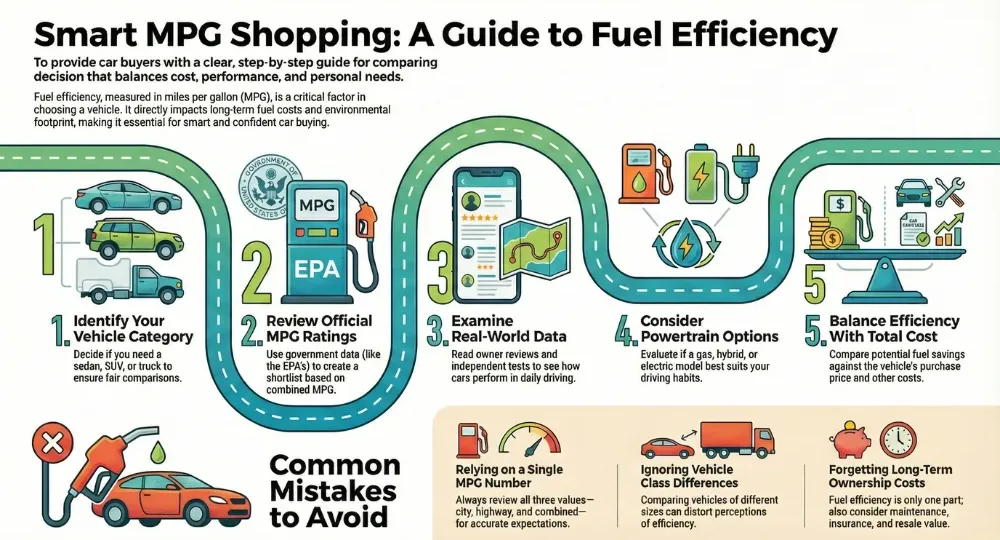
Smart MPG guide for comparing fuel efficiency across vehicle models
Final Thoughts
Comparing fuel efficiency among popular automobile models requires a structured and informed approach. By starting with official MPG ratings comparing vehicles within the same class considering powertrain types reviewing real world data and balancing efficiency with budget and driving needs buyers can make confident decisions. This method ensures long term fuel savings practical usability and a vehicle choice that aligns with everyday life.
Frequently Asked Questions
What is the best way to compare fuel efficiency between cars?
The best way is to use official MPG ratings compare vehicles within the same class and verify performance using real world owner data.
Are hybrid cars always more fuel efficient than gasoline cars?
Hybrids generally offer higher fuel efficiency especially in city driving but their overall value depends on driving habits and purchase price.
Why does real world MPG differ from official ratings?
Real world MPG varies due to driving style traffic terrain weather and vehicle maintenance which are not fully replicated in testing conditions.
Should I prioritize city or highway MPG?
Choose based on where you drive most often. City MPG matters more for urban commuting while highway MPG is important for long distance travel.
Do online fuel economy tools provide accurate comparisons?
Yes when used correctly they offer reliable side by side comparisons based on standardized data and are helpful for narrowing down choices.
You may also love to hear about:

Dony Garvasis is the founder of Search Ethics, a platform dedicated to transparency, authenticity, and ethical digital practices. With over 8 years of experience in SEO and digital marketing, I provide expert content on Tech, digital marketing, SEO, Artificial intelligence, gadgets, science, automobiles, lifestyle, tips, tutorials and much more. My mission is simple: Ethical Search, Genuine Results! I will make sure people everywhere get trustworthy and helpful information.