Now Reading: How to Choose an SEO Platform for Small Business Websites
-
01
How to Choose an SEO Platform for Small Business Websites

Choosing the right SEO platform for a small business website is one of the most important digital decisions a business owner can make. Search engine optimization directly affects how easily potential customers can find your website when searching for products or services online. With the right platform in place small businesses can compete effectively improve visibility attract qualified traffic and build trust over time.
For many small business owners SEO can feel complex and overwhelming. There are dozens of tools platforms and plugins available each promising strong results. The key is not to choose the most expensive or most popular option but to select an SEO platform that aligns with your business goals budget and level of experience. When chosen carefully an SEO platform becomes a long term asset that supports sustainable growth rather than a confusing expense.
This guide explains how to choose an SEO platform for small business websites by focusing on practical needs essential features usability integration and professional support. The goal is to help you make a confident informed decision that supports long term success.
Understanding your business needs and SEO goals
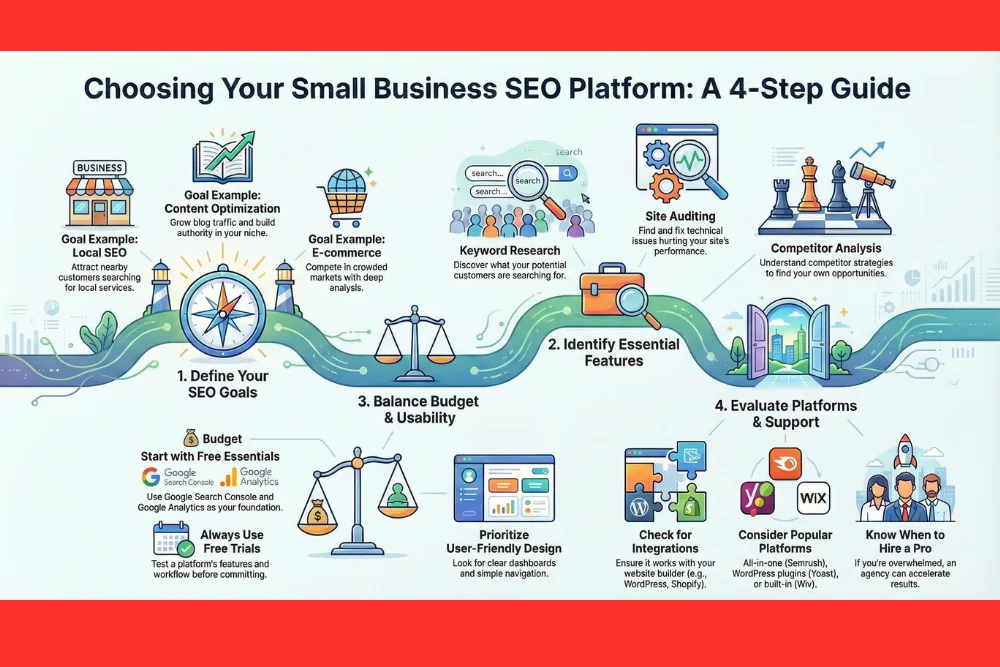
Before comparing SEO platforms it is essential to clearly define your business needs and SEO goals. Every small business is different and SEO tools are not one size fits all. A platform that works well for a local service business may not be ideal for an ecommerce store or a content focused blog.
Start by identifying what you want SEO to accomplish. Some businesses focus on local SEO to attract nearby customers searching for services in their area. Others prioritize content optimization to grow blog traffic and build authority. Ecommerce websites often need advanced keyword research site audits and competitor analysis to compete in crowded markets. Technical SEO improvements may also be a priority if your site has performance or indexing issues.
Clarifying these goals helps narrow your options. For example local businesses benefit from platforms with strong local listing management and location based insights. Content driven websites benefit from keyword research tools and performance tracking. Ecommerce businesses often require deeper site auditing and competitive analysis features. When your goals are clear you can focus on platforms designed to support those objectives.
Identifying essential SEO features
Once your goals are defined the next step is evaluating essential features. While many platforms market advanced capabilities the most important SEO features remain consistent across business types. These foundational tools help you understand your current performance identify opportunities and track progress over time.
Keyword research is one of the most critical features. It allows you to discover what potential customers are searching for and how competitive those search terms are. A good SEO platform provides insights into search volume relevance and difficulty so you can target keywords that match your business goals.
Rank tracking is another core feature. This allows you to monitor how your website performs in search results for your target keywords. Regular tracking helps you understand whether your SEO efforts are improving visibility and which pages need further optimization.
Site auditing tools are essential for identifying technical issues that affect search performance. These audits can highlight problems such as missing metadata slow page speed broken links or indexing errors. Addressing these issues improves user experience and helps search engines better understand your site.
Backlink analysis is also important because links from other websites influence search rankings and credibility. A strong SEO platform shows where your backlinks come from their quality and potential opportunities for growth.
Competitor analysis helps you understand how similar businesses perform in search results. By analyzing competitor keywords backlinks and content rules you can identify gaps and opportunities to improve your own approach.
Some platforms provide all these features in one interface while others specialize in specific areas. Small businesses should prioritize the features that align most closely with their goals and internal expertise.
Balancing budget and usability
Budget plays a significant role in choosing an SEO platform. SEO tools range from free solutions to premium platforms that cost hundreds per month. While paid platforms often offer advanced insights free tools can still provide meaningful value especially for beginners.
Free tools such as Google Search Console and Google Analytics are essential starting points. They provide direct insights into website performance search visibility and user behavior. These tools help small business owners understand how search engines see their site and how visitors interact with it.
Paid platforms often bundle multiple features into one system offering convenience and deeper analysis. However higher cost does not always mean better results. Small businesses should be realistic about what they can afford and what features they will actually use.
Usability is just as important as price. A powerful platform that is difficult to navigate may slow progress and lead to frustration. Small business owners without dedicated SEO professionals should look for platforms with clear dashboards simple explanations and guided recommendations.
Many SEO platforms offer free trials. These trials are valuable opportunities to test usability explore features and determine whether the platform fits your workflow. Taking advantage of these trials can prevent costly mistakes and ensure long term satisfaction.
Evaluating integration and platform compatibility
An SEO platform should integrate smoothly with your existing website setup. Compatibility with your content management system or website builder is essential for efficient optimization and management.
Popular platforms such as WordPress Squarespace and Shopify often work best with SEO tools designed specifically for them. For example, WordPress site users may benefit from SEO plugins that provide on page optimization tools directly within the editor. This makes it easier to optimize content without switching between systems.
Integration with analytics tools is another important consideration. Platforms that connect easily with Google Analytics and Google Search Console provide a more complete view of performance. This integration allows you to combine traffic data search insights and SEO metrics in one place.
Customer support also matters especially for small businesses new to SEO. Responsive support documentation tutorials and community resources can make a significant difference when technical issues arise. A platform with strong support helps reduce downtime and accelerates learning.
Popular SEO platforms for small businesses
Several SEO platforms are particularly well suited for small business websites. Each offers unique strengths and is best suited for specific needs and experience levels.
Semrush is a comprehensive SEO platform known for its robust keyword research site auditing and competitor analysis tools. It provides an all in one solution that helps businesses understand search opportunities and improve performance. Semrush also offers a local SEO module for businesses focused on attracting nearby customers. While it is a premium platform its depth makes it valuable for businesses ready to invest in growth. Some people also use Ubersuggest instead of SEMrush because it is more affordable.
Google Search Console and Google Analytics are essential free tools for all small businesses. Search Console helps monitor search presence, indexing page issues and keyword performance while Analytics provides insights into traffic sources user behavior and conversions. Together they form the foundation of any SEO strategy and should be used regardless of other tools.
Yoast SEO stands as a leading SEO solution for small businesses, particularly within the WordPress environment. With millions of active installations worldwide, this powerful plugin has earned its reputation by making search engine optimization accessible to users without technical backgrounds. Small business owners, bloggers, and entrepreneurs rely on Yoast for its user-friendly interface and comprehensive features that enhance website visibility in search results.
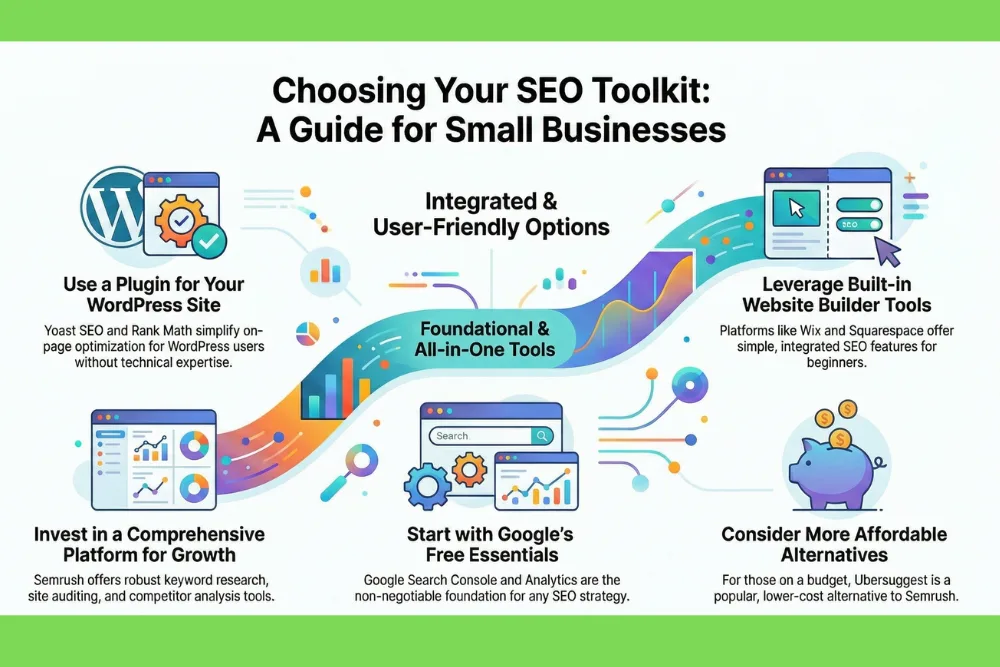
Rank Math is a highly rated SEO plugin for WordPress users. It simplifies on page optimization by guiding users through best practices for content metadata and technical settings. Its user friendly interface makes it a strong choice for small businesses managing SEO internally.
Wix and Squarespace are website builders with built in SEO tools. These platforms are ideal for business owners who want simplicity and ease of use. Their integrated SEO features allow users to manage basic optimization without needing additional software. While they may not offer advanced capabilities they are effective starting points for small businesses prioritizing convenience.
Knowing when to consider professional help
For some small business owners SEO can feel overwhelming despite using the right tools. In these cases professional help may be a smart investment. Hiring an SEO consultant or company that specializes in small businesses can accelerate results and prevent costly mistakes.
When evaluating agencies look for those with experience in local SEO conversion optimization and small business growth. A good agency should have a proven track record transparent communication and a clear understanding of your industry.
Professional services are particularly useful for businesses in competitive markets or those undergoing major changes such as website redesigns or expansions. While tools provide data and guidance experienced professionals bring strategy execution and adaptability.
Even when working with an SEO consultamcy oru SEO agency having a basic understanding of your SEO platform helps you stay informed and involved. Tools and professionals work best together when aligned around shared goals.
Making a confident long term decision
Choosing an SEO platform is not just a short term decision. It affects how you manage content measure success and adapt to changes in search behavior over time. The best choice balances functionality usability and cost while aligning with your business objectives.
Start by defining your SEO goals and understanding what success looks like for your business. Prioritize essential features that support those goals without paying for unnecessary complexity. Test platforms through free trials and evaluate how easily they fit into your workflow.
Ensure the platform integrates with your website and analytics tools and offers reliable support. Consider whether professional assistance is needed to maximize results and reduce learning curves.
By approaching the decision thoughtfully small business owners can choose an SEO platform that supports sustainable growth builds authority and improves visibility over the long term.
Final Thoughts
Choosing the right SEO platform for a small business website is a strategic decision that directly impacts online visibility customer acquisition and long term growth. By clearly defining SEO goals evaluating essential features balancing budget and usability and ensuring strong integration small businesses can make informed choices with confidence.
Tools such as Semrush, Google Search Console, UberSuggest, Yoast, Rank Math and website builders with built in SEO features provide strong starting points depending on your needs. When SEO becomes complex professional help can further enhance results and efficiency.
The key is to focus on clarity consistency and alignment with business goals. With the right SEO platform in place small businesses can build a strong search presence and compete effectively in an evolving digital landscape.
Frequently asked questions
What is the most important factor when choosing an SEO platform?
The most important factor is alignment with your business goals. A platform should support the specific SEO outcomes you want to achieve such as local visibility content growth or technical improvement.
Are free SEO tools enough for small businesses?
Free tools like Google Search Console and Google Analytics are essential and can be sufficient for beginners. As needs grow paid platforms may offer deeper insights and convenience.
How do I know if an SEO platform is user friendly?
Look for clear dashboards guided recommendations and strong documentation. Free trials are the best way to evaluate usability before committing.
Do website builders offer good SEO tools?
Website builders like Wix and Squarespace include basic SEO features that are effective for many small businesses especially those prioritizing ease of use.
When should a small business hire an SEO professional?
Hiring a SEO professional or a freelance SEO consultant is helpful when SEO feels overwhelming or when operating in competitive markets. Agencies with small business experience can accelerate results and reduce errors.

Dony Garvasis is the founder of Search Ethics, a platform dedicated to transparency, authenticity, and ethical digital practices. With over 8 years of experience in SEO and digital marketing, I provide expert content on Tech, digital marketing, SEO, Artificial intelligence, gadgets, science, automobiles, lifestyle, tips, tutorials and much more. My mission is simple: Ethical Search, Genuine Results! I will make sure people everywhere get trustworthy and helpful information.