Now Reading: The Hidden Negative Impact of Artificial Intelligence on Society
-
01
The Hidden Negative Impact of Artificial Intelligence on Society

The Hidden Negative Impact of Artificial Intelligence on Society
AI, AI, AI. Everywhere you look, artificial intelligence is becoming part of daily life.
Artificial intelligence is transforming modern society at an extraordinary speed, but the negative impact of artificial intelligence on society is becoming increasingly difficult to ignore.
While AI improves efficiency, automation, and innovation, it also raises serious concerns related to employment, privacy, ethics, environmental sustainability, and human behavior.
A balanced understanding of these challenges is essential to ensure AI benefits humanity responsibly.
Understanding the Growing Influence of Artificial Intelligence
Artificial intelligence has rapidly become part of everyday life. From recommendation systems and virtual assistants to automated customer support and advanced data analysis, AI technologies now influence how people work, communicate, learn, and make decisions.
Businesses across industries are integrating AI into their operations to improve productivity, reduce costs, and enhance user experiences.
Despite these advantages, the rapid adoption of AI has also introduced several social and ethical concerns. Many experts believe society is entering a period where technology is evolving faster than regulations, education systems, and workplace adaptation. This imbalance creates uncertainty about the long term effects AI may have on human society.
The conversation surrounding AI should not focus only on fear or optimism. Instead, it requires a thoughtful and balanced approach that recognizes both the opportunities and the risks associated with intelligent systems.
The Negative Impact of Artificial Intelligence on Society
The negative impact of artificial intelligence on society extends beyond automation and job replacement. AI has the potential to reshape human relationships, influence decision making, alter economic structures, and even affect mental wellbeing.
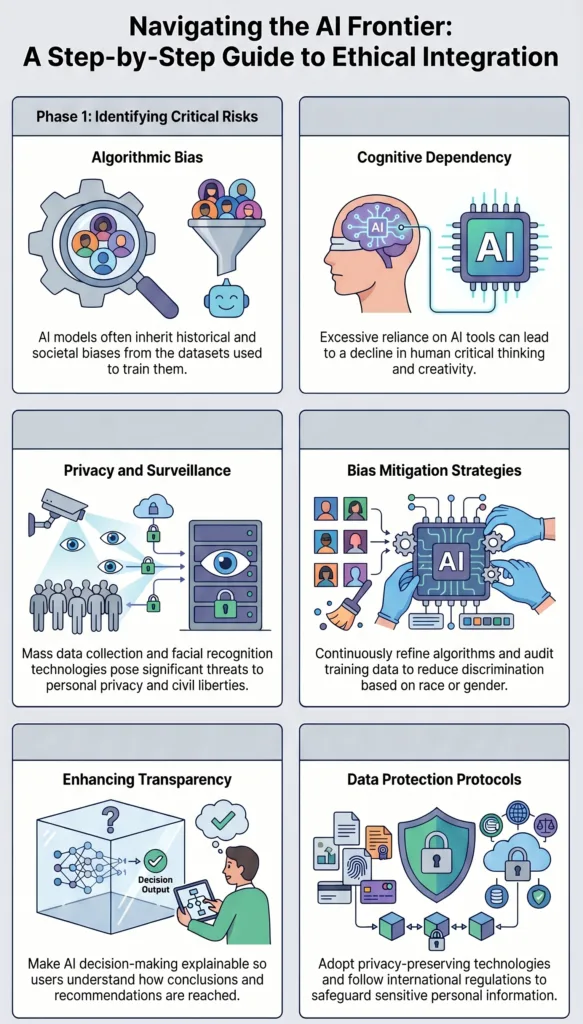
One major concern is the increasing dependence on AI powered systems. As people rely more heavily on technology for daily tasks, critical thinking and problem solving abilities may gradually decline. AI tools can generate answers instantly, but excessive dependence may reduce human creativity, curiosity, and independent analysis.
Navigating the Ethical Landscape and Societal Impact of AI
Another issue involves misinformation and manipulation. AI generated content, including deepfakes and synthetic media, has made it easier to spread false information online. This can damage public trust, influence political opinions, and create confusion during important global events.
There are also concerns about social inequality. Advanced AI technologies are often controlled by large corporations with access to significant resources and data. Smaller businesses and economically disadvantaged communities may struggle to compete in an increasingly AI driven economy. This could widen the gap between different social and economic groups.
At the same time, AI can provide valuable benefits when used responsibly. Many organizations are actively developing ethical guidelines and governance systems to reduce harmful outcomes. This balanced reality is important because AI itself is not inherently harmful. The real challenge lies in how humans design, regulate, and apply these technologies.
Fairness and Bias in Artificial Intelligence Systems
Bias in artificial intelligence systems is one of the most widely discussed ethical concerns. AI models learn from massive datasets that often contain historical and societal biases. If these biases are not addressed properly, AI systems may produce unfair or discriminatory outcomes.
For example, AI tools used in hiring processes may unintentionally favor certain demographics while disadvantaging others. Similar risks exist in lending, law enforcement, healthcare, and education. Biased algorithms can reinforce existing inequalities rather than eliminate them.
Also read: OpenAI Launches ChatGPT for Teachers to Transform Classroom Education
Major AI service providers are investing heavily in fairness and bias mitigation strategies. Companies continuously refine algorithms and examine training datasets to reduce discrimination based on race, gender, socioeconomic status, and other sensitive factors.
However, achieving complete fairness remains difficult because human societies themselves contain biases and inequalities. AI systems reflect the data they are trained on, meaning ethical AI development requires constant monitoring, auditing, and improvement.
A balanced discussion about AI must recognize that while bias is a serious concern, ongoing research and ethical frameworks are helping organizations reduce unfair outcomes and improve accountability.
Negative Effects of AI Tools on Student Learning Outcomes
Artificial intelligence tools are changing the way students learn, research, and complete academic tasks, but excessive dependence on these technologies can create several educational challenges. One major concern is the decline in critical thinking and research skills, as students may rely on AI generated answers instead of developing their own understanding. AI tools are also increasing the risk of cheating and academic dishonesty through automated essay and assignment generation.
In addition, reduced interaction between students and teachers may weaken communication and interpersonal skills. Concerns about biased information, inaccurate outputs, and student data privacy further highlight the need for responsible and balanced AI use in education.
Also read: Best AI for Studying That Helps You Learn 10X Faster
Transparency and Explainability in AI Decision Making
Transparency plays a crucial role in building trust between humans and artificial intelligence systems. Many AI models operate in ways that are difficult for ordinary users to understand. This lack of explainability can create uncertainty and fear, especially when AI systems influence important decisions.
People want to understand how AI reaches conclusions, why certain recommendations are made, and how personal data is being used. Without transparency, users may lose confidence in technology and question whether decisions are fair or accurate.
To address this issue, AI providers are working to make systems more explainable and interpretable. Transparency includes informing users about AI capabilities, limitations, and data usage practices. Ethical AI frameworks also emphasize the importance of informed consent and responsible communication.
At the same time, achieving full explainability is technically challenging for highly advanced AI models. Some systems process enormous amounts of data through complex neural networks that are difficult even for developers to interpret completely.
This creates an important balance between innovation and accountability. Society benefits when AI systems remain understandable, transparent, and subject to human oversight.
Privacy Concerns and Data Security Risks
Artificial intelligence relies heavily on data. The more data AI systems process, the more accurate and powerful they become. However, this dependence on data also creates significant privacy concerns.
Many AI applications collect large amounts of personal information, including browsing behavior, location data, purchasing habits, and communication patterns. If this information is mishandled or exposed through data breaches, users may face serious privacy risks.
Unauthorized surveillance is another growing concern. AI powered facial recognition and tracking technologies can monitor individuals at an unprecedented scale. Critics argue that excessive surveillance may threaten civil liberties and personal freedom.
Also read: What Is Phishing and Why It Is So Dangerous
To reduce these risks, AI companies are implementing strict privacy protection measures and adopting privacy preserving technologies. Many organizations follow international data protection regulations and invest in cybersecurity systems to safeguard user information.
Even so, balancing innovation with privacy protection remains one of the biggest challenges in the AI era. Responsible governance and transparent policies are essential to maintain public trust.
Accountability and Human Oversight in Artificial Intelligence
Artificial intelligence systems are capable of making mistakes. In some cases, these errors can lead to harmful outcomes that affect individuals, businesses, or entire communities. This raises an important question about accountability.
Who is responsible when an AI system makes a harmful decision?
To address this issue, many organizations have established governance frameworks that ensure humans remain involved in critical decision making processes. Human oversight helps monitor AI behavior, verify outputs, and intervene when necessary.
Ethical AI frameworks often include risk assessments, continuous monitoring, auditing procedures, and stakeholder engagement. These measures help organizations identify problems early and reduce unintended consequences.
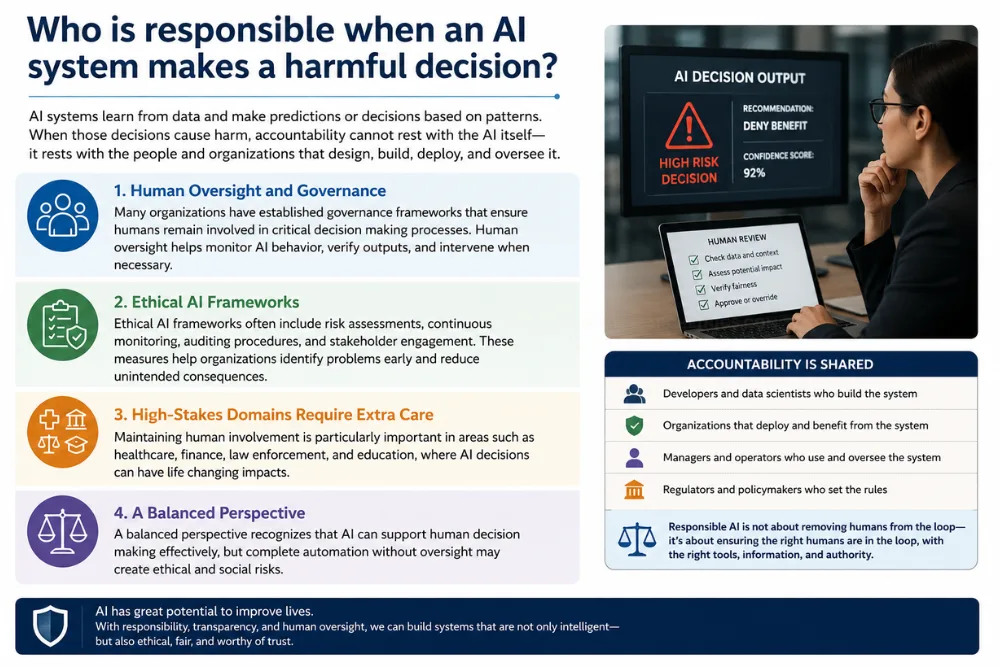
Maintaining human involvement is particularly important in areas such as healthcare, finance, law enforcement, and education, where AI decisions can have life changing impacts.
A balanced perspective recognizes that AI can support human decision making effectively, but complete automation without oversight may create ethical and social risks.
Main Negative Effects of AI on Employment in Tech Companies
The impact of AI on employment has become one of the most debated issues in the technology industry. While AI creates new opportunities in some sectors, it also disrupts traditional job roles and workforce structures.
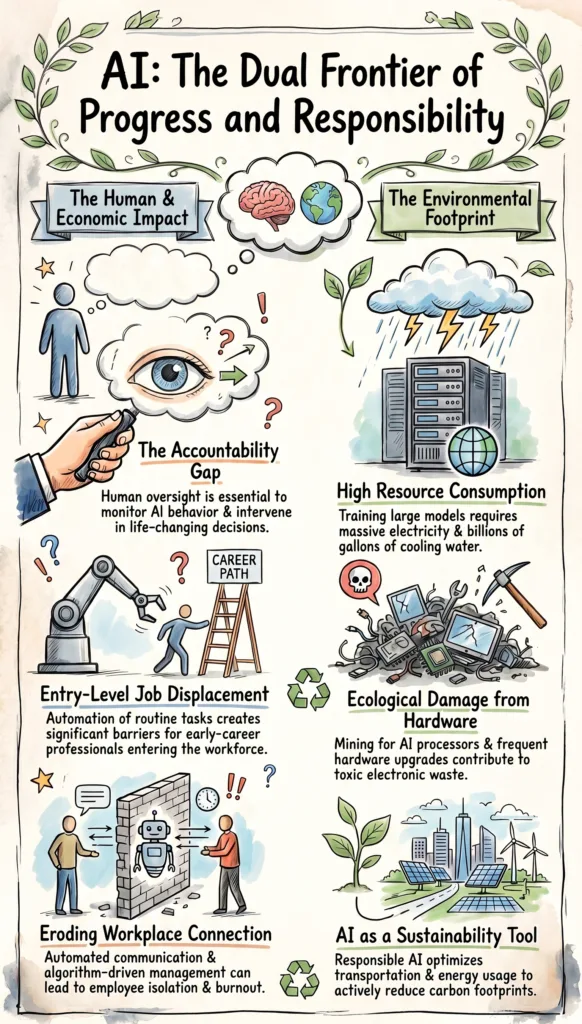
One major concern is job displacement among early career workers. Research indicates that younger employees in highly AI exposed occupations, such as software development and customer service, have experienced declining employment opportunities. Entry level positions are particularly vulnerable because AI systems can automate repetitive and routine tasks efficiently.
Also read: Best AI like Chatgpt for Customer Support
This trend creates barriers for young professionals attempting to enter the workforce. Without entry level opportunities, gaining practical experience becomes increasingly difficult.
Another issue is skills obsolescence. As AI technologies evolve rapidly, workers must continuously learn new skills to remain competitive. Roles involving coding, data processing, and routine technical support may become less relevant as automation expands.
Many technology companies are also slowing recruitment efforts while prioritizing AI implementation. Instead of expanding teams, businesses often focus on integrating AI tools to improve productivity with fewer employees. This can reduce job openings and increase uncertainty about future career paths.
AI may also contribute to wage inequality. Highly skilled professionals capable of developing and managing AI systems may experience rising demand and salaries, while lower skilled workers face reduced opportunities.
Despite these challenges, experts also emphasize that AI is likely to create new categories of jobs over time. The key challenge is ensuring workers receive adequate support, education, and reskilling opportunities during the transition.
How AI Affects Workplace Relationships and Human Interaction
The growing reliance on artificial intelligence tools is also changing workplace dynamics. Automated communication systems, virtual assistants, and algorithm driven management processes may reduce direct human interaction within organizations.
Collaboration and interpersonal relationships are essential for creativity, innovation, and employee satisfaction. When communication becomes increasingly automated, employees may feel isolated or disconnected from colleagues.
AI driven productivity systems can also create pressure to perform at higher speeds, potentially increasing workplace stress and burnout. Constant monitoring and performance tracking may negatively affect employee morale and mental wellbeing.
At the same time, AI tools can improve efficiency and reduce repetitive workloads, allowing employees to focus on more meaningful tasks. The challenge lies in finding a healthy balance between automation and human connection.
Organizations that prioritize both technological efficiency and employee wellbeing are more likely to create sustainable and productive work environments.
Environmental Pollution Caused by Artificial Intelligence
One of the less discussed aspects of the negative impact of artificial intelligence on society is its environmental cost. Advanced AI systems require enormous computational power, leading to significant energy consumption.
Training large AI models involves operating massive data centers filled with high performance hardware. These facilities consume vast amounts of electricity, much of which still comes from fossil fuel sources. As a result, AI operations contribute to greenhouse gas emissions and climate related concerns.
Water usage is another environmental challenge. Data centers require substantial cooling systems to prevent overheating, leading to billions of gallons of water consumption annually.
The production of AI hardware also contributes to environmental degradation. Manufacturing processors, storage devices, and GPUs requires mining materials such as cobalt, silicon, and gold. Mining activities can damage ecosystems, pollute water sources, and destroy natural habitats.
Electronic waste is an additional concern because AI infrastructure requires frequent hardware upgrades. Improper disposal of outdated equipment can release toxic substances into the environment.
However, it is important to maintain a balanced perspective. AI also has the potential to support sustainability efforts when applied responsibly. Researchers and organizations are using AI to optimize energy consumption, track emissions, improve disaster response systems, and advance climate research.
The long term environmental impact of AI will depend largely on how industries manage energy efficiency, renewable energy adoption, and sustainable hardware production.
Can AI Help Reduce Carbon Footprints?
Although AI contributes to environmental challenges, it can also play a valuable role in reducing carbon emissions and improving sustainability.
Several AI powered platforms help businesses measure and manage their carbon footprints. These systems analyze emissions data, optimize operations, and provide recommendations for reducing energy consumption.
Persefoni provides an AI driven carbon management platform that helps businesses measure, monitor, and manage their carbon emissions more effectively. Its advanced Agentic AI feature enables users to interact with emissions data through natural language queries, create customized reports, and gain valuable insights. It support smarter sustainability decisions and regulatory compliance.
AI powered energy management systems can improve efficiency in buildings and industrial facilities by analyzing real time data and adjusting energy usage automatically. This can significantly reduce waste and lower emissions.
The Ethical Landscape and Societal Impact of Artificial Intelligence
AI is also transforming supply chain management. Businesses can use machine learning systems to optimize transportation routes, reduce fuel consumption, and improve logistics planning.
Companies such as Google have introduced AI driven sustainability initiatives that optimize traffic systems and fuel efficient navigation. These technologies help reduce greenhouse gas emissions from transportation networks.
Generative AI is increasingly used to analyze environmental data, predict energy patterns, and support smarter sustainability decisions. These applications demonstrate that AI itself is not inherently harmful to the environment. The real issue lies in balancing technological advancement with responsible environmental management.
Adherence to Global Ethical Standards
Many organizations developing artificial intelligence technologies align their practices with international ethical guidelines. Global frameworks emphasize human rights, dignity, inclusion, sustainability, and accountability.
Ethical standards encourage companies to develop AI systems that prioritize public safety and social wellbeing. Collaboration between governments, regulators, academic institutions, and technology companies plays a critical role in shaping responsible AI policies.
Major AI providers continue investing in research, policy development, and ethical governance systems to address emerging challenges. This includes monitoring risks, improving transparency, and promoting inclusive innovation.
The global conversation about AI ethics is still evolving. As technology advances, ethical frameworks must adapt continuously to address new risks and societal concerns.
A balanced and thoughtful approach remains essential because overly restrictive policies could slow innovation, while insufficient regulation may increase harmful outcomes.
The Importance of Responsible AI Development
The future impact of artificial intelligence will depend heavily on how society chooses to develop and regulate these technologies. Responsible AI development requires a combination of technical innovation, ethical principles, and human centered governance.
Education and awareness are also critical. People need to understand both the opportunities and the risks associated with AI systems. Governments, educational institutions, and businesses must work together to prepare future generations for an increasingly automated world.
Reskilling and upskilling programs will become increasingly important as industries evolve. Workers need support to adapt to changing job markets and emerging technologies.
Transparency, accountability, privacy protection, and environmental sustainability should remain central priorities in AI development. When these principles are respected, AI can contribute positively to society while minimizing harm.
Final Thoughts
The hidden negative impact of artificial intelligence on society is complex and multifaceted. AI is transforming industries, improving efficiency, and creating new possibilities, but it also introduces serious concerns related to employment, bias, privacy, environmental sustainability, and human interaction.
In my opinion, A balanced perspective is essential because artificial intelligence is neither entirely beneficial nor entirely harmful. The technology itself is a tool, and its impact depends largely on how humans choose to design, regulate, and apply it.
Responsible governance, ethical development, transparency, and human oversight will play a critical role in shaping the future of AI. By addressing these challenges thoughtfully and proactively, society can maximize the benefits of artificial intelligence while reducing its potential risks.
References Used:
Yes, AI is affecting employment. Here’s the data
The Transformative Effects of AI on Jobs and Education
How AI Damages Work Relationships—and Where It Can Actually Help
Top 10 Ethical Considerations for AI Projects
Environmental Considerations for Using AI
Persefoni Launches Agentic AI to Help Companies Analyze Carbon Footprint
6 Ways AI Can Help Reduce Carbon Emissions
Frequently Asked Questions
What is the negative impact of artificial intelligence on society?
The negative impact of artificial intelligence on society includes job displacement, privacy concerns, misinformation, environmental pollution, bias in decision making, and reduced human interaction.
How does AI affect employment in tech companies?
AI affects employment by automating repetitive tasks, reducing entry level opportunities, creating skills obsolescence, and contributing to hiring slowdowns in some technology companies.
Does artificial intelligence contribute to environmental pollution?
Yes, artificial intelligence contributes to environmental pollution through high energy consumption, water usage, electronic waste, and emissions generated by data centers and hardware production.
Can AI help reduce carbon emissions?
AI can help reduce carbon emissions by optimizing energy usage, improving supply chain efficiency, reducing fuel consumption, and supporting sustainability initiatives.
How do AI tools affect students’ critical thinking skills?
AI tools can reduce critical thinking skills when students rely too heavily on automated answers instead of researching, analyzing, and solving problems independently. This dependency may weaken creativity, reasoning, and deep learning abilities over time.
What are the risks of using AI tools in education?
The main risks of using AI tools in education include cheating, academic dishonesty, reduced student teacher interaction, biased information, and data privacy concerns. These issues can negatively affect learning quality and educational integrity if AI is not used responsibly.
Why is transparency important in AI systems?
Transparency helps users understand how AI systems make decisions, how personal data is used, and what limitations the technology may have, which builds trust and accountability.
How do companies reduce bias in AI systems?
Companies reduce bias by auditing datasets, refining algorithms, monitoring outcomes, and implementing fairness focused ethical frameworks.
Is artificial intelligence entirely harmful to society?
No, artificial intelligence is not entirely harmful. AI offers many benefits in healthcare, education, sustainability, and productivity, but responsible development and regulation are necessary to minimize risks.

Dony Garvasis is the founder of Search Ethics, a freelance SEO consultant, and a passionate technology blogger. With over 8 years of experience in SEO, blogging and content marketing, I provide expert content on Tech, digital marketing, SEO, Artificial intelligence, gadgets, science, automobiles, lifestyle, tips, tutorials and much more. My mission is simple: Ethical Search, Genuine Results! I will make sure people everywhere get trustworthy and helpful information.