Now Reading: Tech Books That Provide Practical Coding Exercises for Python
-
01
Tech Books That Provide Practical Coding Exercises for Python
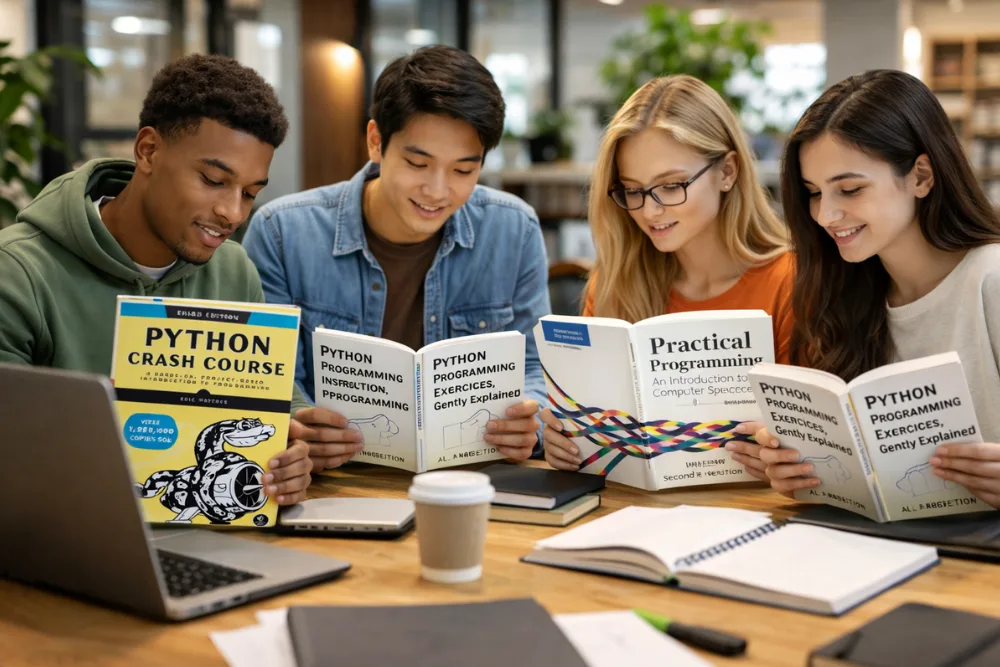
If you are searching for Python tech books that focus on practical coding exercises, the best resources are those that combine clear explanations, structured practice, and real world application. The books discussed here help beginners and intermediate learners build confidence, strengthen problem solving skills, and apply Python knowledge through hands on exercises from day one.
Learning Python effectively requires more than reading syntax. It requires consistent practice, exposure to real problems, and guided exercises that reinforce concepts. The following books and learning resources are widely respected because they focus on writing code, solving challenges, and understanding how Python works in real situations.
Why Practical Coding Exercises Matter in Python Learning
Python is known for its simplicity and readability, but mastering it still requires deliberate practice. Practical coding exercises allow learners to translate theory into action, which is essential for long term retention and skill development.
Coding exercises help learners understand how logic flows in a program, how errors occur, and how to debug effectively. Instead of passively consuming information, readers actively engage with problems that simulate real programming tasks. This approach aligns with how professional developers actually learn and grow.
Books that emphasize exercises also support different learning levels. Beginners gain confidence by solving small tasks, while intermediate learners sharpen their skills through algorithmic thinking and structured challenges.
Related search: How Does Vibe Coding Differ from Traditional Coding Methods
Python Programming Exercises, Gently Explained by Al Sweigart
This book is one of the most beginner friendly Python exercise books available. It is designed for learners who want to practice coding without feeling overwhelmed by heavy theory or complex mathematics.
Key Strengths of the Book
Python Programming Exercises, Gently Explained includes forty two carefully designed programming exercises. Each exercise is introduced with a gentle explanation of the concepts involved, making it easy for readers to understand what is expected before writing code.
The exercises range from simple programs like Hello World and Fizz Buzz to more advanced logic based tasks such as Bubble Sort. Each challenge focuses on a specific programming concept, allowing learners to build skills step by step.
Another major strength is the inclusion of prerequisite explanations and helpful templates. Readers are not left guessing how to start. This reduces frustration and encourages consistent practice.
Who Should Read This Book
This book is ideal for beginners who have basic Python knowledge and want to strengthen their skills through practice. It is also suitable for intermediate programmers who want to refresh fundamentals and improve problem solving abilities.
The gentle teaching style makes it especially useful for self learners who may feel intimidated by traditional programming textbooks.
Practical Programming, Second Edition by Paul Gries, Jennifer Campbell, and Jason Montojo
Practical Programming is a structured introduction to Python that focuses on teaching programming fundamentals through real world problems and exercises.
What Makes This Book Stand Out
This book uses Python 3 to teach essential programming concepts such as design, algorithms, testing, debugging, and working with files and data. Each chapter builds logically on the previous one, helping readers develop a strong foundation.
The exercises are designed to encourage readers to think like professional programmers. Rather than just writing code that works, learners are guided to write clear, readable, and well structured programs.
The book also emphasizes problem solving strategies and good coding skills and habits, which are critical for long term success in software development.
Learning Approach and Practical Value
Practical Programming balances explanation and application effectively. Concepts are introduced clearly, followed by exercises that require readers to apply what they have learned in realistic scenarios.
This approach makes it an excellent choice for learners who want to understand not just how Python works, but why certain programming practices are important.
Python Crash Course by Eric Matthes
Python Crash Course is widely recognized as one of the most effective beginner friendly Python books available. It uses a hands on, project based approach to teach Python in a practical and engaging way.
Hands On Learning Through Projects
This book includes practical coding exercises that go beyond small snippets of code. Readers work on complete projects such as building a simple game, creating data visualizations, and developing a basic web application.
These projects help learners see how Python is used in real applications, which reinforces understanding and boosts confidence.
Ideal for Beginners
Python Crash Course is particularly suitable for beginners because it starts with the basics and gradually introduces more advanced concepts. The exercises are designed to be approachable while still challenging enough to promote growth.
By working through projects, learners gain experience with writing, testing, and refining code, which mirrors real development workflows.
Python Practice Exercises by Steven Gellis
Python Practice Exercises is focused entirely on problem solving through coding challenges. It provides a broad collection of exercises designed to help learners gain mastery through repetition and variation.
Wide Range of Difficulty Levels
The exercises in this book span beginner, intermediate, and advanced levels. This makes it a versatile resource that learners can return to as their skills improve.
By working through problems of increasing complexity, readers develop logical thinking and adaptability, which are essential traits for programmers.
Building Confidence Through Practice
This book is particularly effective for learners who want to test their knowledge and identify gaps in understanding. Solving diverse problems helps reinforce concepts and build confidence in writing Python code independently.
Real World Python by Lukas Rieger and Christian Mayer
Although Real World Python is a course rather than a traditional book, it is a valuable resource for practical Python learning and deserves inclusion.
Focus on Real World Applications
This course provides practical Python exercises with solutions, video tutorials, and quizzes. The content focuses on applying Python skills in real world scenarios, making it highly relevant for learners preparing for jobs or coding interviews.
The exercises simulate realistic tasks, helping learners understand how Python is used in professional environments.
Structured and Supportive Learning
Real World Python offers guided explanations and step by step solutions, which help learners understand not just the final answer but the reasoning behind it. This approach supports deeper learning and long term skill development.
How These Python Books Support Effective Learning
All of the resources discussed share common strengths that align with effective Python learning principles.
They emphasize hands on practice, clear explanations, and gradual skill building. Instead of overwhelming learners with theory, they focus on applying concepts through exercises and projects.
They also encourage good programming habits such as writing readable code, testing solutions, and thinking critically about problem solving. These skills are essential for anyone aiming to use Python professionally.
Choosing the Right Python Exercise Book for Your Goals
Selecting the right book depends on your current skill level and learning objectives.
| Python Book Name | Best For | Skill Level | Key Focus Areas | Why Choose This Book |
|---|---|---|---|---|
| Python Programming Exercises, Gently Explained | Beginners | Beginner | Core Python concepts, step-by-step exercises | Ideal for first-time learners who want clear explanations and gradual difficulty |
| Python Crash Course | Beginners & Self-learners | Beginner to Intermediate | Hands-on projects, fundamentals, practical coding | Perfect for learners who prefer learning by building real projects |
| Practical Programming: An Introduction to Computer Science Using Python | CS students & serious learners | Intermediate | Programming fundamentals, design thinking, best practices | Best for developing strong problem-solving and professional coding skills |
| Python Practice Exercises | Practice-focused learners | Beginner to Advanced | Coding challenges, multiple difficulty levels | Great for strengthening logic through extensive practice |
| Real World Python | Job-seekers & interview prep | Intermediate to Advanced | Real-world applications, practical scenarios | Excellent for gaining industry-relevant Python experience |
Best Learning Path for Exercise Based Python Practice
A gradual learning path can help maximize results.
Starting with Python Programming Exercises, Gently Explained allows learners to build confidence with simple problems. Moving on to Practical Programming helps deepen understanding of core concepts and best practices.
Python Crash Course can then introduce project based learning, while Python Practice Exercises reinforces skills through repetition. Real World Python can serve as a bridge to professional application and advanced problem solving.
This progression supports continuous improvement without unnecessary frustration.
Final Thoughts
Tech books that provide practical coding exercises for Python are essential for effective learning and long term skill development. Resources like Python Programming Exercises, Gently Explained, Practical Programming, Python Crash Course, Python Practice Exercises, and Real World Python focus on hands on practice, clear explanations, and real world application. By choosing exercise focused materials and practicing consistently, learners can build confidence, improve problem solving skills, and apply Python effectively in real scenarios.
Frequently Asked Questions
Are coding exercise books better than theory focused Python books?
Yes, coding exercise books help learners apply concepts directly, which improves understanding, retention, and real world problem solving skills.
Which Python book is best for complete beginners?
Python Programming Exercises, Gently Explained and Python Crash Course are excellent choices for beginners due to their clear explanations and practical approach.
Can intermediate programmers benefit from these books?
Yes, intermediate learners can strengthen fundamentals, improve logic, and refine coding habits through structured exercises and projects.
Do these books help with real world Python usage?
Yes, especially Python Crash Course, Practical Programming, and Real World Python, which focus on real applications and professional programming practices.
How often should I practice Python exercises?
Consistent practice is key. Working on exercises several times a week helps reinforce concepts and build long term coding confidence.
Related search: Is Software Engineering Hard? The Unspoken Truths

Dony Garvasis is the founder of Search Ethics, a freelance SEO consultant, and a passionate technology blogger. With over 8 years of experience in SEO, blogging and content marketing, I provide expert content on Tech, digital marketing, SEO, Artificial intelligence, gadgets, science, automobiles, lifestyle, tips, tutorials and much more. My mission is simple: Ethical Search, Genuine Results! I will make sure people everywhere get trustworthy and helpful information.